

































• I Became Guardian of My Twin Sisters After Mom Died — My Fiancée Pretended to Love Them Until I Heard What She Really Said

    I Became Guardian of My Twin Sisters After Mom Died — My Fiancée Pretended to Love Them Until I Heard What She Really Said

    The day I became a parent was the same day my world came crashing down — not because I welcomed a child, but because I inherited two grief-stricken ten-year-olds who had just lost their mother. My mother. Overnight, I went from planning a Maui honeymoon with my fiancée to packing lunchboxes, braiding hair, and signing permission slips for my twin sisters, Lily and Maya. In those early weeks, when life felt too heavy to hold, Jenna — my future wife — stepped in like a miracle. She cooked, she helped with homework, she whispered bedtime stories. I truly thought she loved the girls. I thought we were becoming a family. But love built on lies always cracks, and the day I came home early and heard Jenna’s real voice — cold, sharp, and dripping with contempt — was the day everything I believed about her shattered.

    After Mom’s accident, I did what any big brother would: I moved back into her house, tucked my engineering career into the back pocket of my grief, and tried to be strong for the only family I had left. Jenna moved in soon after, insisting she wanted to help. Everyone praised her for stepping up — the devoted fiancée taking on two traumatized kids. I wanted to believe it too. She braided hair and scribbled notes for their lunchboxes. She told her friends the girls were “the little sisters she always dreamed of.” And for a while, despite the storm we were navigating, I thought I was lucky — that Mom would’ve trusted Jenna with their fragile hearts. But that illusion crumbled the moment I walked in quietly one gray afternoon and heard Jenna telling the twins they’d be gone soon. Not because we couldn’t manage, but because she didn’t want them.

    Hidden by the hallway, I listened as Jenna told Lily and Maya that a foster family would “deal with their sadness better,” mocked Maya for crying, and warned them not to “get too comfortable.” Then came the cruelest truth — overheard when she thought the girls had left the room and she was safely chatting with a friend. Jenna wasn’t helping us out of love. She was helping herself. She wanted Mom’s house, the insurance money, my income — and she wanted the twins gone so she could have her life back. That night, I pretended nothing was wrong and told her exactly what she wanted to hear — that we should get married now, and that I’d consider giving up the girls. She fell for it instantly. While she planned a giant wedding, I gathered the evidence I needed and made a different plan: the truth would be revealed in front of everyone she wanted to impress.

    On the night of our would-be wedding, surrounded by family, coworkers, and neighbors, I took the microphone and exposed everything. Every lie, every cruel word, every plan she’d made to get rid of my sisters played across a giant projector screen — recorded by nanny cams Mom had installed years earlier. Jenna’s mask cracked in real time. Guests gasped. Her parents walked out. And as security escorted her from the ballroom, Lily squeezed my hand and Maya whispered, “We knew you’d choose us.” A week later, the adoption was finalized. That night, we lit a candle for Mom, ate spaghetti too late, and laughed too loudly. The girls rested their hands on my arms as I cried — not from grief this time, but from relief. We weren’t just surviving anymore. We were finally safe. We were a family.

  • I Bought a Bag of Apples for a Mother with Two Little Kids at the Checkout — Three Days Later, a Police Officer Came Looking for Me at Work

    I Bought a Bag of Apples for a Mother with Two Little Kids at the Checkout — Three Days Later, a Police Officer Came Looking for Me at Work

    Some acts of kindness feel so small in the moment that you barely think twice about them. That’s exactly how my Saturday started—another chaotic morning at the grocery store where I work the early shift. I was tired, running on cheap coffee, and trying to keep up with the usual weekend rush. Between crying toddlers, empty shelves, and customers buying like the world was ending, I was just hoping to make it through my shift. Then a woman stepped into my checkout lane—a thin jacket, exhausted eyes, and two children who were far too quiet for kids their age. They weren’t grabbing candy or begging for toys. They were staring at a simple bag of apples like it was something magical. And in that instant, I felt something shift.

    As I rang up her order, I could see the hesitation in her face as the total appeared on the screen. She swallowed hard and whispered for me to remove the apples and the cereal, her voice cracking in a way that told me this wasn’t the first time she’d had to choose between groceries and bills. Her children didn’t protest—they just lowered their eyes, as if used to hearing “maybe next time.” Before she could reach for her card again, I quietly slid mine into the reader. It was ten dollars—nothing extraordinary—but to her, it meant hope in a moment when she had none. She looked at me like I’d handed her something far bigger than groceries. She thanked me softly and hurried out the door, leaving me with a feeling I couldn’t quite name.

    I didn’t tell anyone about it. Not my husband, not my coworkers. It wasn’t a story—just a moment of being human. But three days later, everything changed. I was scanning items for a man buying cat food when a police officer walked into the store—not casually, not for coffee, but searching. For me. My heart nearly stopped as he approached and asked to speak with my manager. Panic washed over me, but before I could imagine the worst, my manager told me to take a break and follow the officer. Instead of heading to a patrol car, he led me down the street to a small café. And there—sitting by the window—was the woman from the checkout line, her kids smiling and waving. The officer took a seat and said quietly, “I’m their father.” He had been undercover for almost a year, unable to contact them. When he finally came home and heard what happened at the store, he felt compelled to thank me in person.

    We talked for nearly an hour. The kids handed me a picture they had drawn—me at my register wearing a superhero cape. The officer and his wife insisted on buying me lunch, and I left the café feeling lighter than I had in years. A week later, my manager called me into the office with surprising news: I was being promoted to shift manager. He handed me a letter written by the officer, praising my kindness and integrity. That moment—those ten dollars—had somehow traveled full circle. Kindness, I realized, doesn’t disappear. It echoes. It returns. And even if none of this had happened—the café, the drawing, the promotion—I would still do it again in a heartbeat. Because sometimes the smallest gestures become the biggest turning points in someone’s life, including your own.

  • Demi Moore Responds to Emma Heming’s Decision About Bruce Willis’ New Living Arrangement

    Demi Moore Responds to Emma Heming’s Decision About Bruce Willis’ New Living Arrangement

    Demi Moore recently expressed admiration for Emma Heming Willis, praising her strength and compassion as she continues to care for Bruce Willis. The comments came after Emma made the difficult decision to move Bruce into a specialized residence to better support his needs following his diagnosis of frontotemporal dementia in 2022.

    In an interview with Diane Sawyer during the ABC special “Emma and Bruce Willis – The Unexpected Journey” on August 26, 2025, Emma opened up about the weight of that choice. She explained that it was one of the hardest steps she has taken, but one she felt was necessary to provide both Bruce and their daughters with the best possible environment.

    Emma shared that the arrangement ensures Bruce receives professional, around-the-clock support, while their daughters are able to grow up in a home centered on their needs. She explained that this balance reflects what Bruce himself would have wanted for the family — a safe and nurturing environment for their children, alongside high-quality care for him.

    Though they now live apart, Emma described Bruce’s new residence as a “second home,” filled with warmth, laughter, and loving care. She emphasized that their connection remains strong through frequent visits and shared family moments, a reflection of the deep bond that continues to unite them all.

  • Biker’s Late-Night Stop Leads to a Life-Changing Rescue That No One Saw Coming

    Biker’s Late-Night Stop Leads to a Life-Changing Rescue That No One Saw Coming

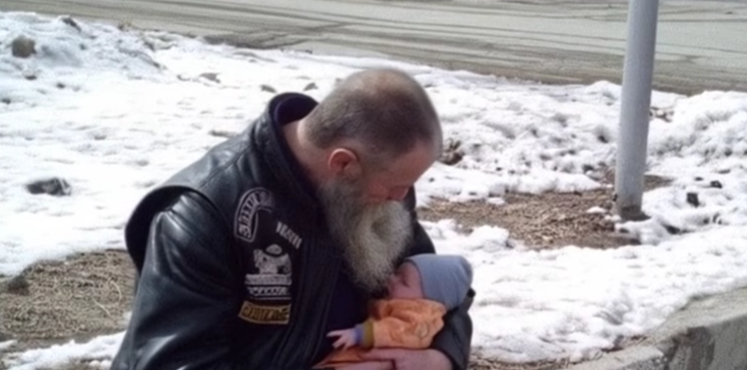
    It was past 3 AM when William “Hammer” Davidson, a 69-year-old biker and Vietnam veteran, stopped at a quiet gas station off I-70 near Kansas City. He had been riding for twelve hours, tired and lost in thought after his brother’s funeral. What started as a simple stop for coffee soon turned into something that would change both his life—and someone else’s—forever. From behind the bathroom wall, he overheard voices that didn’t sound right: men arguing about “prices” and a young girl pleading to be let go. His instincts told him something terrible was happening.

    Moments later, the men emerged, escorting a terrified teenage girl with bruises and fear in her eyes. She looked straight at him and mouthed the words “help me.” In that instant, Hammer knew he couldn’t stay silent. Thinking quickly, he confronted the men and offered them cash under the pretense of a deal, only to get the girl safely away from them. Once the danger passed, he made sure she received protection and immediate care through trusted advocates—people trained to help victims of abuse and exploitation.

    The girl, whose name was Macy, had endured unimaginable hardship. She had been lost in a broken system, with no family to turn to and no one who believed her. For the first time, someone saw her not as a problem or a burden—but as a person worth saving. With the help of support organizations and Hammer’s continued guidance, Macy began to rebuild her life, find healing, and discover hope again. Over time, she went back to school, entered therapy, and learned to ride motorcycles—the same symbol of freedom that had once carried Hammer across the country.

    Years later, Macy is an advocate herself, helping other survivors find safety and strength. She often shares her story publicly, not to relive the pain but to remind people how much difference one person’s courage can make. The biker who refused to look away that night became more than her rescuer—he became her family. Together, they now lead charity rides across the country, raising awareness and funds for at-risk youth. What began as a midnight stop for gas became a story of redemption, bravery, and the power of compassion that changed two lives forever.

  • Corvette Driver Tries to Block Truck — Ends Up Covered in Black Smoke

    Corvette Driver Tries to Block Truck — Ends Up Covered in Black Smoke

    A driver stuck in traffic captured a dramatic road-rage encounter between the drivers of a red Corvette and a Dodge truck. The video shows the truck trying to merge into an exit lane, but the Corvette driver repeatedly blocks him. Frustrated, the Corvette driver rolls down his window and flips the truck driver off, making it clear he has no intention of letting him merge.

    In response, the Dodge driver inches forward, revs his engine, and releases a massive cloud of dark exhaust smoke directly into the Corvette. The plume completely engulfs the sports car, and the man filming can be heard laughing as the cloud drifts away. Once the smoke clears, the Corvette driver appears to give up the fight and finally allows the truck to merge.

    The incident reportedly took place in Tacoma, Washington, on June 28, with both vehicles carrying Washington State license plates. The man who recorded the moment later posted the clip to YouTube, explaining that he noticed the Corvette refusing to let the truck into the lane before the Dodge driver “coaled him with so much smoke you couldn’t even see the driver.”

    The video quickly went viral, gaining more than 553,000 views and over 7,200 shares on Facebook.

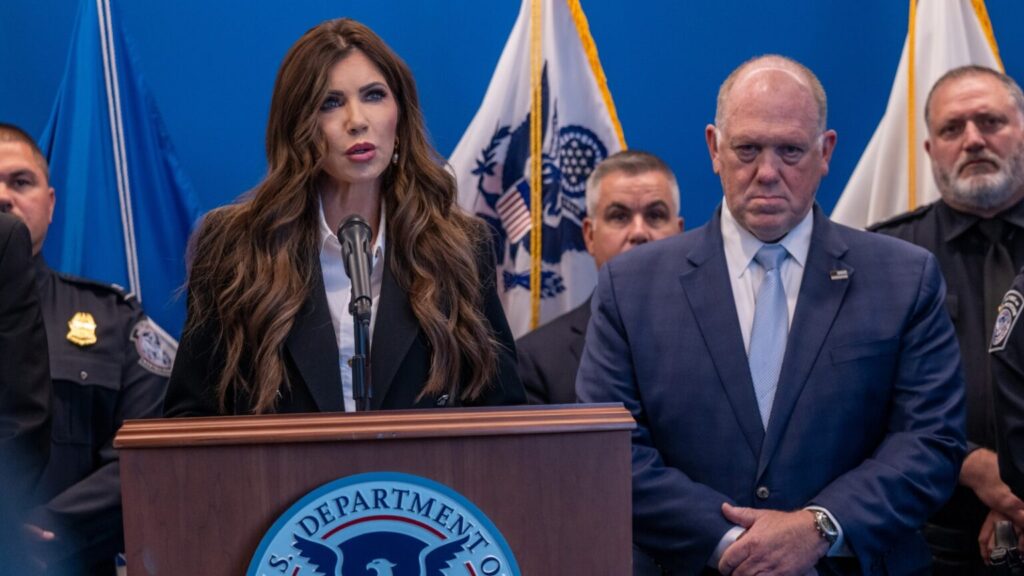
  • ABC Anchor Admits Truth As Trump’s DC Crackdown Yields Big Results

    ABC Anchor Admits Truth As Trump’s DC Crackdown Yields Big Results

    President Donald Trump’s federalization of Washington, D.C., on the heels of declaring a “crime emergency,” was met with mixed reactions, but it has also launched a conversation among residents and members of the media about a subject that, for years, has been hidden in plain view.

    For instance, ABC News anchor Kyra Phillips mentioned on-air hours after Trump’s declaration that she was “jumped” just two blocks away from her Washington, D.C. studio, “within the last two years.”

    Violent crime in the nation’s capital has reportedly dropped since 2023, according to data from the Metropolitan Police Department (MPD) cited by The Washington Post on Monday. Still, Phillips pointed out that multiple alleged incidents have taken place near ABC News’ Washington, D.C., bureau — including two network employees who were reportedly among the victims.

    “We’ve been talking so much about the numbers and yeah, usually that’s how you play devil’s advocate, is you talk about, ‘Oh, well stats say crime is down.’ However, I can tell you firsthand here in downtown D.C. where we work right here around our bureau just in the past six months, you know, there were two people shot,” Phillips said. “One person died literally two blocks down here from the bureau.”

    “It was within the last two years that I actually was jumped walking just two blocks down from here. And then just this morning one of my coworkers said her car was stolen a block away from the bureau,” she continued.

    “So we can talk about the numbers going down, but crime is happening every single day because we’re all experiencing it firsthand while working and living down here,” Phillips continued.

    While violent crime in Washington, D.C., is reportedly down 26% compared to 2024, the MPD’s crime tracker shows there have still been 99 homicides in the city so far in 2025.

    Meanwhile, D.C. Police Commander Michael Pulliam is under investigation over allegations that he manipulated crime statistics, NBC4 Washington reported in July. The department suspended him, but Pulliam has denied any wrongdoing.

    In the first week after the White House assumed control of Washington, D.C.’s police force and deployed federal agents and National Guard troops, the city recorded a modest drop in reported crime but a sharp increase in immigration-related arrests, according to a CNN analysis of government data.

    For the week beginning August 12 — the first full week under federal control — property crimes fell by about 19 percent compared to the week prior, while violent crime dropped 17 percent, based on the most recent Metropolitan Police Department statistics.

    The trends varied by category. Robberies and car break-ins fell by more than 40 percent, while thefts remained flat. Burglary cases rose 6 percent, and assaults with a dangerous weapon increased 14 percent. Two homicides occurred during the period, consistent with recent weeks, though none have been reported since August 13.

    Federal agencies have embedded with local police, assisting in arrests, searches, and warrant executions while patrolling the city in unmarked vehicles, CNN noted further.

    At the same time, immigration enforcement surged. Since August 7, federal officials have arrested about 300 individuals in the district without legal immigration status — more than ten times the typical weekly number of ICE arrests in the city, CNN found.

    During the first six months of Trump’s current term, ICE averaged about 12 arrests per week in Washington, according to data from the Deportation Data Project at the University of California, Berkeley, School of Law.

    Officials told CNN that ICE agents have been accompanying MPD officers and intervening when individuals stopped or questioned are found to be in the country unlawfully.

    In response to CNN’s findings, White House spokeswoman Abigail Jackson stated that the media was attempting to dismiss the “exceptional results” of Trump’s efforts in Washington, D.C.

    “The drops in crime are not ‘moderate,’ they are life-changing for the countless of DC residents and visitors who have not been murdered, robbed, carjacked, or victims of overall violent crime in the last week,” Jackson said. “The priority of this operation remains getting violent criminals off the streets — regardless of immigration status.”

  • Case To Remove Dems Who Fled State Begins At TX Supreme Court

    Case To Remove Dems Who Fled State Begins At TX Supreme Court

    Texas House Democrats made national headlines this summer when they fled the state to stall a vote on a new congressional map that would help Republicans pick up 5 seats in the U.S. House of Representatives.

    Republican Gov. Greg Abbott petitioned the Texas Supreme Court to remove their caucus leader from office.

    Now, that high-stakes case is before the Texas Supreme Court on Thursday (Sept. 4) and could set a precedent for any lawmaker in the future who attempts to flee the state to avoid voting on a measure.

    Abbott touted the court’s decision as a victory, posting on social media that the briefing schedule brings the “ring leader of the derelict Democrats … closer to consequences.”

    The Court has combined Abbott’s lawsuit against Houston Rep. Gene Wu, chair of the House Democratic Caucus, with a similar case brought by Attorney General Ken Paxton, who seeks to oust Wu along with 12 other Democratic members.

    Although Abbott and Paxton initially disagreed over which office had the legal authority to file such suits, Paxton said that he now looks forward to working alongside Abbott to “hold these cowards accountable.”

    On Aug. 3, dozens of House Democrats left Texas to halt the Legislature and block passage of the GOP’s proposed congressional map. The redistricting push came under pressure from President Donald Trump, who has called for adding five Republican seats to bolster the party’s slim House majority ahead of the 2026 midterms.

    As the minority party, their only viable tactic to derail the map is to break quorum—refusing to attend sessions so the chamber lacks the numbers needed to move legislation forward.

    Wu’s attorneys contend that by leaving the state, he is acting in accordance with the will of his constituents, aiming to block the passage of legislation they oppose, the outlet noted.

    Wu “has not died and has not been expelled from the House by the constitutionally prescribed means: a 2/3 vote of the House,” his lawyers said in a brief. “His presence in another state is not a voluntary resignation — as his opposition to this petition makes evident.”

    The Texas Supreme Court is composed entirely of Republicans, with two-thirds of its members initially appointed by Governor Abbott. Among them are two justices — including the chief justice — who previously served as Abbott’s general counsel.

    “They have their own independent authority, of course, but it does put them in a tough political position,” Andrew Cates, an Austin-based attorney and expert on Texas ethics law, told The Texas Tribune in an earlier interview. “They don’t want to be in the position of potentially biting the hand that initially fed them.”

    Texas Republicans also made a big move this week to try and stop this from ever happening again.

    Late on Monday, the Texas House enacted a bill that would punish people who break quorum in the future.

    “In the past, legislators have used quorum breaks to raise political funds, creating concerns that members were benefitting financially while preventing the Texas Legislature from conducting its work,” said state Rep. Matt Shaheen (R-Plano), the author of House Bill 18.

    “Current law does not limit fundraising or expenditures during these unexcused absences, only during the moratorium period during years when we’re in session. This current arrangement creates a financial incentive to break quorum,” Shaheen added.

    During a quorum break, HB 18 would stop lawmakers from raising money. It would fine members up to $5,000 for each donation they accept and the same amount for each donation they make.

    During a quorum break, lawmakers who aren’t breaching the law would still be able to raise money.

    In his closing remarks in favor of the bill, State Rep. Richard Hayes (R-Hickory Creek) elaborated on what Shaheen had said.

    Hayes pointed out three parts of the state constitution.

    He added that the oath of office that lawmakers take requires them to be present at both regular and special sessions, and the constitution gives the Legislature the power to order them to do so.

  • Mayor Arrested After Being Exposed As Noncitizen While Voting For His Own Re-Election

    Mayor Arrested After Being Exposed As Noncitizen While Voting For His Own Re-Election

    Kansas Attorney General Kris Kobach dropped a bombshell Wednesday, announcing election fraud charges against Coldwater Mayor Jose (Joe) Ceballos, just one day after voters handed him another term in office. Ceballos, 54, was charged in Comanche County with three counts of voting without being qualified and three counts of election perjury, non-person felonies that could land him behind bars for more than five years.

    “In large part, our system right now is based on trust. Trust that when the person signed the registration or signs the pollbooks saying that he’s a qualified elector or that he is a United States citizen, that the person is telling the truth,” Kobach said. “In this case, we allege that Mr. Ceballos violated that trust.”

    Kobach said Ceballos is a legal permanent resident but not a U.S. citizen — calling him a citizen of Mexico who never should have been voting in American elections, let alone leading a Kansas town

    Jose Ceballos. (Coldwater, Kansas)

    Kansas Secretary of State Scott Schwab said new tools from the Trump administration helped uncover the alleged fraud. “We now have tools, thanks to the current White House, that we haven’t had in over 10 years,” Schwab said. “That we can check through the SAVE program, to find out if folks end up on our voter rolls. And they could be a legal resident, but they’re not a citizen. We want to make sure that gets clarified.”

    The SAVE program — run by U.S. Citizenship and Immigration Services under the Department of Homeland Security — lets government agencies verify immigration and citizenship status for things like licenses or voter rolls.

    Locals expressed frustration, accusing state leadership of misleading them — including Republican gubernatorial candidate Philip Sarnecki, who shared his reaction on X.

    Kansas is one of eight states requiring proof of citizenship to register to vote, a law Kobach helped pioneer years ago.

    In Coldwater, city leaders scrambled to contain the fallout. City Council President Britt Lenertz said Ceballos called an emergency meeting on Wednesday to address the charges

    “At this time, our focus remains on ensuring that city operations continue to run smoothly and that the needs of our community are met,” Lenertz said. “While the recent allegations involving the mayor are understandably concerning, we will allow the proper legal process to take its course before making any further comments. It’s important that we respect both due process and the integrity of our local government.”

    Coldwater officials later confirmed Ceballos would need to prove his citizenship to keep his seat. City Attorney Skip Herd said Ceballos is a green card holder who’s been registered to vote since 1990 — despite never being a U.S. citizen.

    “He’s been a registered voter since 1990. He applied for citizenship in February of this year, and through that, raised the issue of whether he was a legal citizen,” Herd said.

    Under Kansas law, candidates for city office must be eligible voters and residents, though home rule gives cities some leeway. But as the case unfolds, the small Kansas town finds itself at the center of a national flashpoint over election integrity.

  • Leading Republican Gets Brutal Re-Election News After Repeatedly Backs…

    Leading Republican Gets Brutal Re-Election News After Repeatedly Backs…

    Susan Collins Seeks Re-Election In High-Stakes 2026 Midterm Race

    Main Republican Sen. Susan Collins reaffirmed this week that her “position in the middle of American politics” is why she will run for re-election in 2026, setting up a high-stakes Senate race in the midterms.

    During a 30-minute phone call with Punchbowl News in Washington, Collins, 72, said again that she plans to run for a sixth six-year term.

    “I still plan to run for re-election,” she said, despite frustrations with current Senate dynamics and its increasingly irregular budgeting and appropriations process. “People who are in the middle are tending to leave. They’re tending to retire.”

    Collins, who is the head of the Senate Appropriations Committee, said that she is the only Republican in the U.S. Senate and U.S. House of Representatives from the six New England states of Maine, New Hampshire, Vermont, Massachusetts, Connecticut, and Rhode Island. This is a big change from when she joined the Senate in 1997, when the region was more bipartisan.

    Collins said, “I think that was much healthier. It was a much less polarized era, and it’s important to have voices of people who want to solve problems. I’m not one who tends to rant and rave on certain news shows. Instead, I like to bring people together to search for common ground.”

    “What we need in this country is for those that are in the center to be as riled up and involved as those on the far left and the far right,” Collins said. “It is hard to get things done.”

    The race will be closely watched.

    Collins got some troubling news recently about her reelection in Maine.

    Collins, who is considered the most centrist Republican in the Senate and has been popular in the state for a long time, has won tough races for Republicans in the past.

    Experts view the race as highly competitive ahead of the 2026 midterms, attracting significant investment from both major parties.

    A new Cygnal survey released on Monday showed Collins behind a generic Democratic candidate. This suggested that extending Affordable Care Act (ACA) subsidies could help her win over Mainers. Politico was the first to report on the poll.

    According to the survey, 41% of those who answered said they would vote for Collins, while 49% said they would vote for a Democrat. The report said that she “starts behind but beats expectations.”

    If the Republican senator votes to extend the tax benefits, the election would get closer.

    “Collins consistently overperforms the GOP baseline, especially among college-educated women (+8 net), voters over 55 (+6), and swing voters (+10),” the polling memo reads.

    The ACA, which was President Barack Obama’s main program, gave Congress the power to make those credits. They let Americans with low incomes sign up for health insurance coverage. They were expanded in 2021 to cover more Americans during the pandemic.

    If Congress doesn’t do anything, they will probably run out by the end of the year. As part of a deal with moderate Democratic senators to reopen the government, Senate Republicans are going to vote on the tax credit.

    The poll revealed that 43% of people would vote for Collins if he votes to prolong the tax credits, while 45% would vote for the Democratic candidate. That still gives the Democrats a small edge, but it indicates that the battle is close.

    CBS News stated that Collins favors their extension but thinks they require “reform.”

    There were no questions concerning individual candidates in the survey. Mills and Platner are in a heated primary race on the Democratic side to see who will oppose Collins. Collins hasn’t officially started her campaign yet, but she has said she plans to run again.

    Polls have shown that the race is quite close.

    A poll from the Maine People’s Resource Center last month showed Collins ahead of Mills by four points (46% to 42%), and Platner ahead of Collins by four points (45% to 41%).

    It asked 783 Maine voters from October 26 to 29, and the results could be off by as much as 3.5 percentage points.

  • My Dog Brought Me My Late Daughter’s Sweater the Police Had Taken – Then He Led Me to a Place That Stopped Me Cold

    My Dog Brought Me My Late Daughter’s Sweater the Police Had Taken – Then He Led Me to a Place That Stopped Me Cold

    Grief has a strange way of blurring time, turning days into a fog you move through without direction. Three weeks after losing my daughter in a tragic accident, I was barely functioning—moving from room to room like a shadow in my own home. Then, on a quiet, misty morning, something happened that pulled me sharply out of that numbness. Our dog Baxter began scratching frantically at the back door, more urgently than I had ever seen. And when I opened it, he was holding something I never expected to see again—my daughter Lily’s yellow sweater, the one the police had taken as part of the accident investigation. In that instant, confusion, disbelief, and a surge of emotion collided, and Baxter’s determined gaze made it clear he wanted me to follow him.

    In those weeks after the accident, memories filled every corner of our home. Lily’s room stayed exactly the way she left it—her colored pencils scattered on her desk, her sunflower drawing half-finished, and the fairy lights she loved still glowing softly in the evenings. My husband Daniel, recovering physically and emotionally, could barely speak without breaking down. The silence in our house wasn’t peaceful; it was heavy, stretching from room to room like a reminder of everything we had lost. That morning, when Baxter dropped the yellow sweater at my feet, it felt impossible. I had watched the officers collect Lily’s belongings, each item sealed away. How could Baxter have found something meant to be locked up far from home?

    When Baxter dashed into the foggy backyard and slipped through a small gap in the fence, something in me knew I had to follow. He led me across the empty lot behind our house, straight toward an old shed we hadn’t used in years. Inside, the air was dusty and still, but what I found buried in one corner stole my breath. Nestled on a pile of familiar clothing—pieces I hadn’t even realized were missing—was a mother cat nursing three tiny kittens. As I knelt beside them, I recognized each sweater and scarf in the nest. These were Lily’s things, carefully placed, warm, and soft. In that moment I understood: before she passed, Lily had been secretly caring for this cat, building a safe little refuge for her growing family. Baxter had simply brought me back to what Lily had started.

    Bringing the cats home breathed a small but meaningful warmth back into our lives. Daniel, broken by grief, softened when he saw them settled in the living room, their gentle purring filling a space that had felt painfully empty. Caring for them—feeding them, keeping them warm, watching them grow—slowly reminded us how love continues even when everything else feels lost. The kittens became tiny reminders of Lily’s kindness, each heartbeat echoing the tenderness she carried into the world. And for the first time since the accident, we found ourselves smiling at something real. Grief didn’t disappear, but it changed shape, making room for the quiet comfort Lily had unknowingly left behind. Through our dog’s instinct and our daughter’s gentle secret, hope found its way back into our home.