Category: Uncategorized

  • From Childhood to History: The Story Behind This Influential Figure

    From Childhood to History: The Story Behind This Influential Figure

    The life of a woman who later became widely known in U.S. history began with a childhood marked by instability. Born in Michigan in 1956, she experienced early challenges after her father entered the correctional system and passed away during his sentence. She and her sibling were raised by their grandparents, though the home environment was often difficult and unpredictable.

    Accounts from later years describe a household that lacked consistency, contributing to long-term emotional struggles. In her early teens, she faced several hardships that shaped the direction of her life. She became pregnant at a young age and ultimately chose adoption for her child, hoping to provide opportunities she felt she could not offer at the time.

    After leaving school, she attempted to earn a living through various forms of work while trying to establish independence. During the 1970s, she encountered several legal issues involving minor offenses, reflecting the challenges she faced in maintaining stability. Additional personal losses and emotional difficulties further influenced her circumstances. She eventually moved to Florida, seeking a fresh start, but her personal struggles continued.

    Over the following years, she became involved in a series of legal cases that brought her significant national attention. Aileen Wuornos, whose life has been widely discussed in documentaries, books, and films, became the focus of public examination regarding how early adversity, lack of support, and long-term emotional distress can contribute to complex behavioral patterns later in life. Her story is frequently referenced in discussions about the impact of early-life trauma and the importance of accessible mental-health resources.

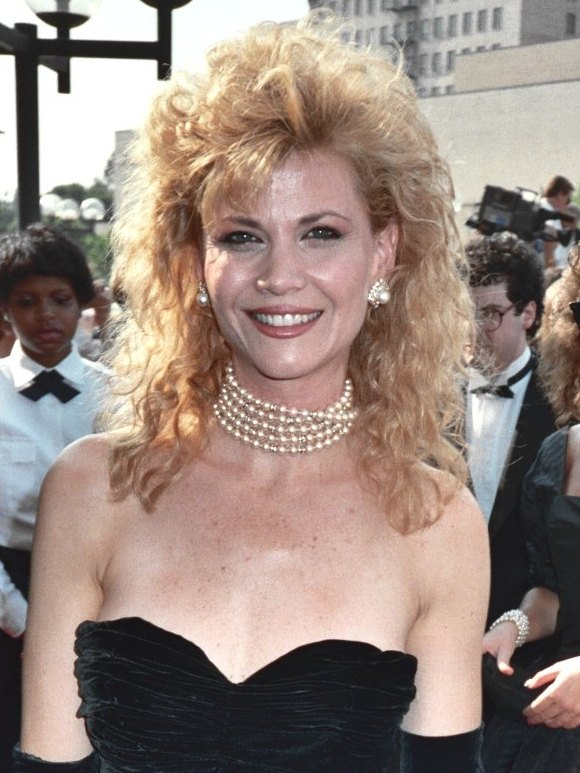
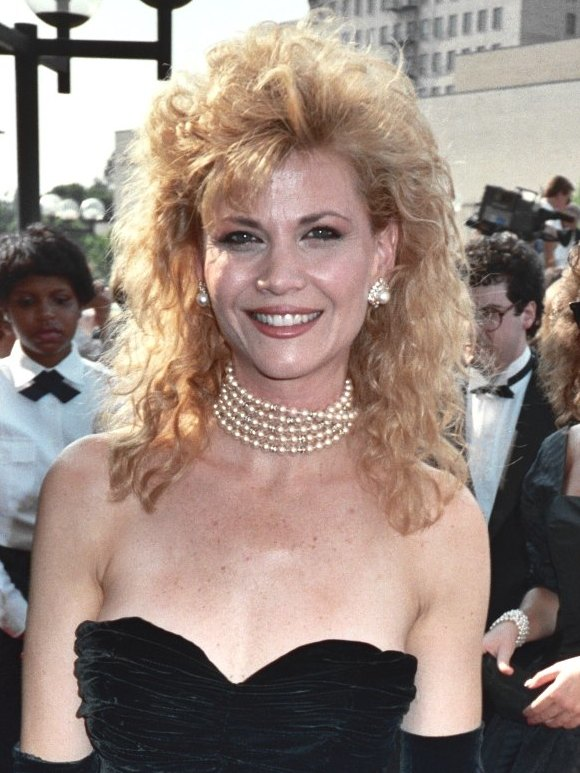
  • Hollywood Just Lost One Of Its Kindest Souls—The Untold Story Of Markie Post’s Final Years

    Hollywood Just Lost One Of Its Kindest Souls—The Untold Story Of Markie Post’s Final Years

    There are certain faces from television history that feel like home—warm, familiar, timeless. Markie Post was one of those faces. For anyone who grew up watching Night Court, The Fall Guy, or even later shows like Chicago P.D., Markie wasn’t just a performer on a screen. She was that spark of kindness, that polished confidence, that mix of humor and sincerity that made you feel like everything in the world could still turn out alright.

    When she passed away in 2021, the news felt like a sudden silence. Even people who hadn’t followed her life closely for years remembered what she meant to them. Her characters were comforting. Her humor was effortless. Her presence glowed. And behind all the fame and the laughter, her real life was marked by strength, grit, and a kind of humility rare in Hollywood’s constant glare.

    When Melissa Joan Hart Shared Her Heartbreak With the World

    The first message that captured just how deeply Markie was loved came from Melissa Joan Hart. They had worked together on Holiday in Handcuffs, playing mother and daughter. But when Melissa wrote her tribute, there was nothing “work-related” about her grief. It was personal.

    “I’m heartbroken to lose an angel here on earth,” she wrote, the words almost trembling off the page. “My dear friend and TV mother Markie Post is finally at rest after a long hard battle with cancer. I can’t describe what she meant to me—the friendship we had, the kindness she showed me. Love you so much, Markie. You will be forever missed.”

    Her message hit millions of fans like a cold wind. Many had no idea Markie had been fighting cancer at all. She’d kept it quiet, choosing dignity over publicity, focusing on work, family, and the parts of life that mattered most.

    Remembering a Woman Who Made Hollywood Feel a Little Kinder

    People who followed Markie throughout her career often describe the same impressions: kindness, strength, humor, confidence. She had this soft glow about her—a natural warmth that made her characters memorable without ever trying too hard.

    Fans wrote messages like:

    “She always seemed so strong and confident. I never knew she was fighting cancer.”

    “She was such a great actress. I’m so sad to hear she’s gone.”

    “Rest in peace, Markie… and thank you for everything you gave us.”

    You could tell these weren’t just obligatory condolences. They came from people who felt like they’d lost a part of their childhood, their comfort TV, their memories.

    How an American Girl From California Found Her Way Into the Living Rooms of Millions

    Markie Post didn’t grow up with dreams of fame. Born in 1950 in Palo Alto and raised in Walnut Creek, California, she came from what most would call an intellectual household. Her father was a nuclear physicist, her mother a poet. Creativity and intelligence were part of the everyday air she breathed.

    Her real name was Marjorie, but as her siblings struggled to pronounce it, “Markie” naturally stuck—and became the name millions would one day recognize.

    In high school, Markie was a cheerleader. She later studied physics in college, more out of respect for her father than her own passion. But physics didn’t quite love her back.

    “I was intimidated by my father,” she once admitted. “He was the dearest man, but he’d say, ‘It’s so easy!’ while helping me with equations. That didn’t make it easy for me.”

    Her honesty about her early academic struggles was refreshing, especially coming from a woman who would one day shine so brightly in a different world.

    Before the Spotlight: Markie’s Humble First Job in Show Business

    Markie’s early career in entertainment wasn’t glamorous. Long before she became a familiar face on television screens, she worked behind the scenes on game shows—researching questions, organizing materials, absorbing the mechanics of production.

    Her job on Split Second and Double Dare gave her what she called “the best education I ever had.”

    “I learned more researching that game show than I did in four years of college,” she joked during an interview in the 1980s.

    But those early days gave her more than skills—they gave her a foot in the door.

    The Break That Changed Everything

    Her first real break came with guest roles on series like Hart to Hart and Cheers. She wasn’t a household name yet, but producers quickly noticed something special—an effortless charm with just enough spark to make viewers instantly like her.

    In 1977, she made the full switch to acting. Then came The Fall Guy, where she portrayed Terri Michaels. This was the show that truly launched her. She became popular, admired, and recognizable.

    But even then, Markie wanted more than what fame alone offered.

    “I’m very functionary on that show,” she once said. “I’m like the tape at the beginning of Mission: Impossible. Sometimes they bring me into the caper and that helps.”

    She wanted to stretch, to dig deeper, to play someone with layers. And not long after, she got her chance.

    The Role That Made Markie Post an Icon

    In 1985, after a standout guest appearance, NBC producers asked her to join Night Court as Christine Sullivan—the sharp, kindhearted public defender with the perfect balance of strength and humor.

    Fans fell in love with her almost instantly.

    By the show’s third season, she was one of the brightest stars on TV. Her knack for timing, her endearing sincerity, and her undeniable beauty made her unforgettable.

    “People are crazy about our show,” she told the Courier-Post in 1986, almost shyly.

    She wasn’t just talented—she was disciplined. She worked harder than most people ever realized, eventually earning around $400,000 a year at her peak on the show.

    Yet she never bragged. She never presented herself as larger than life.

    In her own words:

    “I was like Wile E. Coyote—running off a cliff and not looking down. As long as I didn’t look down, I could just keep going.”

    The Beauty She Never Saw in Herself

    Markie’s beauty was part of her fame, but she never let it define her. She often insisted:

    “I’m no siren. I see prettier girls than me in the grocery store.”

    Fans would laugh at that modesty—because on-screen, Markie was captivating. Her eyes sparkled. Her smile lit up scenes. She had the kind of presence that needed no soundtrack, no dramatic lighting. She simply was.

    She once said she carried both her parents’ personalities:

    “My passionate, emotional side is from my mother. My logic and precision are from my father.”

    That combination—warmth and sharpness—became her trademark.

    Her Personal Life: A Hollywood Love Story That Actually Lasted

    Long before Hollywood became known for short marriages and quick splits, Markie and Michael A. Ross showed that love could last.

    They met in the early 1980s in an acting class. They married soon after and built a life in Toluca Lake, near Bob Hope’s residence. Their home became a haven of creativity, laughter, and stability in an industry where stability rarely lasted.

    Together, they raised two daughters—Kate and Daisy. They were a tight-knit family, the kind that supported each other’s careers and celebrated life’s small victories.

    In 2011, when asked about their long marriage, Markie said something beautifully real:

    “We just decided that no matter what, dead or alive, we’re getting to the end of our lives together. Life won’t always be wonderful. You’ll get bored, annoyed, tired. But if it’s wonderful 80 percent of the time, you’re lucky.”

    And they stayed lucky for 39 years—right up until the very end.

    The Battle She Fought in Silence

    Markie was diagnosed with cancer years before her passing. But she didn’t want pity or headlines. She chose privacy, resilience, and above all—normalcy.

    Her family later revealed that she saw her treatment as her “side job.” Even while undergoing chemotherapy, she continued working. She appeared in The Kids Are Alright, showing up with the same professionalism and grace she’d always carried.

    According to Deadline, she remained active in her career until she simply couldn’t anymore.

    Her family shared a tribute that captured her perfectly:

    “Our pride is in who she was as a person—someone who baked elaborate cakes for friends, sewed curtains for first apartments, and showed us how to be kind in a harsh world.”

    She passed away on August 7, 2021—just shy of her 71st birthday.

    The Voices That Rose After She Was Gone

    After her passing, tributes poured in from all corners of Hollywood—and from everyday viewers whose lives she’d unknowingly touched.

    Melissa Joan Hart’s grief was public and raw.

    Fans wrote messages filled with memories from decades past.

    And thousands simply said:

    “Thank you, Markie.”

    A Legacy That Still Feels Alive

    Markie Post was more than an actress. She was proof that grace can survive fame. That kindness can thrive in an industry known for competition. That beauty doesn’t need arrogance. That humor can be gentle. And that real strength—true strength—is quiet, patient, and softer than people expect.

    Her legacy lives on in every rerun, every fan memory, every tribute posted online, and every woman in Hollywood who watched her and thought:

    “I want to be like her.”

    She leaves behind a husband who adored her, daughters she inspired, friends who cherished her, and fans who will never forget what she brought into their homes.

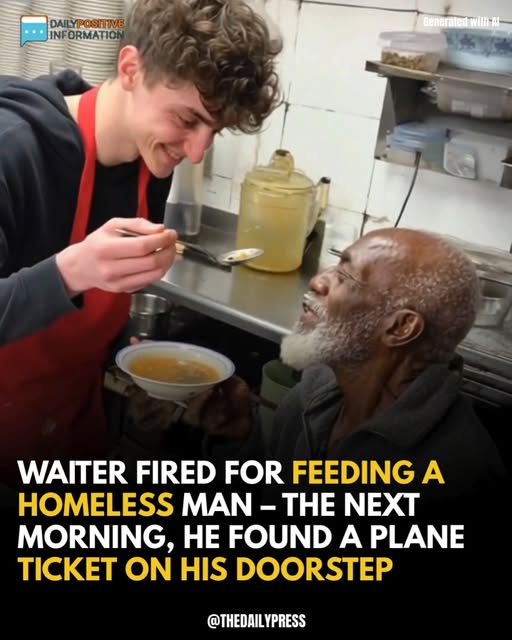
  • Waiter Fired For Letting Homeless Man Eat Indoors — Next Morning, A Plane Ticket Shows Up At His Door

    Waiter Fired For Letting Homeless Man Eat Indoors — Next Morning, A Plane Ticket Shows Up At His Door

    Have you ever had one of those days where the world seems hell-bent on breaking you? Where gravity feels a little heavier, and every breath is a reminder of how much air you don’t have?

    I was eighteen, but I felt like I’d aged a decade in the last two years. Life has a way of kicking you when you’re down, and then stomping on your ribs just for good measure.

    I worked at Callahan’s, a tiny, family-owned Italian place on the edge of a rusting industrial town in Ohio. It wasn’t the kind of place you saw on food blogs. It was the kind of place with red checkered tablecloths that were actually vinyl, plastic grapes hanging from the ceiling gathering dust, and a perpetual smell of garlic, floor wax, and damp coats.

    And before you get any ideas about a glamorous coming-of-age story, I wasn’t even a waiter.

    Management thought I looked “too green” for customer service. Too skinny, too quiet, too much like a kid who was afraid of his own shadow—which, to be fair, I was. So I was stuck in the back, the invisible cog in a greasy machine. I spent my shifts scraping gum off chairs, bussing tables until my back screamed, and scrubbing plates until my fingers pruned and bled around the cuticles from the industrial soap.

    I didn’t get tips. Just minimum wage and the constant, nagging hope I wouldn’t get yelled at for “standing around” while I was catching my breath.

    But I didn’t complain. Not once.

    After my parents died in a car accident—a slick patch of ice on a Tuesday night that turned my life upside down—I inherited their old house and the mess they left behind. It turns out that grief doesn’t stop the mortgage company from sending letters. The debt was crushing, a physical weight that sat on my chest every time I tried to sleep. The house was a mausoleum of memories, filled with half-finished projects my dad would never complete and books my mom would never read.

    I was barely staying afloat, one paycheck away from losing everything. So every dollar mattered. Every hour on the clock was a lifeline.

    Source: Unsplash

    The Night That Changed Everything

    Until that fateful night that cut straight to the bone.

    It was November. The kind of November that bites. The wind howled behind the restaurant like it had teeth, rattling the heavy metal door of the loading dock. I was taking out the trash, the bags in my arms already soaked through with rain and kitchen slop. I pulled my hoodie tighter, muttering curses under my breath as the cold seeped into my bones.

    The alley behind the building always smelled like sour grease and wet cardboard, a perfume of despair. But that night, something was different.

    Something moved near the dumpster.

    I stopped cold, my grip tightening on the slick black plastic.

    There, half-buried under a pile of damp blankets and cardboard boxes, was a man. He looked barely conscious, knees pulled to his chest, shaking violently. His clothes were rags, thin layers that offered no protection against the freezing rain. His lips were tinged blue, eyes fluttering open like it physically hurt to do so.

    “Sir?” I stepped closer, cautious but concerned. “Are you okay?”

    He tried to speak, but only a croak came out.

    “No… just cold… so cold…”

    I stood there for a second, torn between the paralyzing fear of what would happen if someone saw me—if Mr. Callahan saw me—and the overwhelming, human instinct not to let this man freeze to death five feet from a kitchen full of heat and leftover soup.

    Screw it.

    “Come on,” I said, pulling him up carefully. He was lighter than I expected, frail under the layers of grime. He smelled of rain and sickness. “This way. Quietly.”

    He could barely walk. I took him through the back door, moving fast, my heart thudding against my ribs like a trapped bird. I could already hear my boss’s voice in my head—“You don’t bring street rats in here, Derek! We run a respectable business!”

    I guided him to the supply closet near the break room. It was cramped, packed with boxes of paper towels and extra napkins, smelling of bleach and dust. But it was warm. And it was hidden.

    I grabbed a clean towel from the stack, wrapped it around his shivering shoulders, then ran to the kitchen. I moved like a ghost, dodging the line cooks who were busy shouting orders. I filled a bowl with leftover minestrone soup—thick, hot, and hearty—and grabbed a few rolls of bread from the warmer.

    When I handed it to him, his hands trembled so badly he almost dropped the spoon.

    “T-Thank you,” he whispered, the steam from the bowl hitting his face. And then, as he took a sip, he started crying—silent, shaking sobs between spoonfuls that broke my heart.

    “My name’s Arthur,” he managed to say between bites. “I used to play piano. Can you believe that? My fingers used to fly.”

    I looked at his gnarled, freezing hands. “I believe you, Arthur. You can stay here tonight,” I told him, my voice low. “Just until morning. The morning shift doesn’t come in until 9.”

    He nodded, eyes shining with a gratitude that made me feel small.

    But I wasn’t even two steps out of the closet when I heard it.

    The Confrontation

    “What the hell is going on back here?”

    I turned, and there he was. Mr. Callahan.

    He was a man built like a barrel, with wide shoulders and a face that was always red, like a volcano seconds from eruption. He stood at the end of the hallway, hands on his hips. His eyes zeroed in on the open supply closet door, then snapped back to me.

    “Is that—” he stormed past me, yanked open the door.

    Arthur cowered, pulling the towel tighter, the soup sloshing onto his lap.

    “You brought a homeless man into my restaurant?!” Callahan roared. “Are you insane?!”

    “Please,” I said, stepping between them, holding my hands up. “He was going to freeze. It’s thirty degrees out there. I was just trying to—”

    “I don’t care!” he shouted, spit flying. “This is a business, not a shelter! Do you know the health code violations? Do you know the liability? If a customer saw this, we’d be ruined!”

    The shouting echoed through the hallway. The staff stopped what they were doing. Even the clatter of dishes from the kitchen fell silent.

    “Fire him,” Callahan barked, jabbing a thick finger at me. “Right now. Get him out.”

    My heart dropped into my stomach.

    “Wait—Mr. Callahan, come on,” said Mark, the floor manager. Mark was a good guy, quiet, always tried to be fair. He stepped forward from the kitchen doorway. “He didn’t mean any harm. He was just trying to help. It’s freezing out there. The kid has a good heart.”

    “I don’t pay him for his heart! I pay him to clean plates!” Callahan barked again, not even looking at Mark. “And get that bum out of here before I call the cops!”

    Mark looked at me. His face was pale. His lips parted like he wanted to say something else, to fight for me… but he had a mortgage too. He had kids in college.

    “I’m sorry, Derek,” he whispered, his voice heavy with defeat. “You’re done.”

    And just like that, I lost my job. It was the only thing holding my world together, the only thing keeping the wolves from the door, and it snapped.

    Source: Unsplash

    The Long Walk Home

    I walked home in the rain that night.

    I didn’t even bother with the bus—what was the point of spending the $2.50? I needed the walk. I needed to feel the cold sting on my face to remind myself I was still here. Still breathing, even if barely.

    When I got home, my soaked shoes left muddy prints on the cracked tile floor of the entryway. The silence in that old house was louder than any shouting I’d faced earlier. It was a heavy, suffocating silence. I peeled off my wet hoodie and slumped into the kitchen, where a stack of unopened mail waited on the table like a threat.

    One envelope sat right on top, marked URGENT in red ink.

    I already knew what it was before I opened it. Another payment due. A final notice of foreclosure intent. One I couldn’t make. Not now, not ever, if something didn’t change.

    I sat down at the kitchen table, head in my hands, and just… let it crash over me. All of it. The debt, the job, my parents’ ghost still clinging to every room in that house. I felt like I was drowning on dry land. I looked around the kitchen where my mother used to bake blueberry muffins, where my father used to drink his coffee and read the paper.

    “I failed you,” I whispered to the empty room. “I lost the house.”

    I didn’t sleep much that night. I stared at the ceiling, counting the cracks in the plaster, wondering how long it takes to freeze to death if the heating gets cut off.

    The Envelope on the Porch

    But when I finally pulled myself off the couch the next morning, eyes gritty and swollen, and opened the front door to check the mailbox… I stopped.

    There was something on my doormat.

    A thick, sealed manila envelope. No name. No return address. Just sitting there, dry, as if the storm hadn’t touched it.

    I looked around. The street was empty. The morning fog was still clinging to the pavement. Frowning, I picked it up. It was heavy.

    I tore it open right there on the porch.

    Inside was a plane ticket.

    One way. To New York City.

    There was also a roll of crisp bills—hundreds, maybe thousands—wrapped in a rubber band. And a folded piece of paper.

    My hands shook as I opened the note. The handwriting was neat, precise.

    “Derek,

    What you did yesterday showed the kind of man you are. You didn’t lose your job — you outgrew it. Integrity is expensive, and you paid the price without blinking. I have a friend who manages one of the most prestigious restaurants in Manhattan. I told him about you. He agreed to hire you as a trainee. This cash is for a start. Go. You have a future much bigger than this town.

    Mark.”

    Mark?

    Mark—as in the same manager who fired me? The guy who stood there and let Callahan kick me out? He must have come by in the middle of the night. He must have dipped into his own savings for this.

    I sat on the porch step, stunned. The wind picked up the edge of the envelope, fluttering the plane ticket, but I didn’t move. My eyes burned, and I let them.

    For the first time in years, I cried.

    Not because I was broken… But because someone, finally, believed I was worth saving. Someone saw me.

    And just like that, the door I thought had slammed shut the night before had led to something else entirely. A fire escape.

    A beginning.

    Source: Unsplash

    The City of Lights and Shadows

    I flew to New York the next day. The plane touched down just after dawn, the city skyline rising out of the mist like a jagged crown.

    I’d never been on a plane before. I’d never even left my home state. But there I was—18 years old, one backpack filled with everything I owned, a wad of cash I was too scared to count in public, and a job I didn’t dare believe was real.

    I took the subway into Manhattan. The noise was a physical assault—the screech of metal wheels, the hum of voices in a dozen languages, the buskers playing drums on plastic buckets. It smelled of ozone and hot pretzels and urine. It was terrifying. It was electric.

    The address Mark gave me led to a building in Tribeca. The Gilded Lily.

    It was… massive.

    I stood outside the heavy oak doors for ten minutes, smoothing down my shirt, trying to wipe the travel dust off my shoes. I looked at my reflection in the window. I looked like a kid. A lost kid.

    I pushed the doors open.

    Inside, crystal chandeliers hung from the ceiling like frozen fireworks. Floors so polished I saw my reflection in them. Waiters in tailored uniforms glided across the room like ballet dancers, balancing silver trays with an elegance that seemed impossible. It felt more like a palace than a place to eat.

    And me?

    I stood there in borrowed dress shoes that pinched my toes, heart thudding like a drum against my ribs.

    “Can I help you?” a hostess asked, looking me up and down with a skepticism that made me want to shrink.

    “I’m here to see Julian,” I said, my voice cracking. “Mark sent me.”

    Her expression changed instantly. “Oh. Wait here.”

    Moments later, a sharp-dressed man with silver hair and the posture of a general walked toward me. He moved with a fluidity that commanded attention without demanding it.

    “Derek, right?”

    “Yes, sir.”

    He looked me up and down, not with judgment, but with assessment. He checked my fingernails. He checked my shoes. He checked my eyes.

    “I’m Julian. Mark told me you were green but worth the gamble. He said you have integrity. In this city, talent is cheap, but integrity is rare.”

    “I… I’ll work hard,” I managed to say. “I won’t let you down.”

    He raised an eyebrow. “Good. Because this place doesn’t slow down. We serve senators, celebrities, and people who can ruin your career with a single tweet. You give me one reason to regret this, and you’re out. Understand?”

    “Yes, sir.”

    “Start in the back. You have to earn the floor.”

    The First Winter

    The first six months were a blur of exhaustion and homesickness.

    New York in winter is not like the movies. It’s grey slush at the crosswalks and wind that tunnels through the avenues like it’s hunting you. My apartment in Queens was a fourth-floor walk-up with a radiator that hissed and banged but produced no heat. I shared it with three other guys—a line cook, a taxi driver, and a jazz musician who practiced at 3 AM.

    Christmas Eve was the hardest.

    The restaurant was closed. My roommates had all gone home to their families or were working parties. I was alone in the apartment, wrapped in a blanket, eating a bodega sandwich.

    I scrolled through social media on my cracked phone. I saw pictures of people from my high school getting married, having babies, celebrating in warm living rooms. I felt an ache in my chest that was so sharp I almost couldn’t breathe.

    I thought about the house in Ohio. I had used Mark’s money to pay the back mortgage, but I had to rent it out to keep it. I was a landlord to my own childhood home, living like a pauper in a city of kings.

    I almost packed my bag right then. I almost went to the bus station.

    But then I looked at the little notepad I kept by my bed. It was filled with notes on wine pairings, French service terms, and napkin folds. I turned to the first page, where I had taped Mark’s note.

    You have a future much bigger than you think.

    I closed my eyes. I ate my sandwich. And I stayed.

    Source: Unsplash

    The Broken Glass

    The real test, however, wasn’t the loneliness. It was the fear of failure.

    Two months later, on a busy Friday night at The Gilded Lily, I made a mistake. A big one.

    I was running a tray of expensive red wine—a vintage Bordeaux that cost $400 a bottle. I was moving through the crowded dining room when a customer backed his chair out without looking.

    I swerved. My foot caught the edge of a rug.

    Smash.

    The sound silenced the room. Red wine exploded across the pristine white tablecloth of Table 6. Glass shattered everywhere. The customer, a wealthy investment banker, jumped up, shouting about his suit.

    I froze.

    Flashbacks of Mr. Callahan roared through my head. You idiot! Get out! You’re fired! I stood there, trembling, waiting for the screaming to start. I waited for Julian to storm over and throw me out on the street.

    Julian did walk over. He moved calmly through the chaos. He signaled two busboys to clean the mess. He spoke quietly to the customer, offering to pay for the cleaning and comping the meal.

    Then he turned to me.

    I braced myself. “I’m sorry,” I whispered. “I’ll pack my things.”

    Julian looked at me, confused. “Why?”

    “Because… I ruined it. I cost you money.”

    Julian sighed. He put a hand on my shoulder—not to shove me, but to steady me.

    “Derek, look at me.”

    I looked up. His eyes weren’t angry. They were serious, but calm.

    “We are not saving lives here,” Julian said. “We are serving dinner. It is just wine. It is just glass. Did you drop it on purpose?”

    “No, sir.”

    “Did you try to save it?”

    “Yes, sir.”

    “Then go to the back, clean yourself up, get a fresh apron, and get back on the floor. Mistakes happen. Panic is a choice. Do not choose panic.”

    I stared at him. This was leadership? This wasn’t fear?

    “Go,” he said gently.

    That night, I didn’t just learn how to carry a tray. I learned how to be a leader. I learned that fear creates mistakes, but confidence fixes them.

    The Search for Arthur

    Years passed. I moved up the ranks. I became the General Manager. I had money in the bank. I had a nice apartment.

    But there was a loose thread.

    One night, sitting in my office at The Gilded Lily, I hired a private investigator back in Ohio. It cost me a week’s salary, but I needed to know.

    I wanted to find Arthur.

    I wanted to tell him that the bowl of soup I gave him hadn’t been for nothing. That his suffering that night had launched my life.

    Three weeks later, the PI called me.

    “I found him,” the voice said. “Arthur Penhaligon.”

    “Is he… is he okay? Can I send him money?”

    There was a pause.

    “He passed away, Derek. Two years ago. Pneumonia.”

    My heart sank.

    “But,” the PI continued, “I found out something else. He wasn’t just a homeless guy. He was a music teacher for thirty years. He lost his mind a bit after his wife died, stopped paying bills, ended up on the street. But the shelter records say that a few years ago, someone gave him a heavy winter coat and a wad of cash. He used it to get into a halfway house for a few months. He spent his last year teaching kids at the center how to play piano.”

    I gripped the phone. The cash. Mark.

    Mark had gone back. Mark had finished what I started.

    I hung up the phone and cried. Not out of sadness, but out of a fierce, burning resolve. Arthur didn’t die in that alley. He died teaching music. Because we tried.

    The Shark and the Dream

    When I finally decided to open my own place, the investors circled like sharks. I had the reputation now. I was the “Boy Wonder” of the New York restaurant scene.

    One meeting stands out.

    I was sitting in a glass-walled conference room with a venture capitalist named Sterling. He was offering me two million dollars. It was enough to build my dream restaurant three times over.

    “I love the concept,” Sterling said, leaning back in his leather chair. “upscale comfort food. Very trendy. But I have some notes on the business plan.”

    “Okay,” I said.

    “This ‘Community Hour’ you have listed. Where you open the back door from 4 to 5 PM for the homeless? No. Absolutely not.”

    “It’s non-negotiable,” I said.

    Sterling laughed. “Derek, be serious. You can’t have bums lining up next to a place where people pay fifty dollars for a steak. It ruins the brand. It kills the property value.”

    “The brand,” I said, standing up, “is hospitality. True hospitality. Not just for the people who can afford it.”

    “You’re being naive. You take my money, you play by my rules. No free soup. No back door charity.”

    I thought about the debt I used to have. I thought about the fear of poverty. Two million dollars could fix everything forever.

    But then I thought about Arthur shivering in the closet. I thought about Mark handing me that envelope.

    “Then I don’t want your money,” I said.

    Sterling looked shocked. “You’re walking away from two million dollars?”

    “I’m walking away from a bad partner,” I said. “Keep your money. I’ll find another way.”

    I walked out. I didn’t have the funding yet, but I had my soul.

    The Reunion

    I hadn’t heard from Mark in a long time. Life moved fast in the city, a blur of seasons and shifts. I sent him Christmas cards, updates, checks to pay him back (which he never cashed), but he was a man of few words. I figured he had his own path to walk.

    But on a rainy Tuesday afternoon, like something out of a movie, I saw a familiar silhouette at the front desk.

    It was raining hard, a relentless downpour that turned New York gray.

    A man stood there, shaking off a wet umbrella. Gray blazer. Shoulders a little more slumped than I remembered. Kind eyes that looked tired, etched with the lines of hard years.

    He looked at the opulent dining room, clearly hesitating, wondering if he was in the wrong place.

    “Reservation for Mark,” he said to the hostess, his voice quiet.

    I froze. I was standing near the bar, reviewing the night’s wine list. I looked up.

    It was him.

    The years stripped away. I wasn’t the General Manager in a tailored Italian suit. I was the kid in the hoodie, soaking wet, holding a plane ticket.

    I smiled. A real, genuine smile that felt like sunshine breaking through the clouds. I handed the wine list to the sommelier and walked over. I straightened my jacket, took a deep breath, and stepped into his line of sight.

    “Right this way, sir.”

    Mark turned, confused at first. He saw a man in a tailored suit, confident, commanding the room. He saw the expensive watch, the polished shoes.

    Then his eyes landed on my name tag.

    Derek M. General Manager

    He didn’t say anything. He just stared at me for a second, then blinked like he couldn’t trust his own eyes. His mouth opened slightly, then closed.

    “…You did it,” he whispered. The pride in his voice cracked a little.

    I shook his hand—firmly, this time. Then I pulled him into a hug right there in the lobby, ignoring the decorum of the high-end establishment. “No,” I said, my voice thick with emotion. “We did. You believed in me when no one else would. You saved me, Mark.”

    He nodded, swallowing hard, patting my back. The same man who once had to fire me to save his own skin… was now my honored guest.

    Source: Unsplash

    The Dinner of a Lifetime

    I didn’t let him pay for a thing. I escorted him to Table 1, the best seat in the house by the window overlooking the rain-slicked cobblestones.

    “Derek, this is too much,” Mark said, looking at the white linen. “I just wanted to see how you were doing. I didn’t expect… this.”

    “It’s not enough,” I said.

    I sat with him. I let my assistant run the floor.

    We talked for hours.

    I learned that Callahan’s had closed down two years ago. Tax evasion. Callahan had lost everything. Mark had been working at a diner, scraping by, but he was happy. He had grandkids now.

    I told him about Arthur. I told him about the PI report.

    Mark went quiet. He swirled his wine.

    “I wondered,” Mark said softly. “I wondered if he made it.”

    “He did,” I said. “Because of you.”

    I sent out a custom tasting menu: truffle risotto (the real deal), wagyu beef that melted on the tongue, a chocolate soufflé that required perfect timing. I paired every course with wines I selected myself.

    Mark ate with a look of wonder. “I remember you eating stale bread in the breakroom,” he laughed.

    “I remember you sneaking me sandwiches,” I countered.

    He sat there, looking around at the restaurant—my restaurant—with the quiet pride of a teacher watching his student take flight. He watched me direct the staff with a nod, handle a complaint with a whisper, welcome guests with a smile.

    The Next Dream

    As he was leaving, the rain had stopped. The city lights reflected on the wet pavement, turning the street into a river of gold.

    Mark put on his coat. He looked older than when he arrived, but lighter.

    “You were never just a busboy, Derek,” he said, smiling. “You were just waiting for the right place to shine. I knew it the moment I saw you help that man.”

    I laughed softly. “And you were the one who opened the door. You gave me the key.”

    Mark chuckled, buttoning his coat. “You ever think about owning your own place someday? You run this place like it’s yours, but… it’s not.”

    I raised an eyebrow, grinning. I reached into my jacket pocket and pulled out a folded piece of paper. It wasn’t just a blueprint; it was a promise.

    “Funny you ask,” I said. “Got a meeting next week with a potential investor. A good one this time. One who understands the mission.”

    Mark looked at the blueprint. It was a smaller space. Intimate. Warm. And in the corner of the layout, there was a designated space.

    “What’s this?” Mark pointed.

    “That,” I said, “is an upright piano. For live music.”

    Mark looked at me, understanding dawning in his eyes.

    “And see the back door?” I pointed. “It stays unlocked from 4 to 5. Soup kitchen style.”

    “It looks… welcoming,” Mark said, his voice thick.

    “It will be,” I said. “Think New York’s ready for a place called The Open Door?”

    Mark’s face lit up. His eyes crinkled at the corners. And with a laugh that warmed the damp air, he said, “Yes, it is. And I’ll be the first customer.”

    I watched him walk down the street until he disappeared into the city night. I stood there for a long time, breathing in the air of the city that had adopted me.

    I had lost my job for doing the right thing. But I had gained a life.

    And as I walked back inside The Gilded Lily, ready to close up for the night, I knew one thing for sure: When I opened my own place, the back door would always be unlocked for anyone who was cold.

    Because you never know when an angel might be sleeping by the dumpster.

    Let us know what you think about this story on the Facebook video! If this story touched your heart, please share it with friends and family to spread the message that kindness always comes back around.

  • Celebrity‘80s Actress Vanished From Hollywood After A Nose Job — AI Reveals How She Might Look Today Without It

    Celebrity‘80s Actress Vanished From Hollywood After A Nose Job — AI Reveals How She Might Look Today Without It

    She was formerly America’s sweetheart, a youthful, emotive actress who illuminated every screen she graced. However, following a solitary decision under the spotlight of notoriety, her previously ascending career was abruptly halted. She would never receive the same recognition again.

    This esteemed performer of the 1980s, lauded for her charisma and classic cinematic performances, discreetly withdrew from public view after undergoing a plastic surgery treatment that rendered her practically unrecognizable. Decades later, artificial intelligence provides an insight into her appearance had she not modified her face.

    A Broadway Bloodline and the Weight of Expectation

    The actress is the progeny of a Tony-nominated luminary, renowned for his performance in “Cabaret,” both on Broadway and in the film adaptation. He also performed in “George M!,” “Goodtime Charley,” “The Grand Tour,” a revival of “Chicago,” and portrayed the original Wizard of Oz in “Wicked.”

    Indeed, her father is the illustrious Joel Grey, at 93 years old, who frequently features in her Instagram posts. Their friendship is evidently genuine, marked by sentimental reminiscences and significant milestones, including her presentation of the Lifetime Achievement Tony Award to him.

    In a touching Father’s Day post from 2018, she even wrote“I am fortunate to have a dad who has always made me feel loved, who loved to play, and taught me so much about art, and food, flowers, and travel, and showing up. thank you dad, i love you [sic].”

    Her Meteoric Rise to Fame

    She then emerged as a prominent figure, cherished for her performances in 1980s classics such as “Red Dawn” and “Ferris Bueller’s Day Off.” However, none were more emblematic than her portrayal of Frances “Baby” Houseman in “Dirty Dancing.”

    The actress is Jennifer Grey.

    Despite reaching the pinnacle of her stardom after her film with Patrick Swayze, Jennifer swiftly vanished from the Hollywood landscape, leaving many unaware of the reasons behind her departure. The pivotal decision made in 1989, which would torment her for decades, was to have rhinoplasty.

    The Surgery That Changed Everything

    “I went into the ­operating room a ­celebrity and came out anonymous,” the actress told the Mirror in 2012. “It was the nose job from hell. I’ll always be this once-famous actress nobody ­recognises because of a nose job.”

    In her 2022 memoir, “Out of the Corner,” Jennifer ultimately disclosed the complete truth of her surgery and its consequences. In the prologue, she highlighted that despite the worldwide acclaim of “Dirty Dancing,” the anticipated offers did not materialize. Many assumed it was due to her appearance.

    In accordance with the precedent set by various family members, she proceeded with the procedure. However, complications necessitated a second surgery, and upon its conclusion, her appearance had altered significantly. Suddenly, the world perceived her differently.

    Source: Wikipedia

    The Fallout on Set and in the Press

    The timing was exceptionally poor. At that time, she was prepared to film supplementary scenes for the movie “Wind” under the direction of Carroll Ballard. She needed to contact him to elucidate the events that transpired.

    She issued an apology, and the production team endeavored to accommodate her by photographing her via mirrors or from a distance. The endeavor was unsuccessful. Ballard subsequently informed the media that the project failed due to her surgery.

    In the preface of her memoir, Jennifer elaborated on the profound shame that ensued. Individuals murmured in her absence, alleging that she had perpetually despised her appearance and desired further cosmetic procedures. Attempts to console her simply exacerbated the situation.

    Jennifer felt that she’d become nothing but a nose. “There’s no rest of me worth knowing. Overnight, I lose my identity and my career,” she wrote.

    Public Rejection and Private Pain

    The actress ultimately recognized that the occurrence was a concealed benefit, however at that moment, it seemed like a harsh obliteration. On certain days, strangers were incredulous that she had ever been referred to as “Baby.”

    In an interview with People, she elucidated the rationale for incorporating the narrative in the memoir’s prologue. She was fatigued by being misinterpreted and evaluated as an individual who had repudiated her natural nose. She particularly resented that ladies with “imperfect” noses identified with her suffering.

    The reality was markedly dissimilar.

    “That I would disfigure myself or be, you know, unable to be satisfied — it’s not my story,” she revealed. “I actually never wanted the nose job in the first place.”

    The Real Reason Behind the Decision

    The actress had always liked her looks. But Hollywood didn’t. “And it made me feel like, dude, there’s nothing wrong with how I am, except I couldn’t get a job. I’d become famous, and then I couldn’t get a job,” she added.

    In a separate interview to promote her memoir, Jennifer informed ABC that she earned only $50,000 from “Dirty Dancing,” and no other offers were forthcoming. Subsequently, an individual indicated her nose.

    And everything started to align.

    Her family had evacuated Ukraine to evade persecution as Jews. In America, they altered everything they could to assimilate, including their surnames. Her father, mother, grandmother, and aunt had all undergone rhinoplasty.

    For aspiring individuals in the entertainment industry, rhinoplasty was not merely an option; it was an imperative. Jennifer attempted to withstand. However, she ultimately acquiesced. She undertook the action for the sake of survival. It was unsuccessful. When individuals ceased to recognize her, she found herself in a “surreal” condition of being renowned yet invisible.

    What would her appearance be now had she not undergone the surgery?

    Reimagining Jennifer Grey

    In astonishing new images, AI illustrates what Jennifer could resemble now had her contentious rhinoplasty not occurred. Initially, the authentic photograph is presented. Subsequently, the revised edition. Warning: it is astonishing!

    The disparity is rather significant. Few comprehend the profound impact a single rhinoplasty may have on an individual’s identity. Let us proceed to another reinterpreted point, where the distinction is rather more nuanced.

    While the alteration is little, it suffices to restore the visage that characterized a generation. Now, let us advance to the subsequent period, in which she appears much more youthful.

    Jennifer appears to have emerged directly from the 1980s in this context. The enthusiasm, vitality, and inspiration are all present. Let us examine one final reinterpretation that undoubtedly revives “Baby.”

    The capabilities of AI are extraordinary, and although the actress may never reverse past events, and the world may never perceive her as it once did, these images poignantly illustrate that even minor choices may yield significant consequences.

  • She Told 911 There Was Someone In Her Room—What Police Found Still Haunts The Neighborhood

    She Told 911 There Was Someone In Her Room—What Police Found Still Haunts The Neighborhood

    It was the kind of night no one remembers. Quiet street. Houses lined up like dominoes. Curtains drawn, families asleep, the world pretending it was safe.

    Then the phone rang at dispatch.

    The operator almost brushed it off. Calls like this came in often—kids scared of the dark, bad dreams, the usual. But the moment she picked up, she froze.

    On the other end was a girl. Five years old. Her voice wasn’t playful, or sleepy. It cracked, like it hurt to even speak.

    “Please… come quick. There’s someone in my room.”

    That was it. Barely a sentence. But the kind that makes your stomach drop.

    The Arrival

    A patrol car slid into the neighborhood. Everything looked normal—porch lights glowing, sprinklers ticking away, not a hint of chaos.

    The officer had seen it all before: frightened children, parents rolling their eyes, houses that creaked too loud. He knew better than to laugh it off, but he didn’t expect much either.

    The girl’s mother opened the door, tired and confused. “She gets these nightmares,” she said, waving it off.

    But the child wasn’t dreaming. She was sitting up in bed, her stuffed elephant locked in her arms, eyes wide like she hadn’t blinked in an hour. She didn’t look at the door or the window. She raised her finger… and pointed at the vent.

    Something in the Walls

    The officer leaned in. Just a rusty old grate, nothing unusual. Still, he crouched, shining his light inside.

    That’s when the pieces started to fall apart.

    The duct led to a forgotten shaft, part of an old dumbwaiter system built decades earlier. Families had long since forgotten it existed. But someone hadn’t.

    Inside, officers later found scraps: food wrappers. A flashlight. What looked like bedding. And footprints pressed into the dust.

    The girl hadn’t been imagining anything. Someone had been there. Living inside the walls. Watching. Listening.

    Panic on the Block

    By morning, word had spread. Neighbors stood outside in their robes, whispering, trying not to believe what they were hearing. If one house had a shaft, then so did the others. If he’d been in her walls, he could have been in theirs too.

    The illusion of safety—gone in a single night.

    Parents double-checked locks that had never mattered before. Every creak in the floorboards suddenly felt like a warning. And that little girl’s face—those wide, unblinking eyes—haunted the entire street.

    No Ending, No Closure

    The search dragged on. Officers followed the trail as far as it would go. But whoever had been crawling through those shafts had already slipped away. The bedding was old. The wrappers stale. The prints fading.

    There would be no arrest. No mugshot to pin the fear on. Just the knowledge that for who-knows-how-long, someone had been hiding in the shadows of their homes.

    And the only reason anyone knew at all… was because a five-year-old had the courage to speak up.

    What Stays With You

    Here’s what chills people most: not the fact that someone was there, but how close it came to being ignored.

    The dispatcher could have shrugged it off. The officer could have stayed in the car. The mother could have told her daughter to stop making things up. And then what?

    That child’s tiny, fragile voice pulled back the curtain on something no adult wanted to believe. And in doing so, she may have saved herself—and others.

    The Aftermath

    That house was secured. Vents sealed. Locks reinforced. But the truth doesn’t patch over that easily.

    Even years later, people on that street said they never heard silence the same way again. Every draft of air felt suspicious. Every faint noise behind a wall carried the question no one wanted to ask out loud: Is someone there?

    The Lesson

    Monsters don’t always kick down doors. Sometimes, they slide quietly through the cracks we never check.

    That night, the bravest person wasn’t the cop, or the mother, or the dispatcher. It was the little girl with the stuffed elephant, voice shaking, who refused to keep it inside.

    She didn’t scream. She didn’t cry. She spoke just loud enough to be heard. And that was enough to change everything.

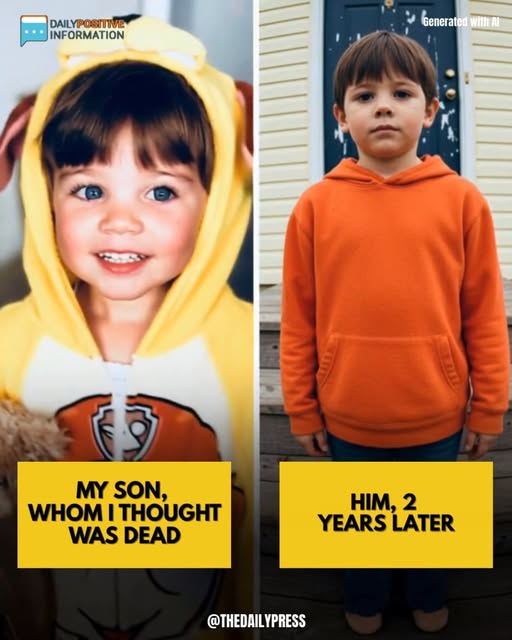
  • Two Years After My Son Passed Away, I Heard A Knock And A Voice Say, ‘Mom, It’s Me’

    Two Years After My Son Passed Away, I Heard A Knock And A Voice Say, ‘Mom, It’s Me’

    The house was always loudest when it was quiet. That’s something they don’t tell you in the grief pamphlets. They tell you about the anger, the bargaining, the depression. They don’t tell you that at 3:00 AM, the hum of the refrigerator sounds like a scream, and the settling of the floorboards sounds like footsteps you know you’ll never hear again.

    Last Thursday started like every other awful, quiet night I’ve had since my family fell apart. My husband, Lucas, had been gone for eighteen months—his heart gave out six months after we buried our son. I was alone in a four-bedroom colonial in the suburbs of Ohio, a house bought for a family that no longer existed. The nursery was shut tight; the master bedroom felt like a cavern.

    By midnight, I was scrubbing a clean counter just to avoid thinking too much. I was using a lemon-scented spray, wiping the same spot on the granite for the third time, just to fill the silence with the friction of the paper towel. I was trying to scrub away the memory of the hospital smells that still lingered in my nightmares.

    Then, the sound came.

    Source: Unsplash

    A Sound That Should Not Have Existed

    It was three soft knocks.

    My hand froze. The paper towel hovered over the counter. I waited, assuming it was the house settling, or maybe a branch from the old oak tree hitting the siding in the wind. The wind had been picking up all evening, rattling the storm windows.

    But then it came again. Three soft knocks. Deliberate. Low down on the door. Too low for a neighbor. Too gentle for a delivery driver.

    A pause.

    Then a tiny, trembling voice I hadn’t heard in two years drifted through the wood.

    “Mom… it’s me.”

    The dish towel slipped from my hand and hit the floor with a wet slap. For a second, the words didn’t make sense. I tried to rearrange them into something logical—a neighbor’s child, a prank, a hallucination brought on by exhaustion and the half-glass of wine I’d had with dinner. My whole body went cold, a physical chill that started at the base of my spine and wrapped around my throat.

    “Mom? Can you open?”

    I couldn’t breathe. Because that voice belonged to one person, and there was absolutely no way I could be hearing it now. It sounded like my son. My son, Evan, who died at five years old. My son, whose tiny white casket I’d kissed before they lowered it into the wet earth at a frantic, rainy funeral. My son, who I’d begged and screamed and prayed for every night since.

    He was gone. For two years. I had the death certificate in the safe. I had the grief counseling receipts in the drawer.

    Another knock.

    “Mom? Can you open?”

    I forced my legs to move down the hallway. I had to grip the wall as I went, my fingernails digging into the drywall. Grief had tricked me before. I’d heard phantom footsteps upstairs; I’d seen the flash of blonde hair in the grocery store aisle; I’d heard a laugh at the park that wasn’t his but sounded enough like it to break my heart all over again.

    But this voice wasn’t a memory turned into a ghost. It was sharp, and clear, and terrified. It was alive.

    Too alive.

    “Mommy?” The word slipped under the door and cracked me open.

    I unlocked the deadbolt with shaking hands. The chain rattled as I pulled it free. I opened the door wide to the night.

    The Boy on the Porch

    My knees gave out. I caught myself on the doorframe, gasping for air that wouldn’t come.

    A little boy stood on my porch. He was barefoot, his toes curled against the cold concrete. He was dirty, streaks of grime running down his arms. He was shivering under the yellow porch light.

    He wore a faded blue T-shirt with a rocket ship on it. The decal was peeling. It was the same shirt my son was wearing when he went to the hospital two years ago. It was tighter now, stretched across his chest, the fabric worn thin.

    He looked up at me with wide brown eyes. The same freckles scattered across the nose. The same dimple on the right cheek that only appeared when he was nervous or trying to be brave. The same cowlick on the left side of his forehead that never stayed down, no matter how much water or gel I used.

    “Mommy?” he whispered, his teeth chattering. “I came home.”

    “Who… who are you?” I managed to choke out.

    My heart just stopped. The world tilted on its axis.

    He frowned, a little crinkle between his eyebrows, like I’d told a bad joke. “It’s me,” he said, his voice small. “Mom, why are you crying?”

    Hearing him call me Mom hit me like a physical punch to the gut.

    “I… my son… my son is dead,” I said. My voice sounded tinny, like it belonged to a stranger standing ten feet away. “Evan passed away.”

    “But I’m right here,” he whispered, taking a hesitant step forward. “Why are you saying that?”

    His lip trembled. That specific quiver of the lower lip—I knew that quiver. It was the face he made right before a meltdown.

    He stepped inside like he’d done it a thousand times. The movement was so natural, so possessed of muscle memory, that it made my skin crawl. Everything in my brain screamed that this was wrong, that this was a cruel trick, a nightmare I hadn’t woken up from.

    But under that screaming logic, something raw and desperate whispered: Take him. Don’t ask. Just grab him.

    I swallowed the bile rising in my throat.

    “Where have you been, Evan?” I asked, my voice barely a whisper.

    He blinked, looking around the foyer. “With the lady,” he whispered. “She said she was my mom. But she’s not you.”

    My stomach twisted into a knot. I grabbed my phone from the entry table with shaking hands.

    His small fingers clutched at my sleeve. “Don’t call her,” he said, panic rising in his voice, sharp and high. “Please don’t call her. She’ll be mad I left.”

    “I’m not calling her,” I said, hitting the screen with trembling fingers. “I’m calling… I don’t know. I just need help.”

    I hit 9-1-1.

    The Impossible Phone Call

    The operator answered after one ring. “9-1-1, what is your emergency?”

    I realized I was sobbing. I couldn’t stop. “My son is here,” I choked out, sliding down the wall to sit on the floor. “He died two years ago. But he’s here. He’s in my house. I don’t understand.”

    There was a pause on the line. I could hear the operator typing. “Ma’am, are you injured? Is the child injured?”

    “No,” I wept. “He’s… he looks exactly like him. But he’s older. He’s bigger.”

    They told me officers were on their way. They told me to stay on the line.

    While we waited, Evan moved around the house. It was terrifying how much he knew. He didn’t ask where things were. He walked into the kitchen, the linoleum cold on his bare feet, and opened the cabinet to the right of the sink without thinking.

    He pulled out a blue plastic cup with cartoon sharks on it.

    “Mommy, please don’t let them take me again,” he whispered, clutching the cup to his chest.

    It was his favorite cup. We had buried it in a box of his things in the attic, or so I thought. But there it was.

    “Do we still have the blue juice?” he asked.

    “How do you know where that is?” I whispered.

    Source: Unsplash

    He gave me a weird look, like I was the one being strange. “You said it was my cup,” he said. “You said nobody else could use it ’cause I drool on the straw.”

    I had said that. Those exact words. Three years ago, at a breakfast table that included a husband who was still alive and a son who hadn’t yet been in a car accident.

    Headlights washed over the front windows, slicing through the darkness. Blue and red strobe lights began to bounce off the living room walls, illuminating dust motes dancing in the air.

    “Again?” I repeated, latching onto his earlier words. “Who took you before?”

    Evan flinched at the flashing lights. “Mommy, please don’t let them take me again.”

    The doorbell rang. He nearly jumped out of his skin, dropping the shark cup. It clattered on the floor, spinning in a circle.

    Police Procedure and Heartbreak

    Two officers stood on the porch. A tall man with a gentle face, Officer Daley, and a woman with sharp, observant eyes, Officer Ruiz.

    “Ma’am?” Daley asked, stepping in. “I’m Officer Daley. This is Officer Ruiz. You called about a child?”

    “He says he’s my son,” I said, gesturing to the kitchen. “My son died two years ago.”

    I stepped back so they could see him. Evan was peeking from behind the kitchen island, clutching his dirty t-shirt.

    Daley crouched down, making himself small. “Hey, buddy,” he said gently. “What’s your name?”

    “I’m Evan,” he answered.

    Daley’s eyes flicked up to mine. They were full of questions I couldn’t answer.

    Got Electrical Skills?

    Think you know home wiring? Take our electrical safety quiz and prove your skills!

    “How old are you, Evan?” he asked.

    Evan held up six fingers. “I’m six,” he said. “I’m almost seven. Daddy said we could get a big cake when I turned seven. A chocolate one with the Hulk on it.”

    Ruiz looked at me, checking for confirmation.

    “Ma’am?” she asked quietly.

    “That’s… that’s right,” I said, feeling faint. “He’d be seven now. He was five when… when it happened.”

    “And your son is… deceased?” Daley asked, his voice low.

    “Yes,” I whispered. “Car accident. I saw him in the hospital. The doctors declared him. I saw the body. I watched them close the casket. I stood at his grave.”

    “I’m not leaving him.”

    My voice cracked, shattering the professional tension in the room. Evan ran to me and pressed his face into my side. He smelled like rain and old dust and something sweet, like cheap laundry detergent.

    “I don’t like when you say that,” he whispered. “It makes my tummy hurt.”

    Ruiz stood silently for a second, assessing the threat level. There was none, only confusion.

    “Ma’am, we need to get him checked out,” she said. “If you’re okay with it, we’d like to take you both to the hospital. Let CPS and a detective meet you there. We need to verify who he is.”

    “I’m not leaving him,” I said. The protective instinct, dormant for two years, roared back to life like a sleeping dragon.

    “You’re not required to,” Daley said soothingly. “You can stay with him the whole time.”

    The Longest Night at the Hospital

    The ride to the hospital was a blur of streetlights and silence. Evan refused to let go of my hand, even while strapped into the back of the cruiser.

    At the hospital, they put Evan in a small pediatric room with bright pictures of zoo animals on the walls. It was too cheerful for the gravity of the situation. A doctor checked him over—malnourished, dehydrated, minor bruising, but healthy. I watched the doctor’s hands, terrified he would find something that proved this boy wasn’t mine—or worse, find proof of what he had endured.

    Then, a woman with a gold badge appeared in the doorway. She looked tired but kind.

    “Mrs. Parker? I’m Detective Harper,” she said gently. “I know this is… unbelievable. We’re going to try to get some answers.”

    A nurse came in with a sterile kit.

    “We’d like to do a rapid parentage test,” Harper said. “Technology has come a long way. It’ll tell us if he’s biologically yours. Is that something you’re comfortable with?”

    “Yes,” I said immediately. “Please. I need to know.”

    Evan watched, anxious, his eyes darting between the swab and me. “What’s that?” he asked.

    “It’s just like a Q-tip,” I said, forcing a smile I didn’t feel. “They rub it in your cheek. I’ll do it too.”

    He let them swab his mouth. When they did mine, he grabbed my wrist, his grip surprisingly strong. “Don’t leave,” he whispered.

    I sat in a plastic chair just outside his room while they processed the rush order. Evan watched cartoons on the wall-mounted TV, glancing over every few minutes to make sure I was still there.

    “Mommy?” he’d call.

    “Yeah, baby?” I’d answer.

    “Just checking,” he’d say.

    Detective Harper sat beside me with a notebook. The hallway smelled of antiseptic and floor wax.

    “Tell me about the accident,” she said.

    So I did. I dragged up the memories I had tried to bury. I told her about the rainy night. The red light the other driver ran. The crunch of metal that sounded like a bomb going off. The ambulance ride. The machines beeping. The doctors shaking their heads.

    I told her about the tiny blue rocket shirt. About kissing the cold forehead in the casket. About Lucas, my husband, grabbing the dirt at the cemetery like he could pull our son back out of the ground.

    I told her about finding Lucas six months later, hand on his chest, eyes open and empty. A broken heart, the doctors said. Stress cardiomyopathy.

    By the end, Harper’s eyes were shiny. She stopped writing.

    “I’m so sorry,” she said.

    “If that boy isn’t my son,” I said, my voice shaking with a rage that frightened me, “this is the cruelest prank on earth. And whoever did this deserves to die.”

    “And if he is?” she asked.

    “Then somebody stole him from me,” I said. “And I want to know who.”

    Source: Unsplash

    The Impossible Truth

    The nurse came back clutching a folder two hours later. She shut the door behind her, creating a seal of privacy.

    “Mrs. Parker,” she said quietly. “We have the test results.”

    My heart pounded so hard my vision blurred at the edges.

    “Okay,” I whispered.

    She opened the folder.

    “The test shows a 99.99% probability that you are this child’s biological mother,” she said. “And a matching probability that your late husband is his biological father.”

    The air left the room.

    “That’s not possible,” I said, staring at the paper. “My son is dead. I saw him. I buried him.”

    Detective Harper moved closer, her demeanor shifting from sympathetic to intense.

    “Genetically,” she said, “he is your son.”

    My knees almost gave out. I had to grip the arms of the plastic chair.

    Harper continued, her voice careful and measured. “When we ran his prints, something else came up,” she said. “Mrs. Parker, around the time of your son’s reported death, there was an internal investigation at the state morgue. Records show a breach. It was hushed up, but several instances of… mislabeled remains were discovered.”

    I just stared at her, the horror slowly dawning on me.

    “You’re telling me I buried the wrong child,” I said. “You’re telling me I spent two years grieving over an empty box or… someone else’s baby?”

    She nodded slowly. “We think Evan was taken before he ever reached the morgue,” she said. “Likely during the transfer from the ER. The confusion of the crash, the multiple ambulances… it created a window.”

    “Who?” I demanded.

    “We suspect a nurse. A woman named Melissa,” Harper said. “She was on shift that night.”

    The name meant nothing to me, but it made my stomach twist.

    “He said he was with a lady,” I said. “He didn’t want me to call her.”

    Harper nodded. “Melissa worked in the pediatric ER. She lost her own son, Jonah, several years before. He was the same age as Evan. She had a documented breakdown, but the hospital kept her on.”

    “Where is she now?” I asked.

    “We’re trying to find her,” Harper said. “But first, I need to hear from Evan, if you think he can help find her.”

    The Story of the “Other Mother”

    I went back into the room. Evan looked up, worried, the cartoon forgotten.

    “Mommy?”

    I climbed onto the narrow hospital bed next to him and took his hand. It was warm. Real.

    “Baby, this is Detective Harper,” I said. “She wants to ask about the lady you stayed with. Is that okay?”

    He hesitated, pulling his knees to his chest. “She said not to tell,” he whispered. “She said they’d take me away.”

    “They’re not taking you away,” I said. “I promise. I’m right here. Nobody is ever taking you again.”

    He nodded, eyes shiny with unshed tears.

    Harper sat in the chair, lowering herself to his eye level. “Hi, Evan,” she said softly. “Can you tell me the lady’s name?”

    “Melissa,” he said after a second. “She said I was her son. She called me Jonah when she was happy. When she was mad, she called me Evan.”

    “How long were you with her?” Harper asked.

    He frowned, trying to measure time in the way children do. “Since the beep room,” he said. “The room where the machines beeped. You were crying. Then I went to sleep. When I woke up, Melissa was there. She said you’d left. She said you didn’t want a broken boy.”

    His fingers dug into my hand.

    “I would never leave you,” I said fiercely, tears streaming down my face. “She lied to you. You were hurt, and she stole you.”

    He sniffed. “Do you know who brought you here tonight?” Harper asked.

    “A man,” Evan said. “He lived with us. Uncle Matt. He yelled a lot. Tonight, he yelled at Melissa. He said what she did was wrong. He said he couldn’t sleep anymore. He put me in the car and said, ‘We’re going to your real mom now.’”

    “Do you know his name?” she asked.

    “Uncle Matt,” Evan said. “But she called him ‘idiot’ more.”

    “Am I in trouble?” he asked, looking between us. “For going with her?”

    Harper’s mouth tightened into a grim line. “No, buddy. You are a hero. We’re going to find them. Both of them.”

    Evan looked up at me, panic flickering again. “Am I in trouble?”

    I pulled him into my arms, burying my face in his neck. “Absolutely not,” I said. “You didn’t do anything wrong. Grown-ups did. Bad grown-ups.”

    Going Home

    The bureaucratic nightmare started immediately. Child Protective Services wanted to place him in foster care “pending investigation” and “DNA verification from an independent lab.”

    I lost it.

    “You already lost him once,” I said, shaking with rage in the hallway. “The system lost him. You people let a woman walk out of a hospital with my son while I was planning his funeral. You are not taking him from me again.”

    Detective Harper backed me up. “She’s his biological mother and a victim,” she said flatly to the social worker. “Supervised reunification is fine, but he goes home with her tonight. I’ll park a squad car in the driveway if I have to.”

    They relented.

    That night, I buckled Evan into the dusty old booster seat I’d never been able to throw out. It had been sitting in the garage for two years, gathering cobwebs. He sat in it, his legs longer now, his knees bumping the back of the passenger seat. He looked out the window, his expression unreadable.

    He looked around the car. “Is Daddy here?” he asked quietly.

    I swallowed. This was the conversation I had been dreading.

    “Daddy’s with the angels,” I said. “He… he got sick after you left. His heart stopped working because he missed you so much.”

    Evan stared out the window at the passing streetlights. “So he thought I was there,” he said softly. “With the angels.”

    My voice shook. “Yeah. I think he did.”

    At home, Evan stepped inside slowly. He touched the wall, the couch, the coffee table, like he was checking if it was all solid. Like he was testing the reality of the world.

    He walked straight to the shelves and reached up, without looking, to grab his favorite battered blue T-Rex.

    “You didn’t throw him away,” he said.

    “Never could,” I answered.

    He padded down the hall, bare feet soft on the wood, and stopped at his bedroom door.

    I hadn’t changed it. Rocket ship sheets. Dinosaur posters. Glow-in-the-dark stars stuck to the ceiling in constellations that didn’t exist.

    He went in slowly, almost cautiously. “Can I sleep here?” he asked.

    “If you want,” I said. “Or you can sleep with me.”

    He climbed onto the bed and slid under the covers, clutching his stuffed sloth. He looked smaller than ever in that bed that had been empty for so long.

    “Will you stay?” he whispered. “Until I fall asleep?”

    “I’ll stay as long as you want,” I said. “I’ll sleep right here on the floor if you want.”

    I lay on top of the comforter, facing him.

    After a minute, he spoke into the darkness.

    “Mom?”

    “Yeah?”

    “Is this real?” he asked. “Not a dream? Sometimes I dream I’m home, and then I wake up at Melissa’s.”

    I swallowed hard, fighting the urge to scream at the universe for allowing this to happen.

    “Yeah, baby,” I said. “This is real.”

    He studied my face like he was trying to memorize it. “I missed you,” he said.

    “I missed you every second,” I replied.

    He reached out and put his hand on my arm. “Don’t let anyone take me again,” he whispered.

    “I won’t,” I said. “I swear to you. I will burn the world down before I let anyone take you from me again.”

    He fell asleep clutching my sleeve.

    Source: Unsplash

    The Morning After

    I woke up with a crick in my neck, still curled on top of the comforter. The morning sun was streaming through the blinds, cutting lines across the floor.

    For a split second, the old reality washed over me—the one where the room was empty and the silence was absolute. Panic flared in my chest. I sat up, heart hammering, scrambling to look at the pillow beside me.

    He was there. But he wasn’t sleeping like my Evan used to. He wasn’t sprawled out like a starfish. He was curled into a tight ball, his back pressed against the wall, the covers pulled up to his nose. It was a defensive posture. A sleeping position learned by someone who needed to make themselves small.

    I watched him breathe for ten minutes, terrified that if I blinked, he would vanish.

    When he finally woke up, he didn’t stretch. He went rigid. His eyes flew open, wide and scared, before landing on me. The tension drained out of his shoulders.

    “You’re still here,” he whispered.

    “I’m always here,” I said.

    Breakfast was the first real test. I made pancakes—his favorite. But when I set the plate down, he didn’t dig in. He looked at the food, then at me, then at the pantry.

    “Can I keep some?” he asked softly.

    “What do you mean, honey?”

    “For later,” he said, sliding a pancake off the plate and into his napkin. “In case… in case you get mad.”

    My heart broke all over again. “Evan, you don’t have to save food. There is always food here. And even if I get mad—which I won’t—you will always, always be allowed to eat.”

    He hesitated, then slowly unrolled the napkin. He ate with a ferocity that told me he had known hunger, or at least the threat of it.

    That afternoon, I had to explain to him why his father wasn’t coming through the door. I showed him pictures. I took him to the closet where Lucas’s coats still hung. Evan buried his face in a flannel shirt, inhaling the fading scent of cedar and Old Spice.

    “He smelled like this,” Evan said, his voice muffled by the fabric. “I remember.”

    It was a jagged, painful blessing. He had his father back for a moment, just in a scent, before the grief of that second loss settled over him.

    The Aftermath

    They arrested Melissa two days later in a town an hour away. She was packing a bag, getting ready to run.

    “Uncle Matt”—her brother—turned himself in. He admitted he’d discovered the truth about “Jonah” a week prior. He’d helped take Evan from the hospital years ago, thinking he was helping his grieving sister adopt an unwanted child. When he realized the truth—that the mother was alive and grieving—he couldn’t stand the guilt anymore.

    Part of me hates him. Part of me wants to see him rot. But part of me is grateful he finally did the one right thing that mattered.

    Evan has nightmares. He wets the bed sometimes. He asks if I’m coming back every time I step out of his sight.

    Sometimes he wakes up screaming, “Don’t let her in!”

    I hold him and say, “She can’t come here. She’s in jail. She’s far away. You’re safe.”

    “Are you coming back?” he calls if I go to the bathroom.

    “Yes,” I call back. “Always.”

    We’re both in therapy now. We talk about grief and trauma and how to live in a world where the dead knock on your door in rocket ship shirts.

    Life is weird and paperwork-heavy and full of appointments. But it’s also full of things I thought I’d never get again.

    Sticky hands on my cheeks. Lego pieces under my feet that hurt like hell. His voice yelling, “Mom, watch this!” from the yard.

    The other night, he was coloring at the kitchen table while I made dinner.

    “Mom?” he said.

    “Yeah?”

    “I like home better,” he said.

    He looked up at me, serious. “If I wake up and this is the angels’ place,” he said, “will you be there too?”

    I walked over and knelt beside him.

    “If this were the angels’ place,” I said, “Daddy would be here. And I don’t see him. So I think this is just home.”

    He thought about that, then nodded. “I like home better,” he said.

    “Me too,” I said.

    Two years ago, I watched a tiny casket disappear into the ground and thought that was the end of my story. I thought I was just waiting out the clock until I could join them.

    Last Thursday, my door shook with three soft knocks, and a little voice said, “Mom… it’s me.”

    And somehow, against every rule I thought the universe had, I opened the door… and my son came home.

    Let us know what you think about this story on the Facebook video! If this story touched your heart, please share it with friends and family to spread the word about holding your loved ones close.

  • President Donald Trump Issues Chilling Warning After Guardsmen Killed In DC…

    President Donald Trump Issues Chilling Warning After Guardsmen Killed In DC…

    Trump Says Airspace Around, Above Venezuela Will Be Closed Immediately

    President Donald Trump on Saturday announced that all airspace above and around Venezuela will be completely closed after months of targeting drug-carrying boats in the waters off the South American nation’s coastline. Trump, in a Truth Social post, said: “To all Airlines, Pilots, Drug Dealers, and Human Traffickers, please consider THE AIRSPACE ABOVE AND SURROUNDING VENEZUELA TO BE CLOSED IN ITS ENTIRETY.”

    Last week, the U.S. aviation regulator warned major airlines of a “potentially hazardous situation” when flying over Venezuela, citing a “worsening security situation and heightened military activity in or around” the country.

    In response, Venezuela revoked operating rights for six major international airlines that had suspended service following the Federal Aviation Administration’s advisory,

    The Trump administration has accused Venezuelan President Nicolás Maduro of involvement in drug trafficking, an allegation he has denied. Maduro, who has been in power since 2013, maintains that Trump is attempting to remove him from office and has said that Venezuelan citizens and the military would oppose any such effort.

    U.S. forces in the region have largely focused on counter-narcotics operations, though their presence exceeds what is typically required for those missions. Since September, they have conducted at least 21 strikes on alleged drug-trafficking boats in the Caribbean and Pacific, resulting in at least 83 deaths.

    Trump said earlier this month that he has “sort of made up” his mind on how to proceed with the United States’ policy toward Venezuela after holding a series of meetings this week with senior military officials to discuss potential options against Caracas.

    “I sort of made up my mind,” Trump told reporters aboard Air Force One when asked about the situation, The Hill reported. “I can’t tell you what it is, but we made a lot of progress with Venezuela in terms of stopping drugs from pouring in.”

    Trump and senior administration officials have sharply escalated their rhetoric toward Venezuelan President Nicolás Maduro, labeling him an “illegitimate leader” and accusing him of overseeing a drug-smuggling network — allegations Maduro has repeatedly denied.

    Throughout the week, Trump received a series of briefings at the White House from Defense Secretary Pete Hegseth and other top military leaders outlining potential U.S. options toward Venezuela, including possible land-based strikes, according to administration officials.

    Separately, since early September the administration has intensified operations targeting what it describes as narcotics-smuggling vessels in the Caribbean and eastern Pacific. U.S. forces have struck 20 boats and killed at least 80 people, whom the administration has characterized as “narco-terrorists.”

    The United States has significantly increased its military presence in the U.S. Southern Command region, deploying warships, Marines, fighter aircraft, surveillance planes, and other assets as part of what officials describe as an effort to curb narcotics trafficking and protect U.S. national security.

    Hegseth earlier also announced the launch of a new military and intelligence initiative in the Western Hemisphere, named “Operation Southern Spear,” which he said is aimed at targeting and dismantling “narco-terrorist” networks operating within the Southcom area, The Hill added.

    Trump signaled during his interview on CBS’s “60 Minutes” that Venezuelan President Nicolás Maduro may soon face consequences, suggesting Maduro’s “days are numbered.”

    Trump has previously floated the possibility of launching military strikes against Venezuela but has not acted on those discussions.

    “At a minimum, Secretary Hegseth’s announcement continues to emphasize the Trump administration’s narrative that these maritime strikes are somehow related to counterterrorism,” Brian Finucane, a senior adviser at International Crisis Group, said in an interview with The Hill on Friday.

    Last month, Trump revealed that Maduro has “offered everything” in a desperate attempt to persuade the United States to halt military operations targeting suspected drug-trafficking vessels.

    The President made the blunt remark using the “f-bomb” during a bilateral meeting with Ukrainian President Volodymyr Zelensky at the White House, responding to a question about reports that Maduro had tried to open back-channel negotiations.

  • Republicans GAIN House Seat in Unexpected Development — The Dem…

    Republicans GAIN House Seat in Unexpected Development — The Dem…

    N.C. GOP Approves Redrawn Map to Strengthen House Grip Before Midterms

    North Carolina’s Republican-led legislature approved a revised congressional district map designed to add at least one more GOP seat in the U.S. House, aligning with President Donald Trump’s push for mid-decade redistricting to help Republicans maintain their narrow majority in the chamber ahead of the 2026 midterm elections.

    The new boundaries build on the state’s existing map, drawn by Republicans in 2023 following the 2020 census, which delivered 10 of North Carolina’s 14 House seats to the GOP in the 2024 elections—even as the swing state remains evenly split between Republican and Democratic voters.

    Democratic Gov. Josh Stein lacks veto power over redistricting under state law, leaving the plan poised for implementation unless challenged in court.

    This move marks the third instance this year of a Republican-controlled state legislature responding to Trump’s call for aggressive redistricting strategies, following similar actions in Texas and Missouri.

    In Texas, where the push began in earnest, Republicans unveiled a proposed map on July 30, 2025, aiming to flip up to five Democratic-held seats through mid-decade adjustments.

    The effort stems from a pair of long-running legal battles, including a 2024 ruling by the U.S. 5th Circuit Court of Appeals that overturned prior district configurations in areas like Baytown and Galveston, creating an opening for the redraw.

    Texas Republicans have cited population shifts and compliance with voting rights laws as justifications, though critics argue it’s a partisan power grab encouraged by Trump. By September 2025, state officials had begun walking back some initial rationales amid scrutiny from the U.S. Department of Justice, but the plan remains on track for adoption.

    Other GOP-led states, including Ohio, Kansas, and Indiana, are weighing or advancing comparable mid-cycle changes, capitalizing on their legislative majorities to redraw lines outside the traditional decennial census timeline. Such tactics have historical roots.

    Texas itself pursued a similar mid-decade redistricting in 2003 under then-Gov. Rick Perry, who helped solidify Republican dominance in the state’s delegation.

    Democrats have decried these efforts as unfair gerrymandering, but Republicans counter that many blue states have long employed similar strategies to entrench their own advantages.

    For instance, Illinois Democrats have drawn maps that pack Republican voters into a handful of districts, allowing the party to hold a supermajority in the state’s congressional delegation despite competitive statewide races.

    In Maryland, convoluted district shapes have helped Democrats secure seven of eight House seats in a state where Republicans routinely win about 40% of the vote.

    New York Democrats attempted an aggressive gerrymander in 2022, only to have it struck down by courts, but the episode highlighted ongoing partisan map-drawing in left-wing strongholds.

    Overall, both parties have a history of manipulating districts for gain, with gerrymandering often canceling out nationally but distorting representation at the state level.

    In response to the Republican surge, California Democrats have placed Proposition 50 on the November 2025 ballot, a measure that would authorize temporary congressional map changes through 2030 to counter moves in Texas and other red states.

    The proposition, backed by Gov. Gavin Newsom and the state Democratic Party, directs the independent Citizens Redistricting Commission to adopt legislatively influenced boundaries, potentially putting five Republican-held seats at risk in districts currently represented by figures like Reps. Kevin McCarthy and Mike Garcia.

    With Republicans controlling more state legislatures than Democrats, the GOP appears positioned to net additional House seats through these maneuvers.

    Democrats, who fell short in 2024, need to net just three seats to reclaim the House majority in 2026, making every district adjustment critical.

    The Senate remains a tougher climb for Democrats, who must defend incumbents in red-leaning states while targeting GOP vulnerabilities.

    U.S. Rep. Don Davis, a North Carolina Democrat, blasted the plan as “beyond the pale” in a statement, accusing Republicans of undermining fair elections as his 1st District faces elimination under the new map.

    Trump, however, hailed the North Carolina map on social media, calling it a win for “putting America First.” State House Speaker Destin Hall echoed the sentiment by reposting Trump’s message, adding, “We’re putting America First in NC!”

    As legal challenges mount and the redistricting arms race intensifies, the 2026 midterms could hinge on these behind-the-scenes battles over district lines, testing the resilience of America’s electoral system.

  • The Biker Who Became Our Guardian Angel When I Lost Everything And Thought My Baby Would Be Taken Away

    The Biker Who Became Our Guardian Angel When I Lost Everything And Thought My Baby Would Be Taken Away

    When my wife Ellie died just thirty-six hours after giving birth, I was sitting in a prison cell sixty miles away, helpless and grieving. I was serving eight years for a terrible mistake — armed robbery — and I knew the consequences were mine to bear. But nothing prepared me for the moment the prison chaplain told me Ellie was gone and that our newborn daughter, Destiny, had been taken by Child Protective Services. With no family and no rights left to fight with, I feared she would enter the same foster care system that shaped my own childhood. Then, weeks later, an unexpected visitor appeared: an older biker named Thomas Crawford, wearing a leather vest and carrying my baby in his arms. He told me he had been with Ellie when she died, holding her hand so she wouldn’t leave this world alone, and had promised her he would protect Destiny until I could.

    Thomas fought harder than anyone I had ever known. He convinced CPS to grant him emergency foster custody, completed inspections and classes, and showed up at that prison every week — rain, snow, heat, didn’t matter — to hold my daughter up to the glass so I could watch her grow. For three years, he drove hours each way with a car seat strapped to the back of a motorcycle club member’s truck, determined to keep his promise to my wife. Through that glass, I watched Destiny’s first smile, heard her tiny voice say “Da-da,” and felt a kind of hope I thought prison had beaten out of me. Thomas sent letters and photos constantly, filling my cell with updates, drawings, and milestones. Everyone in the prison — even the toughest men — eventually called him “the real deal,” because no one had ever seen loyalty like that.

    There were moments when everything nearly fell apart again—like when Thomas suffered a heart attack and I feared my daughter would go back to the system. But even then, he fought back, returned to visitation pale but determined, and set up legal documents and a support system so Destiny would always be cared for. By the time I was released early for good behavior, he was waiting at the gates with Destiny in his arms. The moment she ran to me and I finally held her—warm, real, alive—will never leave me. For months, we lived with Thomas while I rebuilt my life, worked, saved money, and learned how to be a real father. He remained part of our family not because he had to, but because he wanted to.

    Today, Destiny is five, bright and joyful, and she still calls him “Papa Thomas.” We spend weekends with him, celebrating milestones he helped make possible. I owe him more than I can ever repay — he saved my daughter, honored my wife’s last wish, and gave me a chance at redemption I never thought I deserved. And now I teach Destiny the same truth he taught me: family isn’t always blood. Sometimes it’s the person who shows up when your whole world collapses. Sometimes it’s the man in a leather vest who promises a dying stranger he’ll protect her baby — and keeps that promise with the fiercest love I’ve ever seen.

  • A Neighbor’s Kind Response That Made a Little Girl Smile

    A Neighbor’s Kind Response That Made a Little Girl Smile

    Some moments in childhood stay with us forever—especially the ones where a simple act of kindness transforms an ordinary day into something unforgettable. For one little girl, the longing to be part of something she admired from a distance slowly became a quiet ache she carried each afternoon. She wasn’t looking for attention or praise; she simply wanted to share in the joy of a game she watched from afar. What happened next turned an everyday neighborhood scene into a heartwarming reminder of how powerful it can be when someone takes the time to notice a child’s unspoken wish.

    She lived in a welcoming, lively neighborhood where summer evenings glowed with the sound of children laughing and the echo of bouncing basketballs. At just seven years old, she was full of imagination, curiosity, and dreams far bigger than her small frame. Across the street, neighborhood kids gathered around an old but well-loved basketball hoop, shooting hoops and cheering with each lucky basket. She watched them day after day—sometimes from her bedroom window, sometimes from her driveway—never quite brave enough to ask if she could join, especially because her family didn’t own a hoop of their own. Yet, her admiration for the game grew stronger each time she watched the ball swish through the net.

    Without equipment, she created her own little world on her side of the street. Her driveway became her imaginary court, her hands mimicking dribbles and shots that existed only in her mind. She practiced quietly, hoping that someday the real experience would come her way. Her parents encouraged her but also reminded her to respect boundaries, so she hesitated to approach the group. Still, the spark never left her eyes. Every afternoon she looked across the road, wondering if anyone might notice her gentle longing to be part of the fun.

    That moment finally arrived when Mr. Ellis, the friendly neighbor who owned the basketball hoop, observed how intently she watched each game. He noticed her pretend dribbles and the shy excitement she tried to hide. One day, he walked over and asked if she liked basketball. When she nodded, he invited her to come shoot a few hoops. Nervous but thrilled, she accepted. He taught her how to dribble, how to aim, and—most importantly—that it was okay to keep trying. Soon the other kids welcomed her, and together they played until the sun dipped behind the houses. Moved by her effort and enthusiasm, Mr. Ellis later installed a smaller hoop just for her size. In that simple gesture, he gave her what she had quietly wished for all along—a place to belong and a reason to smile.