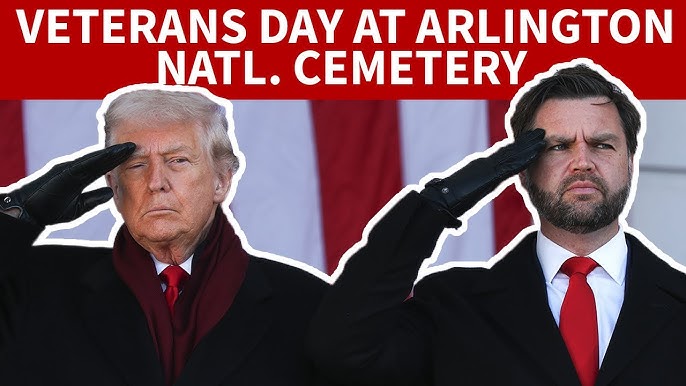
They arrived before most of the crowd, moving under a low November sky as rows of white markers stretched toward the horizon, each one a quiet reminder of sacrifice and unfinished stories. Cameras lingered on the wreath being lifted, the slow, deliberate salutes, and the charged glance between a president and a vice president whose records of service have been both praised and ques…
The scene at Arlington National Cemetery captures how public ritual can carry a nation’s complicated gratitude. The wreath-laying at the Tomb of the Unknown Soldier, the stillness of the crowd, and the presence of military families turn abstract ideas of duty and sacrifice into something tangible. These shared moments help bridge generations, linking those currently serving with those who came home long ago and those who never returned at all.
Yet the power of the ceremony also points beyond itself. Honoring veterans meaningfully requires more than a single day of speeches and solemn gestures. It demands sustained attention to healthcare, mental health services, housing security, and pathways to employment and education. As communities reflect on the 2025 observance, the challenge is to let the silence at Arlington echo into policy, everyday choices, and ongoing support for veterans and their families.