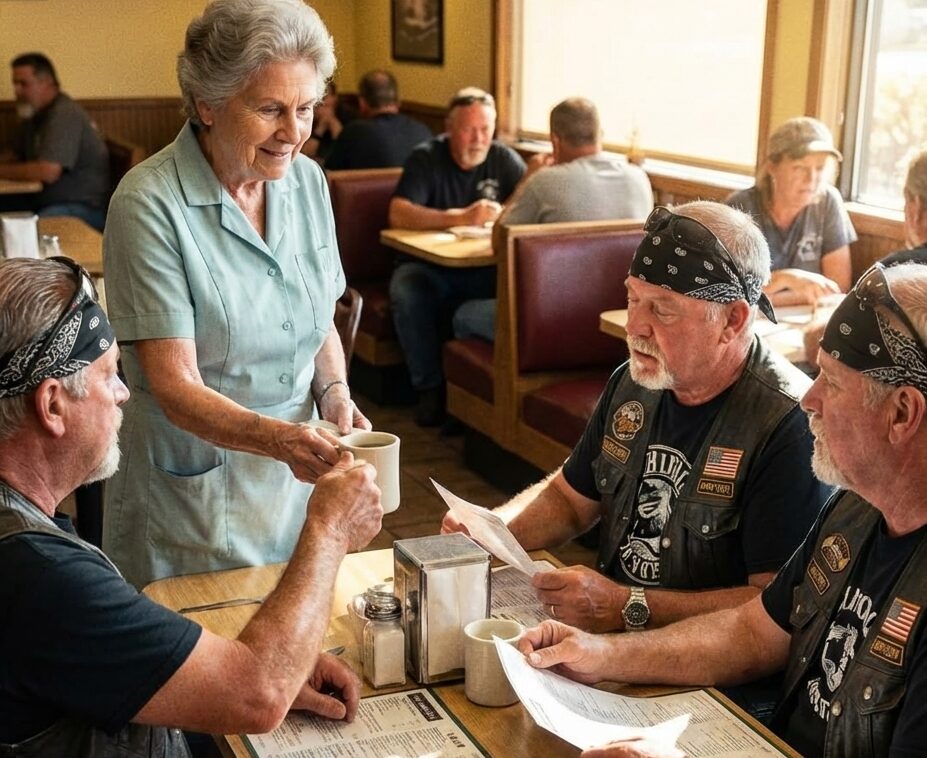
I made them pay before they ate because I didn’t trust them, and that truth still sits heavy with me. When fifteen bikers walked into Maggie’s Diner at nine o’clock on a quiet Tuesday night, every old instinct I had flared up at once. Leather vests marked with patches, thick beards, boots echoing against the tile floor—I’d been running this place for thirty-two years, and I told myself I’d learned to recognize trouble. Without thinking long enough to question myself, I told them I needed payment upfront. The room went still. For a moment, I expected resistance or offense. Instead, the largest man in the group met my eyes calmly, nodded, and said he understood. He paid generously, thanked me for being honest, and led his group to a back corner booth without a single complaint.
I tried to focus on my work, but I kept watching them from behind the counter. They didn’t raise their voices or demand attention. They spoke quietly, laughed softly, and treated my waitress with more courtesy than many late-night customers ever had. Every “please” and “thank you” landed like a small weight on my conscience. When food arrived, they waited patiently. When drinks were refilled, they smiled in appreciation. At one point, my waitress leaned over and whispered, “They’re actually really nice.” I nodded but didn’t answer. I was too busy wrestling with the feeling that I might have been wrong—and that maybe I’d let fear decide something it shouldn’t have.
About an hour later, the group stood up together. The man with the gray ponytail came to the counter, thanked me sincerely for the meal, and wished me a peaceful night. One by one, the others followed, nodding politely as they passed. When the door closed behind them and the sound of motorcycles faded into the distance, the diner felt unusually quiet. A moment later, my waitress called me over, her voice shaky. Their table was spotless—plates neatly stacked, napkins folded carefully. In the center sat an envelope with my name written on it. Inside was a handwritten note explaining that they were military veterans traveling together after attending the funeral of a fellow rider and friend. They said they understood why I was cautious and held no resentment. They also mentioned the framed photo behind my counter—my late husband in his Army uniform—and thanked him for his service. My hands trembled as I read the final line: “We would have protected your diner tonight without hesitation.”
I cried right there behind the counter, not from shame alone, but from gratitude and humility. I had judged them by appearances and asked for trust before offering any myself. They responded not with anger, but with grace. That night changed something in me. It reminded me that kindness often arrives in forms we don’t expect, and that dignity doesn’t need to announce itself loudly. Since then, I’ve tried to meet people with openness instead of assumption. Because sometimes, the people we fear are the very ones who show us how compassion really looks—and it’s never too late to learn that lesson.