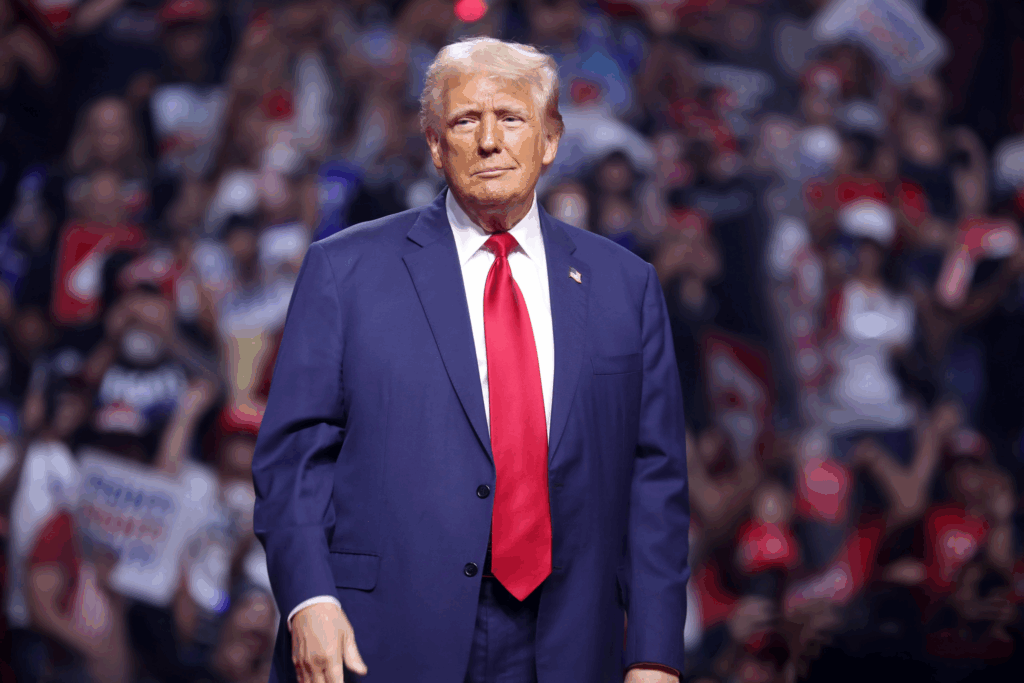
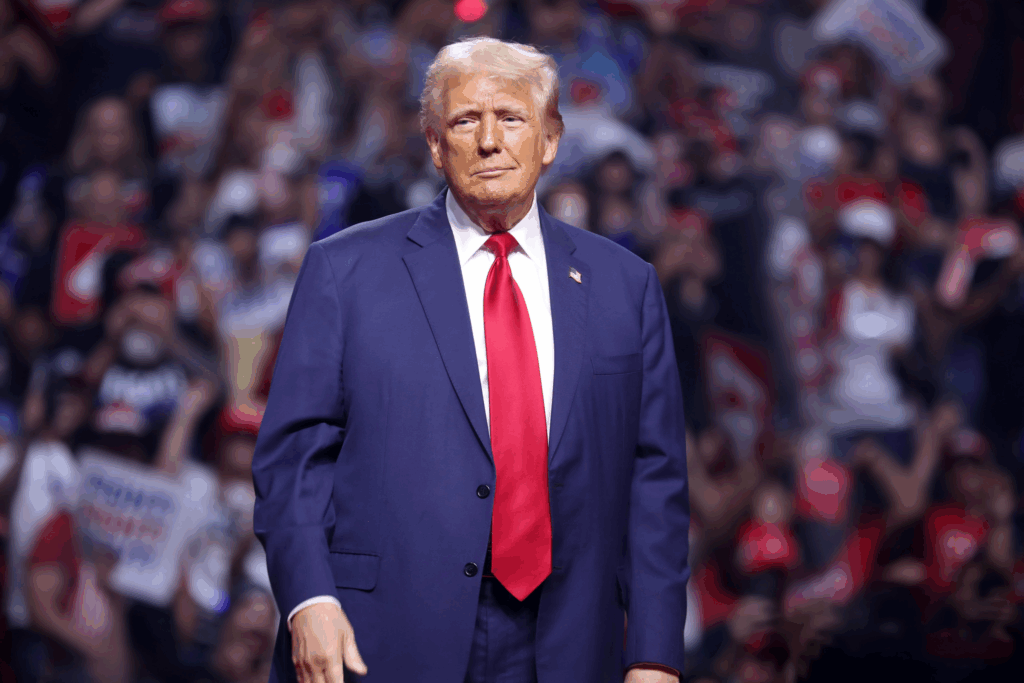
• Trump Admin Sending Hundreds of Marines to Florida to Help ICE

    Trump Admin Sending Hundreds of Marines to Florida to Help ICE

    The U.S. military said Thursday that 200 Marines will be sent to Florida to provide logistical and administrative support to Immigration and Customs Enforcement (ICE). The Marines are the first step in U.S. Northern Command’s support of ICE’s enforcement efforts, the statement said. “Service members participating in this mission will perform strictly non-law enforcement duties within ICE facilities,” USNORTHCOM said in a statement. In June, 700 Marines were sent by President Donald Trump to calm protests against deportation operations by Immigration and Customs Enforcement (ICE) officials in Los Angeles. Critics voiced concerns about the way federal authorities treated migrants and the strategies employed by immigration officers during the raids, even though the raids were carried out by a lawful instruction from federal authorities. Both Los Angeles Mayor Karen Bass and California Governor Gavin Newsom opposed the deployments, claiming they would escalate tensions.


    The military stressed that the Marines will only be responsible for administrative and logistical support within ICE facilities. “Approximately 200 Marines from Marine Wing Support Squadron 272, Marine Corps Air Station New River, North Carolina, are conducting a movement to Florida to augment U.S. Immigration and Customs Enforcement’s (ICE) interior immigration enforcement mission with critical administrative and logistical capabilities at locations as directed by ICE,” U.S. Northern Command wrote in its statement. Strict rules prohibiting the Marines from interacting directly with anyone in ICE custody or participating in the custody procedure will need to be followed. The announcement, which most likely refers to the full deployment of troops in Louisiana and Texas, states that the deployments represent the first wave of support from U.S. Northern Command for ICE operations in the region.

    The Pentagon authorized the deployment of up to 700 Defense Department staff in June to support ICE operations in the three states. “These service members, drawn from all components and operating in a Title 10 duty status, will provide logistical support, and conduct administrative and clerical functions associated with the processing of illegal aliens at ICE detention facilities,” Chief Pentagon spokesman Sean Parnell said in a June 17 statement about the support. “They will not directly participate in law enforcement activities,” Parnell added. This comes as the U.S. job market continues to advance steadily despite media claims about ‘growing economic uncertainty’ and the supposed ‘impact’ of Trump’s tariffs. In June, the economy added a stronger-than-expected 147,000 jobs, while the unemployment rate fell to 4.1% from 4.2%, according to data released Thursday by the Bureau of Labor Statistics.


    June’s job gains exceeded the forecast of 117,500 and showed a decent increase from May’s total, which was revised upward by 5,000 jobs to 144,000. April’s gains were also revised higher by 11,000, reaching a net increase of 158,000 jobs. That in itself is a change from the Biden era, when the Labor Department routinely revised job numbers downward in the following months. The revisions, along with the data released on Thursday, indicate that the average job growth over the past three months is 150,000. “Stocks opened higher after the jobs report. The Dow rose 96 points, or 0.22%. The broader S&P 500 rose 0.4% and the tech-heavy Nasdaq gained 0.6%,” CNN reported. Job Creators Network CEO Alfredo Ortiz praised Trump during an appearance on Fox Business Network on Thursday after the Labor Department released its figures. Hats off to President Trump because this three-legged stool of his has really been powerful: The trade, taxes, and deregulation together. It’s all about Jobs! Jobs! Jobs!” he said. On his Truth Social page, Trump also posted a video of a Bloomberg report where the analyst said of the labor figures: “This is good news; much better than expected. … In our survey, economists were looking for [the unemployment rate] to climb up to 4.3 — It comes in at 4.1. Jobless claims — Much lower than expected.”

  • ABC Anchor Admits Truth As Trump’s DC Crackdown Yields Big Results

    ABC Anchor Admits Truth As Trump’s DC Crackdown Yields Big Results

    President Donald Trump’s federalization of Washington, D.C., on the heels of declaring a “crime emergency,” was met with mixed reactions, but it has also launched a conversation among residents and members of the media about a subject that, for years, has been hidden in plain view.

    For instance, ABC News anchor Kyra Phillips mentioned on-air hours after Trump’s declaration that she was “jumped” just two blocks away from her Washington, D.C. studio, “within the last two years.”

    Violent crime in the nation’s capital has reportedly dropped since 2023, according to data from the Metropolitan Police Department (MPD) cited by The Washington Post on Monday. Still, Phillips pointed out that multiple alleged incidents have taken place near ABC News’ Washington, D.C., bureau — including two network employees who were reportedly among the victims.

    “We’ve been talking so much about the numbers and yeah, usually that’s how you play devil’s advocate, is you talk about, ‘Oh, well stats say crime is down.’ However, I can tell you firsthand here in downtown D.C. where we work right here around our bureau just in the past six months, you know, there were two people shot,” Phillips said. “One person died literally two blocks down here from the bureau.”

    “It was within the last two years that I actually was jumped walking just two blocks down from here. And then just this morning one of my coworkers said her car was stolen a block away from the bureau,” she continued.

    “So we can talk about the numbers going down, but crime is happening every single day because we’re all experiencing it firsthand while working and living down here,” Phillips continued.

    While violent crime in Washington, D.C., is reportedly down 26% compared to 2024, the MPD’s crime tracker shows there have still been 99 homicides in the city so far in 2025.

    Meanwhile, D.C. Police Commander Michael Pulliam is under investigation over allegations that he manipulated crime statistics, NBC4 Washington reported in July. The department suspended him, but Pulliam has denied any wrongdoing.

    In the first week after the White House assumed control of Washington, D.C.’s police force and deployed federal agents and National Guard troops, the city recorded a modest drop in reported crime but a sharp increase in immigration-related arrests, according to a CNN analysis of government data.

    For the week beginning August 12 — the first full week under federal control — property crimes fell by about 19 percent compared to the week prior, while violent crime dropped 17 percent, based on the most recent Metropolitan Police Department statistics.

    The trends varied by category. Robberies and car break-ins fell by more than 40 percent, while thefts remained flat. Burglary cases rose 6 percent, and assaults with a dangerous weapon increased 14 percent. Two homicides occurred during the period, consistent with recent weeks, though none have been reported since August 13.

    Federal agencies have embedded with local police, assisting in arrests, searches, and warrant executions while patrolling the city in unmarked vehicles, CNN noted further.

    At the same time, immigration enforcement surged. Since August 7, federal officials have arrested about 300 individuals in the district without legal immigration status — more than ten times the typical weekly number of ICE arrests in the city, CNN found.

    During the first six months of Trump’s current term, ICE averaged about 12 arrests per week in Washington, according to data from the Deportation Data Project at the University of California, Berkeley, School of Law.

    Officials told CNN that ICE agents have been accompanying MPD officers and intervening when individuals stopped or questioned are found to be in the country unlawfully.

    In response to CNN’s findings, White House spokeswoman Abigail Jackson stated that the media was attempting to dismiss the “exceptional results” of Trump’s efforts in Washington, D.C.

    “The drops in crime are not ‘moderate,’ they are life-changing for the countless of DC residents and visitors who have not been murdered, robbed, carjacked, or victims of overall violent crime in the last week,” Jackson said. “The priority of this operation remains getting violent criminals off the streets — regardless of immigration status.”

  • Hungry Little Boy Dialed 911—What Showed Up Changed Everything

    Hungry Little Boy Dialed 911—What Showed Up Changed Everything

    The narrative that follows serves as a reminder that decent individuals still go above and beyond to assist those in need. They encourage us to act morally and help us regain faith in people.

    An officer who lived close to the residence where the call had been traced was requested to go investigate when a small child called 911 without saying anything.

    She had just put her youngest child to bed at around 9:30 p.m. when she received the call from the boy.

    An 8-year-old boy opened the door after arriving at the house. He didn’t appear to be in any kind of danger. Most importantly, the place was tidy and clean despite being quite sparse. He and his younger sister were present.

    Source: Unsplash

    The youngster identified himself as Mateo and said that he and his siter were hungry, which is why he had called 911. There was no adult around, and they were all alone.

    The investigator discovered after questioning them that the mother of the children had two jobs and was clearly having financial difficulties.

    Mateo claimed that while their mother was at work, he looked after his sister, Sophia. They normally had a few items in the refrigerator, but this time there were just a few ketchup packets and a jug of milk.

    After the police phoned backup and explained the situation, services quickly arrived at the residence, and Rosa, a paramedic, brought sandwiches for the children.

    The officer located the mother of the children, who was employed at Joe’s Diner, before notifying social services.

    She was informed that the children were famished but otherwise fine.

    Source: Pexels

    The poor woman was in a bad mood. She was clearly a loving mother who had to put in a lot of overtime to support her family.

    Rosa and the officer continued to think about Mateo and Sophia in the days ahead.

    When Rosa visited the officer one day, she informed her that she had an idea to launch a project that would bring together paramedics, officers, and community people to support families in need. The Midnight Meals project proved to be a great success.

    Volunteers provided food and toiletries to the community’s most disadvantaged people every Friday night.

    The reaction was tremendous. Teenagers gave their valuable time, grocery businesses provided canned food, and teachers donated books and school materials.

    Source: Pexels

    Rosa and the policeman made the decision to deliver the items themselves one evening. When they arrived to Mateo and Sophia’s house, things appeared different. There were more decorations, more food, and more furniture.

    As his mother praised the two women for everything they had done for her family, Mateo recognized them right away.

    Mateo was thrilled to get a brand-new knapsack from Rosa that was loaded with school supplies.

    The two women considered the reasons for their career choices after realizing the powerful impact of their tiny act of kindness.

  • Nosy Neighbor Had Our Cars Towed From Our Driveway—She Regretted It Instantly

    Nosy Neighbor Had Our Cars Towed From Our Driveway—She Regretted It Instantly

    As our automobiles were towed away, she grinned, certain that she had prevailed in a local conflict. But by morning, she stood stunned on her porch, confronted with a $25,000 error she would never forget.

    The house had only been occupied for one night by Jack and me. The rental was a modest one-story home nestled in a peaceful suburb. Bricks of tan. green shutters. There was a patchy lawn that appeared to have been neglected since spring.

    We only had a short-term job assignment here. Nothing permanent. Nothing noteworthy.

    The doorbell rang just as we were unpacking the coffee machine.

    Jack moaned. “We don’t even have curtains up yet.”

    I looked through the peephole. “Well, looks like the Welcome Committee’s here.”

    He took a quick look. “Oh no. She has cookies in her hand.”

    Source: Unsplash

    I pulled the door open.

    A woman wearing white capri trousers, a pastel pink cardigan, and a matching headpiece was standing there. She had a lovely smile, but what about her eyes? Too busy to be distributing baked goods.

    “Hi there!” she exclaimed in a high-pitched voice. “My name is Lindsey. My residence is directly across the street. I just wanted to say hello and stop by.”

    A dish of cookies was held out by her. They were chocolate chip. perfect rows. There is not a crumb missing.

    I said, “Well, thank you,” and accepted the tray. “That’s very kind.”

    Jack waved languidly at her. “Appreciate it.”

    Her eyes continued to dart behind us, but her smile remained fixed. above my shoulder. Next, over Jack’s.

    She leaned a little as if to take a look inside.

    I took a step sideways. She looked down our corridor. After that, head back to the living room.

    She asked, blinking quickly, “You folks settling in okay?”

    I answered, “Yeah,” slowly. “Just moved in yesterday.”

    She murmured, “Such a lovely area,” as she glanced back at the doorframe. “Slow down. tidy. Extremely…well-organized.”

    Jack folded his arms. “Work is the only reason we are here. There shouldn’t be any issues.”

    “Oh, I’m sure!” Her voice was a bit too bright as she spoke. “I wanted to extend a warm welcome. And a little something else.”

    I sensed it was coming. Cookies gave way to complaints.

    “Our HOA—very friendly, but firm—has a rule about cars,” she explained. “Only one per household in the driveway.”

    I blinked. “One car?”

    “Yes,” she answered in a tighter voice. “No exclusions. keeps the neighborhood neat and orderly.”

    Jack’s eyebrows went up. However, we won’t be parking on the street. Both vehicles easily fit in the driveway.

    “I know,” she responded, tilting her head slightly. However, there are still two cars. Just one residence. Just one driveway. One vehicle.

    “We’re just here temporarily,” I replied. “Not permanent residents.”

    She grinned broadly. “Everyone is subject to the rules. The beauty of it is that.”

    Jack studied her for a moment. “Well, thanks for the cookies.”

    She chirped, “Enjoy them!” “And don’t worry, I’m sure you’ll settle in just fine.”

    We shut the door.

    “That was a lot,” explained Jack.

    I placed the tray on the counter and remarked, “She looked past me like she expected to see a drug deal going down in the kitchen.”

    “Bet she memorized our license plates already.”

    “Give her permission. We’re not breaking any laws, really. Just a neighbor with too much time and too much enthusiasm.”

    Jack gave a shrug. “Cookies smell good though.”

    I heard an odd noise outdoors when I woke up three days later. It was early. It’s still dark. That dreary, chilly hour before dawn.

    Clank, Clank. Whirrr.

    Jack rubbed his eyes and sat up. “What is that?”

    I froze after drawing back the curtain. “Jack. Outside. Now.”

    Half-dressed and barefoot, we flew down the hallway and threw open the door.

    Two tow trucks. In our driveway, both. Our two vehicles both partially raised off the ground.

    “Hey!” I yelled. “What the hell is going on?”

    Not even one of the tow truck guys looked up. “HOA regulation violation. Each house can only have one car. We received orders this morning.”

    “From who?” Jack lost his temper. “No warning is posted! No notice!”

    We spotted her at that point. Lindsey.

    Wearing a lavender bathrobe, she stood on the pavement with her coffee mug in hand and her arms folded across her chest. She was grinning more broadly than before. As if she had just won a prize.

    I shouted, “WOW,” clear enough for her to hear. “You really did it, huh?”

    For half a second, her smile wavered. “What’s so funny?” she yelled immediately.

    Calm as possible, I approached her.

    “Nothing,” I replied. “Just the fact that you owe us twenty-five thousand dollars now.”

    She blinked. “What—what do you mean?”

    Jack approached me with his hands in the pockets of his sweatshirt. I gestured to the tiny decal on my car’s rear windshield. If you didn’t know where to look, it was barely noticeable.

    She squinted.

    I grinned. “Bet you didn’t recognize that little mark.”

    She gazed at it. open-mouthed. We simply stood there. observing the changes in her face.

    She took a slow step forward, squinting at the rear windshield corner as her pupils narrowed and her lips slightly parted. To the right eye, the small sticker was obvious, even though it wasn’t meant to be ostentatious.

    Her head was cocked. With an abruptly thin and uncertain voice, she questioned, “What… what is that?”

    Jack said nothing. There was nothing for him to say.

    I also didn’t respond to her. I just offered her the smallest of smiles, met her gaze, and turned to return to the house. Jack silently followed me.

    Lindsey yelled again, louder than before, behind us. “Hey, hold on! I had a question for you.”

    We didn’t bother to turn around. Nor did we slam the door. Simply shut it. Final and soft.

    Jack tossed himself onto the couch and gave his neck a quick stroke. “She’s gonna lose it thinking about that sticker.”

    I grinned. “She should.”

    She gave us some cookies, but we didn’t even touch them. Like a forgotten, stale peace gift, they sat on the counter, unopened.

    I called later that night, after the neighborhood had huddled in and the streetlights had winked on. It was brief, concise, and to the point.

    I stated, “We’ve got a situation,” “Interference from citizens. Tampering with property. In the morning, you might wish to send someone.”

    After a brief silence, the other person responded quietly and quietly, “Understood.”

    Click.

    From the opposite end of the living room, Jack gave me a quick glance. “They’re sending someone?”

    I gave a nod. “Yes. Early.”

    Jack smiled and threw his arms over his head. “All right. When it occurs, I want her to be completely alert.”

    The following morning, when we went outside, the sun had not yet fully risen. Just as expected, the black SUV turned the corner and slowed down in front of Lindsey’s house.

    A man emerged as the driver’s door opened. As he crossed the street, he was wearing a sharp white shirt, a fitted black suit, and shining shoes that hardly made a sound. He was wearing dark sunglasses, even in the early light.

    He stopped next to me and nodded slightly. I gave it back.

    We crossed the street together and entered Lindsey’s front porch. The doorbell rang.

    The door creaked open after a few seconds.

    Lindsey was standing there with her blond hair piled on top of her fluffy pink bathrobe and a white mug that read “Live, Laugh, Love” in both hands.

    As she took us in, she blinked vigorously. “Um… hello?”

    The agent was unflappable. He produced a thin leather wallet from inside his jacket and opened it while displaying his ID and badge.

    “Ma’am,” he said quietly, “due to your actions yesterday morning, you are now under investigation for interfering with an active undercover federal operation.”

    Lindsey’s face lost its redness. Her mouth opened, but nothing came out.

    “I—I don’t understand,” she finally answered. “What operation?”

    “You initiated the towing of two marked government vehicles,” the agent added, maintaining a polite and even tone. “You disrupted and compromised two embedded federal officers in the process.”

    “I didn’t know!” she stumbled back. “I mean—I thought—I was just trying to follow the HOA rules!”

    “You didn’t check the cars before you started removing them,” he answered without blinking. “You harmed and postponed an ongoing federal investigation as a result. Twenty-five thousand dollars has been spent and lost as a result of your conduct.”

    Her mouth fell open. With a loud crash, the mug fell out of her hands and broke into pieces as it hit the porch.

    With his hands in his hoodie pockets, Jack took a step forward. He added dryly, “Maybe don’t act like the sheriff of suburbia next time.”

    She gazed down at the shattered mug as if it might help her understand why everything had gone so wrong.

    The agent nodded slightly. “Our office will get in touch with you to discuss next steps. You are not allowed to leave the area till then. Don’t get in touch with anyone. Keep all records and documents intact.”

    She gave a faint nod. Her jaw remained agape.

    Without saying another word, he turned and walked back to the SUV.

    I looked at her one last time. “Next time, maybe just bake the cookies and leave it at that.”

    Silently, we crossed the street and headed back.

    Lindsey remained silent. Her door was still slightly ajar. For the remainder of the day, her blinds remained closed. And those flawless rose bushes of which she had been so proud?

    They never fully bounced back.
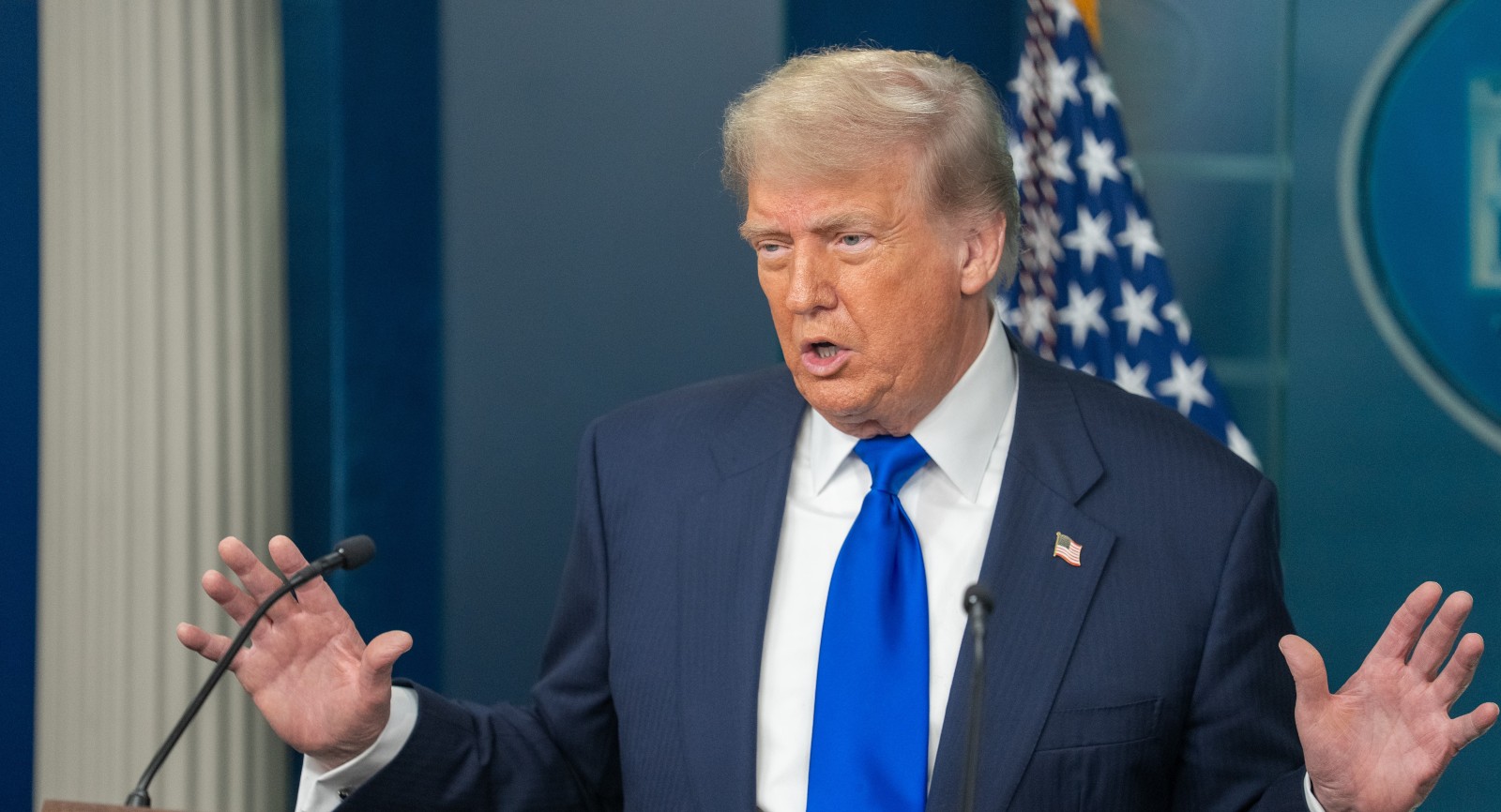
  • Bolster Key Energy Sector

    Bolster Key Energy Sector

    In a significant move to advance the nation’s clean energy goals, the U.S. Senate has overwhelmingly approved legislation designed to revitalize and modernize the country’s nuclear energy sector. The bill passed with strong bipartisan support in an 88-2 vote and now heads to the president’s desk for final approval.

    The newly passed legislation combines nuclear energy reforms with the reauthorization of programs that support the U.S. Fire Administration and local fire departments. This package is expected to streamline the process of launching new nuclear projects while supporting critical emergency services across the country.

    One of the bill’s primary objectives is to accelerate the approval timeline for constructing new nuclear power plants, especially as many older reactors near retirement. The measure reduces licensing fees for power companies and instructs the Nuclear Regulatory Commission (NRC) to identify ways to make environmental review processes more efficient.

    “This legislation helps expand our options to meet growing energy demands while addressing climate challenges,” said White House National Climate Advisor Ali Zaidi.

    Senator Shelley Moore Capito noted the bill’s forward-looking focus, particularly in supporting the development of small modular reactors (SMRs), a newer, more flexible form of nuclear technology. “This is about the future of nuclear,” Capito told reporters. “We need to be ready.”

    Experts in the energy sector believe the legislation will help simplify regulatory pathways, making it easier for the industry to develop clean, reliable power solutions. Lesley Jantarasami, managing director of the Bipartisan Policy Center’s energy program, stated, “It’s a facilitator of the process by which industry gets approvals to build projects. That efficiency matters.”

    Nuclear energy currently provides about 20% of the electricity generated in the United States. Supporters of the bill highlight the importance of this power source, noting that nuclear plants produce electricity without emitting carbon or air pollutants. With energy demand on the rise and environmental concerns growing, many believe nuclear energy can play a vital role in a diverse and resilient power grid.

    However, the measure has also sparked discussion among safety advocates. Some experts caution that changing the NRC’s mission to avoid “unnecessary” regulation may raise questions about safety oversight. Edwin Lyman, director of nuclear power safety at the Union of Concerned Scientists, warned that certain provisions could limit the NRC’s ability to strengthen safety standards. “The intention may be efficiency, but it’s important to ensure safety remains a top priority,” he said.

    Despite concerns, the bill has received widespread support in both chambers of Congress. In the House of Representatives, it passed by a vote of 393-13, with only a few lawmakers expressing reservations.

    As of August 2023, the United States had 93 nuclear reactors operating at 54 facilities across 28 states. These plants have consistently supplied around one-fifth of the country’s electricity for over three decades. Globally, the U.S. remains the leading producer of nuclear power, with France ranking second in capacity and boasting the highest percentage of electricity generated by nuclear—approximately 68%.

    Looking ahead, the newly passed legislation may serve as a catalyst for a new era of nuclear innovation in the U.S., helping meet growing power needs while supporting low-emission energy solutions.

  • A Strong Plan to Help the Middle Class and Close Rich Peoples Loopholes

    A Strong Plan to Help the Middle Class and Close Rich Peoples Loopholes

    White House Press Secretary Karoline Leavitt has announced President Donald Trump’s new tax proposal, aiming to give major relief to middle-class Americans while closing loopholes for the wealthy. The plan would remove taxes on tips, Social Security benefits, and overtime pay, putting more money into workers’ pockets.

    Supporters say the changes would help service industry workers, retirees, and employees working extra hours, while critics warn the overall plan could still benefit corporations and the rich more than ordinary citizens.


    Key provisions include eliminating taxes on tips, which would help restaurant staff, bartenders, and other tipped workers. Social Security benefits would also become fully tax-free, and overtime pay would no longer be taxed, encouraging more people to work extra hours.


    Another major change targets the carried interest loophole, which allows hedge fund and private equity managers to pay lower taxes than average workers. Trump promises a stronger push to close it this time.

    The plan would also extend the 2017 Tax Cuts and Jobs Act beyond 2025 and cut the corporate tax rate further from 21% to 15%, which Trump argues will create jobs and boost investment. Critics counter that it could deepen wealth inequality.

    Potential benefits include higher take-home pay, more business growth, and a fairer tax system. Drawbacks include higher national debt, the possibility of corporate tax cuts favoring the wealthy, and no clear replacement for lost revenue.

    The proposal faces an uphill battle in Congress, with Democrats strongly opposing it and some Republicans calling for spending cuts to offset the tax breaks.

  • Social Security Announces New Cost-of-Living Adjustment (COLA) Checks – What You Need to Know

    Social Security Announces New Cost-of-Living Adjustment (COLA) Checks – What You Need to Know

    The Social Security Administration (SSA) has announced a new Cost-of-Living Adjustment (COLA) for the upcoming year, designed to help recipients manage rising inflation and increased living costs. Millions of Americans, particularly seniors, are set to benefit from this adjustment.

    This year’s COLA represents a 3.2% increase, which is lower than last year’s historic 8.7% rise. Over 70 million beneficiaries, including retirees, disabled individuals, and others who rely on Social Security, will experience changes in their monthly payments starting in January 2025.

    Key Details:

    • Effective Date: The new COLA will be reflected in checks starting in January 2025.
    • Average Monthly Benefit: The average retired worker will see their monthly benefit increase by approximately $50, bringing the average benefit to $1,790.

    Predicted Benefits With COLA 2025 for age 54-65+ :

    Based on current estimates, here’s what you can expect from Social Security benefits by 2025:

    Old-Age Benefits:

    Category Current Amount Estimated Amount with COLA 2025
    Average $1,871.09 $1,920
    Maximum at Age 62 $2,710 $2,781
    Maximum at Age 67 $3,822 $3,923
    Maximum at Age 70 $4,873 $5,001

    Disability Benefits:

    Category Current Amount Estimated Amount with COLA 2025
    Average $1,401.30 $1,438
    Maximum $3,822 $3,923

    Survivors’ Benefits:

    Category Current Amount Estimated Amount with COLA 2025
    Average $1,509.50 $1,549

    SSI (Supplemental Security Income):

    Category Current Amount Estimated Amount with COLA 2025
    Average $695.84 $714
    Individual $943 $968
    Couple $1,415 $1,452
    Essential Person $472 $497

    Why It Matters:

    The COLA is designed to help Social Security beneficiaries keep up with inflation. Rising living costs, especially for essentials like food, healthcare, and housing, disproportionately affect those on fixed incomes. While this year’s increase provides some relief, many argue it may not fully offset actual expenses, particularly for medical care.

    What You Should Do:

    • Check Your Benefit Amount: You can expect to receive your updated benefit amount starting in January. Make sure your payment reflects the new COLA increase.
    • Stay Informed: The SSA will send out notifications detailing your new benefit amount in December, so be on the lookout for official updates.

    For more details on the Social Security COLA and how it impacts you, visit the official SSA website or check trusted resources like AARP and Medicare.gov.

    Discover how Trump’s proposed Social Security tax changes could affect retirees in our article, “Top 10 States Where Retirees Benefit Most and Least.” We break down tax relief potential by state, highlighting savings in retirement-friendly locations and where benefits may fall short. Essential for planning a financially secure retirement.

  • Trump says he’s terminating legal protections for Somali migrants in Minnesota

    Trump says he’s terminating legal protections for Somali migrants in Minnesota

    President Donald Trump said Friday night that he’s “immediately” terminating temporary legal protections for Somali migrants living in Minnesota, further targeting a program seeking to limit deportations that his administration has already repeatedly sought to weaken.

    Minnesota has the nation’s largest Somali community. Many fled the long civil war in their east African country and were drawn to the state’s welcoming social programs.

    But how many migrants would be affected by Trump’s announcement that he wants to end Temporary Protected Status could be very small. A report produced for Congress in August put the number of Somalis covered by the program at just 705 nationwide.

    Congress created the program granting Temporary Protected Status in 1990. It was meant to prevent deportations of people to countries suffering from natural disasters, civil strife or other dangerous conditions.

    The designation can be granted by the Homeland Security secretary and is granted in 18-month increments.

    The president announced his decision on his social media site, suggesting that Minnesota was “a hub of fraudulent money laundering activity.”

    “Somali gangs are terrorizing the people of that great State, and BILLIONS of Dollars are missing. Send them back to where they came from,” Trump wrote. “It’s OVER!”

    Trump’s statement did not include further details on the fraud he cited. Minnesota has seen dozens of people charged with defrauding social service programs in recent years, most notably stemming from the investigation into taxpayer-funded child nutrition programs under the sponsorship of the now-defunct nonprofit Feeding Our Future. The first charges in that case were announced in 2022; a 77th person was charged just this week.

    In a social media post in the wake of Trump’s announcement on Friday night, Minnesota Democratic U.S. Rep. Ilhan Omar wrote that “I am a citizen and so are majority of Somalis in America. Good luck celebrating a policy change that really doesn’t have much impact on the Somalis you love to hate. We are here to stay.”

    Minnesota Gov. Tim Walz wrote on social media: “It’s not surprising that the President has chosen to broadly target an entire community. This is what he does to change the subject.”

    Minneapolis Mayor Jacob Frey posted to Facebook: “Standing with our Somali community today. Minneapolis has your back — always.”

    Trump promised while campaigning to win back the White House last year that his administration would deport millions of people. As part of a broader push to adopt hardline immigration policies, the Trump administration has moved to withdraw various protections that had allowed immigrants to remain in the United States and work legally.

    That included ending TPS for 600,000 Venezuelans and 500,000 Haitians who were granted protection under President Joe Biden. The Trump administration has also sought to limit protections previously extended to migrants from Cuba and Syria, among other countries.

  • Trump Says $2,000 Tariff Dividend Checks Could Begin Going Out By Mid-2026

    Trump Says $2,000 Tariff Dividend Checks Could Begin Going Out By Mid-2026

    Donald Trump previously pledged to provide $2,000 dividends to nearly every American, but now he has disclosed when those payouts could be made.

    The president declared on Truth Social this week that every American would get a “dividend of at least $2000” as a result of the country’s increased prosperity brought forth by his tariff measures.

    The 79-year-old explained this compensation by saying that the US is now the “richest, most respected country in the world” as a result of the tariffs he put in place.

    “People that are against Tariffs are FOOLS!” he wrote. “With Almost No Inflation, and A Record Stock Market Price. 401k’s are Highest EVER. We are taking in Trillions of Dollars and will soon begin paying down our ENORMOUS DEBT, $37 Trillion.”

    “Record Investment in the USA, plants and factories going up all over the place.”

    Source: Flickr

    When Will The Cheques Go Out?

    On Friday, the president affirmed that his much anticipated tariff dividend payments would not be available until 2026.

    “It will be next year… The tariffs allow us to give a dividend. We’re going to do a dividend and we’re also going to be reducing debt,” Trump told reporters aboard Air Force One, per The New York Post.

    The checks, which are intended for families with incomes below a specific threshold, would be paid for by Trump’s aggressive tariff policy—a tactic that is now beset by significant legal and practical challenges.

    “We will see,” Treasury Secretary Scott Bessent said during a recent Fox Business interview, when asked if the plan would happen at all. “We need legislation for that.”

    A Bumpy Road Ahead

    Although Trump marketed the $2,000 payouts as a “dividend” from tariff earnings, congressional approval is far from certain.

    Details are still unknown, despite the president’s insistence that the payouts would only be available to working families.

    under an interview on Fox & Friends last week, Bessent suggested a potential income maximum of $100,000, but he swiftly clarified that the issue was still “in discussion” and that a limit had not yet been decided.

    Not even the payment method has been selected. In an earlier statement, Bessent hinted that the funds “could come in lots of forms,” possibly referring to tax credits or other advantages connected to Trump’s One Big Beautiful Bill Act.

    Another concern is funding, as the US Customs and Border Patrol reports that since their inception through September 23, Trump’s International Emergency Economic Powers Act (IEEPA) tariffs—an unusual application of a statute that makes no mention of tariffs—have generated about $90 billion.

    Overall, through August 31 of fiscal year 2025, Trump’s entire tariff package generated $195.9 billion in revenue.

    Erica York, vice president of federal tax policy at the Tax Foundation, calculated that restricting the checks to those making less than $100,000 would cost roughly $300 billion, although that is still significantly less than the expected cost.

    Legal storm clouds threaten the entire plan

    The Supreme Court is already debating whether Trump’s use of IEEPA to impose tariffs is even legitimate, which puts the funding mechanism for his payoff in peril.

    Several lower courts have already declared his view illegal, and justices have sounded unsure.

    A significant portion of the revenue that Trump is relying on may be eliminated if the court invalidates the IEEPA tariffs, and it might also compel the government to return any money that has already been collected.

    When asked if he’d still move forward with the dividend checks if the Supreme Court overturns his tariffs, Trump said: “Then I’d have to do something else.”

    The future of the checks is further clouded by the Supreme Court’s scrutiny of roughly half of the $100 billion in tariff income that Trump intended to spend.

    Though he has yet to specify what constitutes “high income,” the president has maintained his belief in the concept and insistence that “high-income people” will not be eligible for the benefit in spite of everything.