The winter in upstate New York doesn’t just knock; it kicks down the door and loots the place. Two days before Christmas, the wind was howling with a cruelty that made your bones ache, whipping snow into drifts that looked like frozen waves suspended in time.
I was driving home from a twelve-hour shift at St. Jude’s, my eyes burning with that gritty, sand-paper exhaustion only nurses know. I had spent the last hour holding the hand of a man who didn’t know his own name, telling him he was safe, while secretly wondering if I was going to make rent in January.
The car heater in my beat-up Honda was wheezing, fighting a losing battle against the temperature outside. It was 11:30 PM. My brain was a fuzzy checklist of things I hadn’t done: wrap the presents hidden in the trunk under a blanket, move that damn elf on the shelf that I had forgotten for three nights in a row, and remember to breathe.
My two girls, five and seven, were safe at my mom’s house for the night. I pictured them curled up under Grandma’s heavy quilts, dreaming of reindeer and sugarplums, their breath rising in soft puffs in the cool room.
That image—safe, warm, protected—was the only thing keeping me upright. It was the tether keeping me from floating away into panic.
Then I saw her.
The bus stop on Elm Street is nothing more than a plastic shelter, a flimsy three-sided shield against a world that doesn’t care if you freeze. She was standing there, a silhouette against the swirling white chaos. She wasn’t pacing to keep warm. She wasn’t checking her phone for a ride. She was just… standing. Still as a statue carved from ice.
As my headlights swept over her, I saw the bundle. A baby. Wrapped tight against her chest inside her coat.
My stomach dropped to my knees, leaving a hollow ache in my chest.
The split-second decision that terrified me
I drove past. I did. I admit it. I am not a saint; I am a tired woman trying to survive.
For about five seconds, the survival instinct kicked in, loud and lizard-brained. Don’t stop. It’s late. It’s dangerous. You have kids. You’re a single mom with a mortgage held together by duct tape and prayers. You cannot afford a disaster.
I watched her fade into the rearview mirror, a grey smudge in the red glow of my taillights.
But then, the other voice spoke up. The quiet one that sounds like my grandmother, the one that doesn’t care about logic. What if that were your baby? What if that were you, just one bad paycheck away from the curb?
I slammed on the brakes. The car skidded slightly on the black ice, the tires screaming in protest before coming to a halt on the shoulder. I reversed, my heart hammering a frantic rhythm against my ribs, watching the snow swirl in the red lights.
I rolled down the window. The wind screamed into the car, instantly stealing the meager warmth I had hoarded, biting my cheeks like tiny teeth.
“Hey!” I shouted over the gale. “Are you okay?”
She flinched violently. Up close, under the sickly yellow streetlight that buzzed overhead, she looked wrecked. Her face was grey with cold, her lips cracked and bleeding. She looked young, maybe mid-twenties, but exhaustion and fear had aged her eyes by a decade. She looked like a ghost haunting her own life.
“I…” she stammered, her teeth chattering so hard I could hear it over the engine. “I missed the last bus. I got the schedule wrong. It… it usually comes at midnight.”
She clutched the baby tighter, shielding his face from the wind with a gloved hand that looked too thin for this weather. “I don’t have anywhere to go. My phone died an hour ago.”
“Do you have family nearby?” I asked, shouting to be heard. “Someone I can call?”
“My sister,” she said, tears freezing on her cheeks, glistening like diamonds. “But she’s in the next town over. It’s too far to walk. I tried… I tried to start walking but the wind…”
I looked at the baby. One tiny, mittened hand was sticking out of the blanket. It wasn’t moving.
Panic, sharp and cold, pierced my chest. That wasn’t just a baby; that was a fragile life dangling on the edge of hypothermia.
“Get in,” I said. The words were out before I could overthink them, before I could calculate the risk. “You can’t stay here. You’ll freeze. Get in the car.”
She hesitated, her eyes wide with fear. We are taught from kindergarten: Stranger Danger. But the cold is a more immediate predator than a stranger. She looked at the dark road, then at my face.
“Please,” I urged, my voice softening. “I’m a nurse. I work at St. Jude’s. I’m a mom. Just get in the warm car.”
She opened the door and practically fell into the passenger seat, bringing a gust of arctic air and the smell of wet wool with her.
A silent night with a stranger in my house
As soon as the door slammed shut, the silence of the car was deafening, broken only by the heater blasting full bore. Then, a small, whimpering cry came from the bundle. It was the most beautiful sound I’d ever heard because it meant life.
“He’s okay,” she whispered, rocking him frantically, her hands shaking uncontrollably. “Shh, Oliver. It’s okay. We’re warm. We’re warm.”
“He’s two months old,” she told me, catching my eye, looking for judgment. “I’m Laura.”
“I’m Sarah,” I said. I cranked the heat up to high, sweating in my scrubs but wanting to bake the cold out of their bones. “Where were you trying to go? Before the bus?”
“The shelter,” she admitted, looking down at her boots, which were soaked through and leaving a puddle on my floor mat. “But they were full. They gave me a bus token to try the one in Clayville, but… I missed it.”
My heart broke a little more. The shelters were full two days before Christmas. Of course they were.
“You’re coming home with me,” I said.
She started to protest, shrinking into herself, trying to make herself small. “I can’t. You don’t know me. I’m a burden. I don’t want to intrude.”
“You’re not a burden,” I said firmly, putting the car in gear. “You’re a human being. And it’s Christmas. I have a guest room. It’s not the Ritz, but it has a door and a heater. End of discussion.”
My house is old. It was my grandparents’ place, bought in the fifties with VA loan money, and it smells like lemon pledge, old wood, and history. It’s small, creaky, and the siding is sad, peeling in places I can’t reach, but it’s mine. It’s the only safety net I have since my ex-husband decided fatherhood was an optional hobby three years ago.
We pulled into the driveway. The porch light cast a warm, yellow glow on the snow.
I led Laura into the living room. The Christmas tree lights were blinking softly, casting a warm glow on the worn carpet. The house was messy—toys scattered, laundry piled on the sofa—but it was warm.
“It’s beautiful,” she whispered, looking around like she’d stepped into a cathedral. She touched the wall as if testing its solidity.
I set her up in the guest room—which is really just a glorified storage room with a twin bed, a desk, and boxes of outgrown kid clothes. I gave her clean towels, a pair of my oversized sweatpants, and the thickest wool socks I owned.
“The shower takes a minute to get hot,” I told her. “Just let it run.”
I went to the kitchen and heated up leftover lasagna. I stood by the microwave, watching the numbers count down, wondering what I was doing. Is this safe? But then I thought about the wind outside. Safe is relative.
When she came out, holding Oliver, she looked like a different person. Her hair was wet, wrapped in a towel. She was wearing my sweatpants, which were too short for her, but she looked cleaner. Lighter. But still carrying the weight of the world in her slumped shoulders.
She ate the lasagna like she hadn’t seen food in days, shoveling it in, but she stopped every few seconds to check on the baby sleeping in the center of the bed, surrounded by pillows.
“I’m sorry,” she said again, wiping tomato sauce from her lip. “I swear I’m not a crazy person. I just… I had a run of bad luck. My landlord sold the building. They gave us thirty days, but I couldn’t find anything in my budget. Then my car died… and it just snowballed.”
“We’ve all been there,” I said, sitting on the edge of the desk chair. And I meant it. I’m one missed paycheck, one broken transmission away from disaster myself. I budget groceries like I’m defusing a bomb. I know the exact day bread gets marked down at the bakery outlet.
“My ex left three years ago,” I found myself saying. “He emptied the savings account on his way out. If it weren’t for this house being paid off by my Pop-Pop, I’d be at that bus stop too.”
Laura looked at me, her eyes glassy. “It’s scary how fast it happens. You think you’re solid, and then the floor just… disappears.”
We sat there for an hour, two strangers sharing the intimacy of survival. She told me about Oliver’s dad, a man who “wasn’t ready” for a baby. She told me about her sister, who loved her but had a tiny apartment and three kids of her own and a husband who worked nights.
That night, I barely slept. I lay in my bed, listening to the wind howl, knowing a stranger was sleeping down the hall. Every creak of the floorboards made me jump.
I got up once to “check the thermostat.” The guest room door was cracked open. The light from the hallway spilled in. Laura was asleep, curled around Oliver like a comma, her hand resting protectively on his back. They looked so fragile, yet so fierce in their togetherness.
I went back to bed, pulled the quilt up, and prayed for them.
The morning departure
The next morning, the sun was blindingly bright on the snow, reflecting off the drifts with a glare that hurt my eyes.
When I walked into the kitchen, the coffee was made. The smell of hazelnut filled the air. The guest room was immaculate. The bed was stripped, the sheets folded in a neat pile at the foot. The trash was emptied.
Laura was sitting at the table, Oliver cooing in her lap. She jumped when I entered, looking guilty for occupying space.
“I didn’t want to leave a mess,” she said quickly. “I found the coffee. I hope that’s okay.”
“You didn’t have to do that,” I said, pouring myself a cup. “Did you sleep?”
“Better than I have in weeks,” she smiled. It was the first real smile I’d seen—tentative, but genuine. “The bed was soft. And quiet. The shelter… it’s never quiet.”
I made us toast and eggs. We ate quickly. The reality of the day was setting in. I had to pick up my kids. She had to get to her sister’s.
I drove her to the train station. The roads were plowed but slick. I bought her a ticket to her sister’s town and gave her the forty dollars cash I had in my wallet—my “emergency pizza money.”
“Take it,” I insisted when she tried to push it back, her hands trembling. “Buy diapers. Buy coffee. Just take it. Consider it a loan from the universe.”
She hugged me then. It was an awkward, bulky hug over winter coats and a baby carrier, but it was fierce. She smelled like my shampoo and baby powder.
“Thank you,” she whispered into my ear, her voice thick with emotion. “You saved us. I won’t forget this. I promise.”
“Just get safe,” I said. “That’s all the thanks I need.”
I watched her board the train, a small figure against the massive steel engine. Then I drove home, cleaned the guest room again, and got ready for my kids to return. I thought that was the end of the story. A random act of kindness in a dark winter. A blip on the radar of my life.
The unexpected delivery on Christmas morning
Two days later, it was Christmas morning.
Chaos. Beautiful, loud, wrapping-paper-shredding chaos. My girls were vibrating with energy, tearing through boxes like feral raccoons. The living room was a sea of cardboard, ribbons, and excitement.
“Can we open the big one?” my five-year-old, Lily, shrieked, pointing at a dollhouse box that I had wrestled into the house at 2 AM.
We were in the middle of negotiating who got to open what when the doorbell rang.
The sound cut through the noise. We all froze.
“Santa?” Lily whispered, eyes wide, a piece of scotch tape stuck to her forehead.
“Santa uses the chimney, dummy,” my seven-year-old, Maya, scoffed, though she looked toward the door with interest. “It’s probably Amazon. Or Grandma.”
I laughed, stepping over a pile of Lego boxes. “I’ll get it.”
A courier was standing there, shivering on the porch. He was holding a large box wrapped in glossy, expensive-looking paper with a massive red bow. It looked like something from a movie prop department.
“Delivery for Sarah,” he said, handing me a clipboard to sign.
“Who’s it from?” I asked, looking for a return address.
“Doesn’t say. Just says ‘Express Delivery’. Happy holidays.”
I carried the box into the kitchen. It was heavy. The girls swarmed me immediately, abandoning their other gifts.
“Is it for us? Is it a puppy?” Lily bounced, pulling on my pajama pants.
“I’m not sure,” I said, my heart pounding for some reason. A weird intuition pricked at me.
I peeled off the paper. It was a sturdy cardboard box. I sliced the tape with a kitchen knife and opened the flaps.
On top lay a white envelope.
I opened it. The handwriting was neat, loopy cursive on lined notebook paper.
Dear Sarah,
I made it to my sister’s safe. I told my family everything. About the cold, about the bus, and about the woman who stopped when everyone else drove by.
My family doesn’t have much money. My parents are on a pension, and my sister works two jobs. We can’t pay you back for saving me and Oliver. I wish I could send you a million dollars.
But my nieces—my sister’s daughters—wanted to help. When they heard about your little girls, they went into their closets. They picked out their favorite things, the things they had outgrown but couldn’t bear to give away to strangers. They wanted your daughters to feel as special as you made me feel.
Thank you for being the light in the storm. You taught me that I’m worth saving.
Love, Laura & Oliver.
Tears pricked my eyes, hot and fast. I looked into the box.
It wasn’t just old clothes. It was a treasure chest of girlhood.
Neatly folded piles of clothes. Soft, high-quality sweaters from brands I could never afford. A pair of sparkly pink boots that looked brand new, with the treads barely worn. Dresses with tulle skirts that spun out. Jeans with embroidered flowers.
And at the bottom, there were costumes. A princess dress with sequins. A superhero cape. A doctor’s coat that looked just like mine.
There was a smaller note tucked into the boots, written in purple marker: From our girls to yours. Play hard.
“Mom?” Maya asked softly, tugging my sleeve. “Why are you crying? Is it sad?”
I wiped my face, laughing a watery laugh. “No, baby. It’s happy crying. These are for you. Look.”
I started pulling things out. The girls gasped. Lily grabbed the sparkly boots and immediately put them on over her pajamas. Maya held up a sweater with a unicorn on it like it was made of gold.
I had been stressing about money for months. I had been stretching their shoes for another season, telling them my sewing machine could fix the holes in their leggings, feeling the guilt gnaw at me every time I said “not today” at the store. I felt like I was failing them constantly.
And here, in this box, was a year’s worth of dignity. A year’s worth of new. A year’s worth of style.
“Because sometimes people are really, really kind,” I told them, pulling them into a hug, burying my face in their messy hair. “And sometimes, when you do something good, it comes back to you.”
“Like a boomerang,” Lily said, stomping her new boots on the linoleum.
“Exactly like a boomerang.”

The ripple effect
Later that night, after the girls had finally crashed, exhausted from a fashion show in the living room where they modeled every single item, I sat at the kitchen table with a glass of wine. The house was quiet, save for the hum of the refrigerator.
I opened Facebook. I wanted to share this, but I wanted to protect Laura’s privacy.
I wrote a post. No names. Just the story. The cold night. The stranger. The fear. The decision to stop. And then, the box.
I ended it with: “Sometimes the world is scary. But sometimes, it’s softer than it looks. Be the softness.”
An hour later, my messenger dinged. A request from a “Laura M.”
“Is that post about me?” she wrote.
My heart jumped. “Yeah. I kept it anonymous. I hope that’s okay.”
“It’s more than okay,” she replied. “Oliver is doing great. My sister says hi. She says you have good taste in lasagna. And she says thank you for giving her sister back to her.”
We talked until midnight. We talked about single motherhood. About the fear of not having enough. About the weird, lonely hours of the night when you’re the only one awake and the world feels too big.
We became digital friends. We traded kid pictures. We sent “good luck” texts before big shifts. We vented about laundry mountains.
But life moves on, and winter turns into the slushy grey misery of February.
The Second Winter: When the Pipes Froze
February in New York is the month where hope goes to die. It is grey, wet, and relentlessly cold.
My finances were tighter than ever. My ex missed a support payment, claiming “job trouble,” which really meant “vacation with new girlfriend.” I was picking up extra shifts, barely seeing the girls, running on caffeine and anxiety.
Then, on a Tuesday night when it was five degrees below zero, the house went silent.
The low hum of the furnace, the heartbeat of the house, stopped.
I woke up at 3 AM seeing my breath in the air. I checked the girls; they were buried under blankets, oblivious. I ran to the thermostat. It read 58 degrees and dropping.
I went to the basement. I reset the breaker. Nothing. I hit the reset button on the furnace. It roared to life for three seconds, rattled like a dying tractor, and died.
I called the repair company at 7 AM. The emergency fee alone was $150.
The tech arrived at noon. He looked at the unit, shook his head, and wiped grease on a rag.
“It’s the blower motor and the control board,” he said. “Parts and labor? You’re looking at twelve hundred bucks. And I have to order the part. It won’t be here until Thursday.”
Twelve hundred dollars.
I had three hundred in my checking account.
I sat on the basement steps and cried. Not the pretty movie crying. The ugly, heaving sobbing of a woman who has reached the end of her rope. It was too cold to stay in the house. I would have to take the girls to my mom’s, but she had a cat, and Lily was allergic. It would be a nightmare.
I pulled out my phone to text my mom, to admit defeat.
Then I saw a message from Laura.
Hey! saw the weather forecast up there. You guys staying warm? Oliver is obsessed with snow.
I don’t know why I did it. Maybe because she was a stranger, but also not. Maybe because I knew she understood the precipice of poverty.
I typed back: Honestly? No. Furnace died. Guy wants $1200 I don’t have. Currently sitting in the basement feeling sorry for myself.
I didn’t expect anything. Maybe a “that sucks” or a praying hands emoji.
Three minutes later, my phone rang. It was Laura.
“Sarah?” her voice was urgent. “What’s the make and model of the furnace?”
“What?”
“The furnace. Go look. Read me the tag.”
I walked over and read her the serial numbers, confused. “Why?”
“My brother-in-law,” she said. “The one married to my sister? He does HVAC. He owns his own small company. He’s got a warehouse full of parts. Hang on.”
She hung up.
Ten minutes later, she called back.
“He’s got the motor,” she said, sounding triumphant. “And he’s got a used control board that fits your unit. He’s loading the truck. He’s about an hour away from you.”
“Laura, I can’t,” I stammered. “I can’t pay him right now. I can’t ask him to drive an hour in this weather.”
“Sarah, shut up,” she said, laughing. “He’s coming. He says he needs an excuse to get out of the house because the kids are driving him crazy. And… he knows what you did for me. He wants to do this.”
The Return of the Boomerang
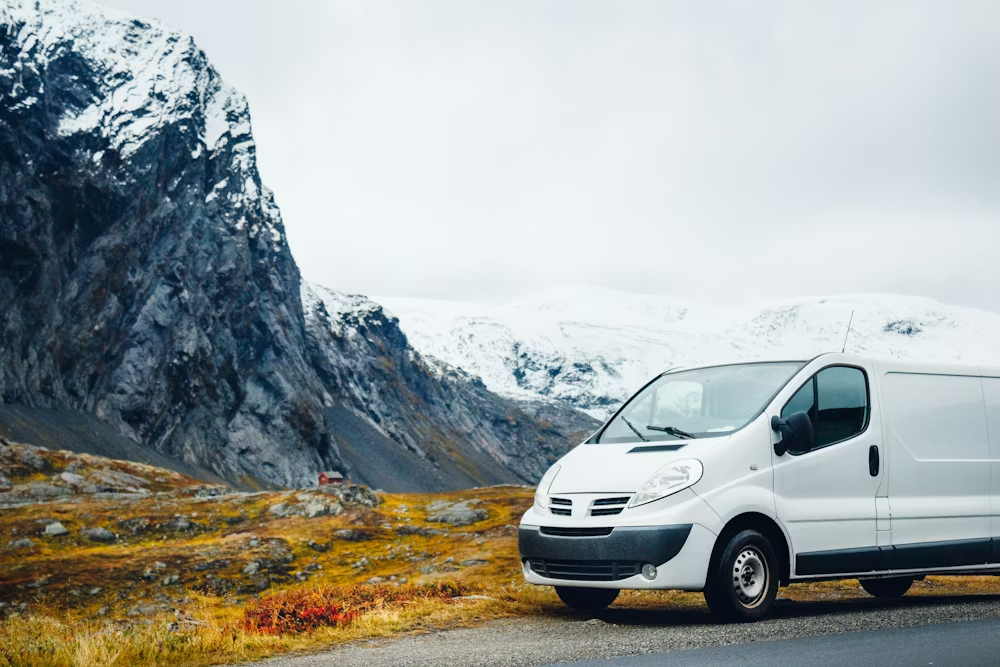
An hour and a half later, a white van pulled into my driveway. A giant of a man with a beard like a Viking hopped out.
“You Sarah?” he boomed, grabbing a toolbox. “I’m Mike. Laura’s brother-in-law.”
He marched into the basement like he owned the place. He banged around for forty minutes. I stood at the top of the stairs, holding a cup of coffee for him, trembling.
Then, I heard it. The whoosh of the pilot light. The roar of the blower.
Heat. Beautiful, glorious heat began to pump through the vents.
Mike came up the stairs, wiping his hands.
“She’s running,” he said. “That motor was shot to hell. But this one’s a tank. It’ll last you another five years.”
“Mike,” I said, reaching for my purse. “Please, let me give you something. I can write you a check for when I get paid, or…”
He held up a hand, a massive paw stained with grease.
“No,” he said. “Laura told me you picked her up when she was freezing. She told me you gave her your bed. That’s my little sister-in-law. You kept her safe. This?” He gestured to the basement. “This is just metal and wires. We’re square.”
He paused at the door.
“Actually,” he said. “Laura sent something else.”
He ran out to the van and came back with a Tupperware container.
“She made cookies,” he grinned. “She said to tell you they go good with red wine.”
I watched him drive away. I stood in my warm kitchen, holding a container of chocolate chip cookies, and I wept.
The Reunion
Spring finally broke in May. The slush melted, the trees budded, and the world felt habitable again.
Laura and I had been talking almost daily. We knew each other’s schedules, our kids’ quirks, our favorite TV shows. But we hadn’t seen each other since that morning at the train station.
We planned a meetup in June. A park halfway between our towns. A picnic.
I was nervous driving there. What if it’s awkward? What if we only bonded because of the crisis?
I pulled into the parking lot. I saw a woman sitting at a picnic table, a chunky baby boy in a stroller, and a taller woman—her sister—setting out food.
Laura looked up. She looked different. Her hair was down, shiny. She was wearing a bright yellow sundress. She looked… rested. Happy.
I got out of the car. My girls ran toward the playground.
Laura stood up. We walked toward each other. And just like that morning in my hallway, we hugged. But this wasn’t the desperate hug of survival. It was the hug of deep, abiding friendship.
“Look at you,” I said, pulling back. “You look great.”
“I got a job,” she beamed. “Receptionist at a dental office. Benefits and everything. And I got my own apartment last month. It’s tiny, but it’s ours.”
“I’m so proud of you,” I said.
She introduced me to her sister, the woman who had sent the clothes, the wife of the HVAC hero. We sat at that picnic table for four hours. We ate sandwiches. We watched Oliver try to eat grass. We watched my girls push her nieces on the swings.
At one point, Laura looked at me over her iced tea.
“You know,” she said. “I almost didn’t get in your car that night. I was so scared.”
“I almost didn’t stop,” I admitted. “I was scared too.”
“Imagine if you hadn’t,” she said quietly.
I looked at the kids playing. I thought about the warm clothes in their closet. I thought about the furnace humming in my basement. I thought about the text message I got last week when I was having a panic attack, the one from Laura that simply said: You got this, Mama.
“I don’t want to imagine it,” I said.
The Lesson
We stayed until the sun started to dip low, casting long shadows across the grass.
As we were packing up, my daughter Lily ran up to Laura.
“Thank you for the clothes,” she said. “I wore the sparkly boots until my feet grew too big.”
Laura crouched down. “I’m glad you liked them. You know, those boots were my niece’s favorites. She was so happy you wore them.”
“We saved them,” Lily said seriously. “Mom put them in a box. For when Oliver gets bigger. Or for someone else.”
I smiled. We had saved them. We had started a “Laura Box” in the closet—things to give away, things to pass on.
Driving home that evening, the girls were asleep in the back seat, sun-kissed and exhausted. The windows were down, letting in the warm summer air.
I thought about the boomerang.
It wasn’t just about doing good so you get good back. That’s too transactional. That’s too simple.
It was about the web. The invisible threads that connect us when we’re brave enough to grab them. I pulled a thread that night in the snow, and it pulled back when I was freezing in my basement.
We are all just one bad day away from the bus stop. And we are all just one decision away from being the driver who stops.
I turned up the radio. The song was cheerful. The road was clear. And for the first time in a long time, I knew that no matter how cold it got, we wouldn’t freeze. We had a village now.
And it all started with a stranger, a baby, and a refusal to look away.
Let us know what you think about this story on the Facebook video! Did Sarah do the right thing by letting a stranger in, or was it too risky? If you have ever been helped by a stranger, tell us your story in the comments. And if you like this story share it with friends and family to remind them that kindness is always worth the risk.