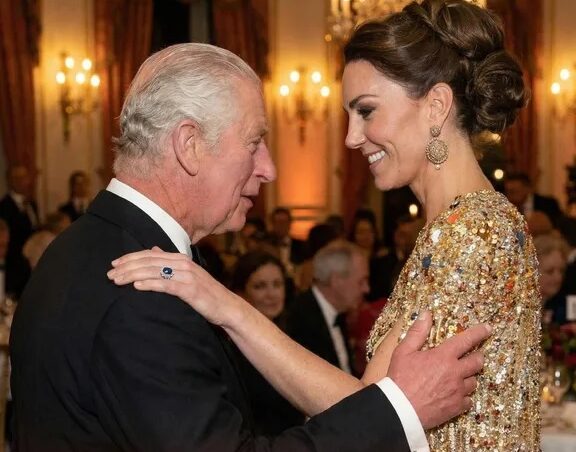

For much of modern royal history, public attention has been a delicate—and sometimes dangerous—currency. Few stories illustrate this better than the painful dynamic between the late Princess Diana and her then-husband, Prince Charles, whose struggles with her immense popularity became a defining tension of their marriage. Diana’s warmth and global appeal captivated crowds in a way the monarchy had rarely seen, and the imbalance left lasting scars. Decades later, as King Charles III now leads the Crown, observers note a striking shift: rather than resisting the spotlight around his daughter-in-law, Kate Middleton, the King appears to be actively encouraging it.
Royal commentators suggest this change reflects both personal growth and strategic clarity. Unlike his younger years, when being overshadowed felt deeply personal, Charles now seems to recognize that visibility can strengthen, not weaken, the monarchy. The Princess of Wales has emerged as one of the institution’s most admired figures—steady, relatable, and modern—qualities that resonate strongly with the public. Rather than viewing her popularity as competition, the King reportedly sees it as an asset that helps keep the monarchy relevant in a fast-changing cultural landscape.
This perspective aligns with Charles’s broader focus on legacy. The monarchy, after all, is not sustained by titles alone, but by public connection. Allowing Catherine to take center stage at high-profile events—sometimes even unannounced appearances that once might have raised eyebrows—signals trust and confidence. It also reflects an understanding that attention naturally gravitates toward the future generation, particularly Prince William and his family, who represent continuity in a more accessible, contemporary form.
Ultimately, this evolution marks a quiet but meaningful departure from the past. Where rivalry once created fractures, collaboration now offers stability. By embracing Catherine’s role as a public-facing figure, King Charles demonstrates a leadership style shaped by experience rather than insecurity. It is a recognition that authority does not diminish when shared, and that the monarchy’s endurance depends on unity across generations. In choosing to let the Princess of Wales shine, the King is not surrendering the Crown’s power—he is strengthening its future.