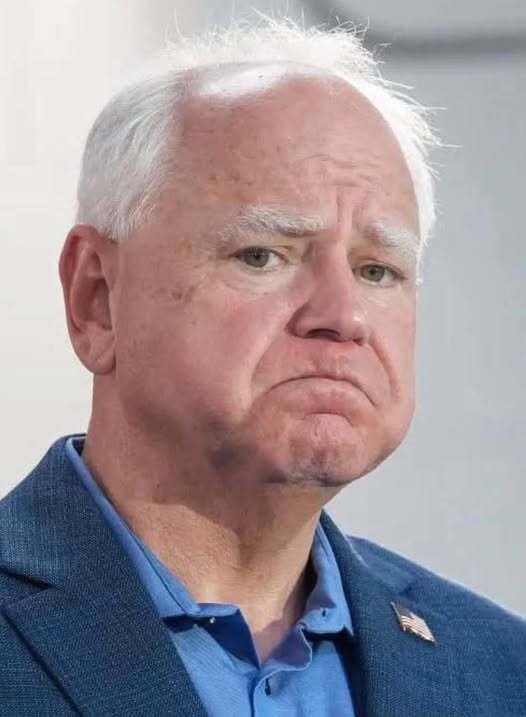

The confirmation of Tim Walz’s new role has captured attention far beyond what might typically be seen as a routine political procedure. While a confirmation could easily be treated as a ceremonial step, many analysts, journalists, and political observers are interpreting this moment as a meaningful signal of a potential shift in influence and leadership. For a politician often described as measured, pragmatic, and steady, the announcement has prompted renewed discussions about his priorities, leadership style, and the ways in which his approach may shape both state and national discourse in the months and years ahead.
Tim Walz has built a reputation on governance rather than spectacle. Throughout his political career, he has emphasized substance over showmanship, focusing on practical issues that affect daily life rather than engaging in polarizing rhetoric or grandstanding. He is often recognized for his calm demeanor, his ability to listen, and his commitment to coalition-building—a skill set that has allowed him to work across party lines and navigate complex legislative landscapes. For voters and colleagues alike, Walz has become synonymous with a pragmatic approach that prioritizes tangible outcomes over ideological posturing.
Education, healthcare access, infrastructure, and economic stability have consistently been central themes in Walz’s political agenda. His tenure as governor of Minnesota, as well as his previous service in the U.S. House of Representatives, reflects a career dedicated to improving public services, addressing systemic inequalities, and responding to the practical needs of his constituents. Supporters often point to his record of prioritizing programs that strengthen schools, expand access to affordable healthcare, and invest in roads, bridges, and public transit. These are initiatives that may not dominate headlines but have lasting, measurable impacts on the communities they serve.
In Minnesota, this confirmation is widely viewed as recognition of Walz’s long-standing commitment to serving the public in ways that prioritize stability, equity, and responsiveness. For years, he has navigated complex challenges, from budget constraints to public health crises, with an emphasis on consensus and careful deliberation. Observers note that his style is particularly suited to addressing systemic problems that require patience, collaboration, and attention to detail. It is this focus on steady, results-oriented governance that has earned him respect from both constituents and colleagues across the political spectrum.
Nationally, the confirmation draws attention to how Walz’s measured style may resonate amid growing public frustration with political volatility and distrust in institutions. Across the United States, citizens and policymakers alike have grown weary of political drama and hyper-partisanship. In this context, leaders who demonstrate predictability, competence, and a willingness to collaborate are increasingly valued. Walz’s reputation as a leader capable of negotiating across divides positions him uniquely to influence both policy discussions and public expectations, potentially shaping how other officials approach governance in similar circumstances.
Walz’s political philosophy is grounded in the belief that effective leadership requires both empathy and pragmatism. Throughout his career, he has emphasized the importance of listening to constituents, understanding local challenges, and translating that understanding into actionable policy solutions. Whether addressing rural healthcare shortages, advocating for teacher support and educational resources, or tackling infrastructure bottlenecks, Walz’s approach is consistent: identify problems, engage stakeholders, and pursue solutions that can withstand scrutiny while delivering real results. This methodology contrasts sharply with more performative approaches, positioning him as a figure whose influence is rooted in tangible achievements rather than rhetorical flourish.
His focus on education, for example, is emblematic of this philosophy. Walz has consistently emphasized the need for equitable funding, robust teacher support, and innovative programs that prepare students for an evolving workforce. Rather than making education a platform for political talking points, he has approached it as a long-term investment in the state’s future. Policies he has championed include expanding access to early childhood education, increasing resources for underfunded schools, and advocating for initiatives that link educational outcomes to local economic development. These efforts demonstrate a commitment to systemic improvement rather than symbolic gestures, earning him credibility with educators, parents, and policymakers.
Healthcare access is another cornerstone of Walz’s record. Recognizing that public health is deeply tied to economic and social stability, he has worked to expand coverage options, reduce disparities, and improve the efficiency of care delivery. During periods of crisis, such as public health emergencies, his administration has focused on balancing immediate response with longer-term planning, ensuring that vulnerable populations are protected while preparing infrastructure for future challenges. The emphasis on data-driven decision-making and inclusive policymaking has reinforced his image as a leader who values efficacy over optics.
Infrastructure, too, has been a consistent priority. From transportation networks to public utilities, Walz has understood the role that functional infrastructure plays in both economic growth and quality of life. Investments in roads, bridges, and public transit systems are frequently framed in terms of practical benefits: reduced commute times, safer travel, and expanded access to opportunities. Yet beyond the immediate advantages, these initiatives also reflect a deeper commitment to resilience and sustainability, emphasizing that infrastructure is both a present necessity and a long-term investment in community well-being.
Economically, Walz has sought to balance growth with fairness. Recognizing the challenges faced by small businesses, rural communities, and low-income families, he has supported policies that aim to stabilize local economies while encouraging innovation and entrepreneurship. Tax incentives, workforce development programs, and investments in technology and manufacturing have been structured to ensure that economic benefits are broadly shared rather than concentrated among a narrow segment of the population. This pragmatic approach has won him respect from business leaders and community organizers alike, who see in his leadership a willingness to engage diverse stakeholders in pursuit of sustainable outcomes.
Beyond policy specifics, Walz’s leadership style is marked by coalition-building and consensus-seeking. Whether negotiating budget allocations, mediating between interest groups, or coordinating statewide initiatives, he has consistently demonstrated a capacity to bring people together. This approach has been particularly effective in politically divided environments, where the ability to communicate across ideological lines can make the difference between progress and stagnation. Observers note that his quiet, deliberative style often achieves outcomes that more combative methods cannot, suggesting that influence is as much about temperament as it is about authority.
The national implications of Walz’s confirmation extend beyond immediate policy considerations. Analysts are watching closely to see how his approach may influence the broader political conversation. In a climate of heightened skepticism toward institutions, his measured demeanor offers a model of stability and reliability. By demonstrating that leadership can be principled, competent, and collaborative, Walz has the potential to shape public expectations and encourage a culture of constructive engagement rather than polarization. This influence, subtle but significant, positions him as a figure whose reach may extend well beyond Minnesota.
Political commentators have also highlighted the symbolic importance of Walz’s confirmation. In an era where high-profile announcements often dominate the news cycle, his ascent serves as a reminder that impact is not always tied to visibility. Leadership rooted in experience, pragmatism, and attention to detail can generate profound results without fanfare. By maintaining focus on governance rather than spectacle, Walz exemplifies a mode of leadership increasingly valued by citizens seeking tangible improvements in their communities.
At the same time, the confirmation raises questions about the future trajectory of Walz’s career. Will this moment mark the beginning of a more nationally visible role, or will it remain a period of heightened local and state attention? Observers are considering how his decisions in the coming months—policy initiatives, public statements, and coalition-building efforts—will define his influence. The confirmation places him in a position of increased scrutiny, but also provides opportunities to model effective governance in a way that could resonate well beyond Minnesota.
Ultimately, the significance of this confirmation lies in the combination of experience, temperament, and proven results. Walz’s record demonstrates a consistent commitment to practical outcomes, equity, and stability. His approach underscores the importance of leadership that prioritizes problem-solving and collaboration over ideological posturing. As he moves forward, the decisions he makes will shape both immediate policy outcomes and longer-term perceptions of his effectiveness, offering a template for how public servants can combine competence, vision, and pragmatism.
In Minnesota, the confirmation is being interpreted as validation of years spent quietly focusing on the issues that matter most to constituents. Nationally, it serves as an example of how steady, results-oriented leadership can command attention even in a media landscape often dominated by sensationalism. Whether Walz chooses to expand his influence beyond state lines or continue building on his current successes, the moment highlights the enduring value of competence, deliberation, and a commitment to governance.
As expectations evolve, Walz’s next steps will determine how this chapter is ultimately remembered. Will his leadership style serve as a model for others? Will his pragmatic, coalition-driven approach inspire similar methods elsewhere? The answers will unfold over time, but what is already clear is that the confirmation has moved him into a more prominent position in the political conversation, prompting reflection on what effective leadership looks like in the 21st century.
In conclusion, Tim Walz’s confirmation represents more than a procedural milestone. It symbolizes recognition of a career built on measured leadership, practical problem-solving, and coalition-building. His record in education, healthcare, infrastructure, and economic policy underscores the importance of steady governance, and his approach provides a counterpoint to the hyper-partisan, performative politics often seen today. Observers within Minnesota and across the nation will be watching closely, evaluating how his experience, temperament, and decisions shape outcomes for both the state and potentially the broader political landscape. As this chapter of his career unfolds, it offers lessons in the enduring value of pragmatism, collaboration, and consistent attention to the issues that affect everyday lives.