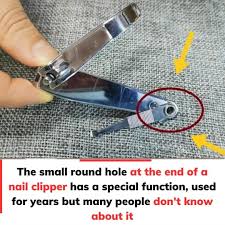

We’re surrounded by everyday objects filled with thoughtful design details we rarely notice. One such example is the small round hole at the end of a standard nail clipper’s lever. While it may seem decorative or accidental, this feature is a purposeful design choice rooted in practicality and history.
Its primary function is portability and organization. The hole allows nail clippers to be attached to keychains, grooming kits, or hooks, preventing them from getting lost in drawers. This simple addition turns a loose tool into an easily stored, always-accessible item.
The hole also offers secondary benefits. It can improve grip and leverage for users with limited dexterity and allows multiple clippers—such as separate ones for fingernails and toenails—to be kept together for hygiene and convenience.
Historically, this design dates back to the late 19th century, when grooming tools needed to be portable. Nail clippers were often carried on watch chains or chatelaines, and the hole ensured they were always within reach. Despite changes in manufacturing and added features like built-in files, this small detail has endured.
That tiny circle of metal reflects a design philosophy focused on real human needs rather than flashy aesthetics. It’s a quiet reminder that the most effective design solutions are often the simplest—and the easiest to overlook.