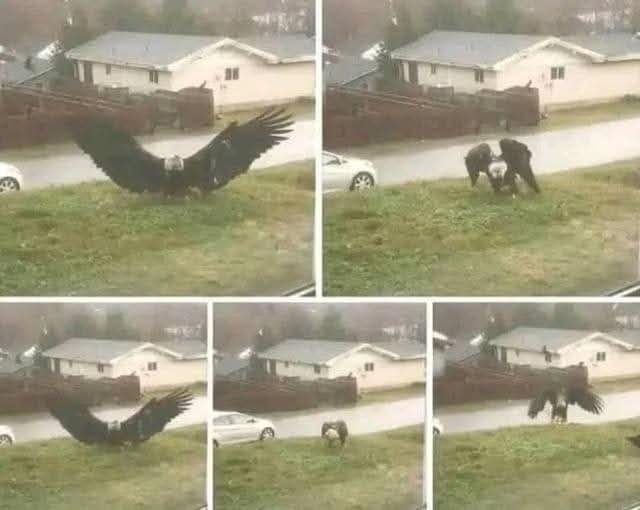

Reports from the lower Rio Grande Valley near Brownsville, Texas have recently attracted measured attention from scientists and wildlife officials after several independent witnesses described seeing an unusually large bird of prey. According to hikers, birdwatchers, and nearby residents, the raptor appeared to have a wingspan noticeably broader than that of familiar large birds typically seen in the area. While such observations can sometimes be influenced by distance, lighting, or perspective, the consistency across multiple accounts encouraged experts to take the reports seriously. Rather than dismissing the sightings outright, authorities opted for a careful and methodical response rooted in established scientific practice.
To better understand what was being observed, wildlife agencies partnered with experienced ornithologists to conduct a structured investigation using noninvasive monitoring techniques. These methods included motion-activated cameras, thermal imaging devices, and long-range optical equipment designed to observe wildlife without disrupting natural behavior. The region’s diverse landscape—combining river systems, agricultural land, and protected wildlife corridors—made observation challenging but also scientifically valuable. This area is known for supporting a wide range of migratory and resident bird species, making it an important location for avian research and long-term ecological studies.
As data was collected and reviewed, researchers identified footage that appeared to show a raptor larger than any species commonly documented in the region. While the images did not provide enough detail for immediate identification, they were considered unusual enough to merit continued attention. Experts emphasized that estimating size in the wild is inherently difficult, particularly when birds are seen in flight without clear reference points. Nevertheless, the findings shifted the conversation from initial skepticism to cautious scientific interest, reinforcing the need for additional evidence and extended observation rather than rapid conclusions.
Importantly, researchers have avoided speculation about undiscovered species or extraordinary explanations. Instead, they have outlined several realistic possibilities, including misidentification of a known species under uncommon viewing conditions, a rare genetic variation resulting in an unusually large individual, or a bird species that is seldom observed in southern Texas. For now, officials have intentionally used the neutral term “unidentified large raptor,” reflecting the scientific requirement for verified data before classification. The case has also sparked broader discussion about the limits of wildlife monitoring and how even well-studied regions can still hold unanswered questions. Scientists stress that uncertainty is a natural part of discovery and that patience, careful analysis, and continued research remain essential to understanding the natural world responsibly.