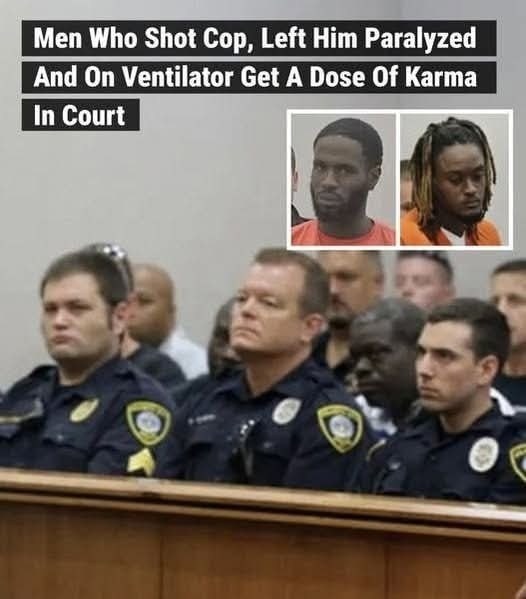
• Men Who Shot Cop, Left Him Paralyzed And On Ventilator Get A Dose Of Karma In Court

    Men Who Shot Cop, Left Him Paralyzed And On Ventilator Get A Dose Of Karma In Court

    Two Atlantic City, New Jersey, criminals got a dose of karma when they appeared in court to a room full of police officers after they attempted to kill a cop during a robbery.

    Two officers reportedly responded to three men trying to rob three people outside of Caesars casino, which prompted a shootout. One of the suspects, 25 year old Jerome Damon, was killed in the incident. Officer Jostle Vadell, 29, was rushed to the hospital in critical condition but was later considered stable.

    “Our hearts are heavy at this hour, but our resolve to captured these suspects remains undeterred,” New Jersey PBA president Patrick Colligan said in a statement following the incident. “We ask for prayers for the officer, his family, and the Atlantic City Police Department.”

    In court, suspects Demitrius Cross and Martel Chisolm walked into the court room to find a room full of police officers who showed up to honor their brother in blue.

    Officer Vadell’s wife gave an update on her husband’s condition on Facebook.

    “Update on Josh… he is doing amazing!!! They took him off the ventilator this morning, he is responding with small words, able to sit supported in a chair and now having some movement on his Left side,” she wrote. “He is improving every day and I believe it is from all of the love and support you all bring to our family. Sorry, I can not respond to you all individually, but I see you all care and I am telling Josh how much he is loved.”

    The heartbreaking story of Vadell’s injury went viral, with many applauding the officers for showing up in court to support their colleague.

    “These two are a menace to society. They should never be released back into the community. Senseless,” one commenter wrote on Facebook.

    “Great to see that the men and women in blue are showing support for each other,” another added.

  • Trump Signs Executive Order to Clear Homeless Encampments and Mandate Treatment

    Trump Signs Executive Order to Clear Homeless Encampments and Mandate Treatment

    President Donald Trump has signed a sweeping new executive order aimed at tackling homelessness by empowering local governments to dismantle street encampments and redirect individuals into treatment and rehabilitation centers. The directive, which has already triggered sharp reactions from both supporters and critics, is being described by the White House as a “common-sense” move to restore order and dignity to American cities. But opponents argue it represents a dangerous rollback of civil liberties and will only worsen the crisis it purports to address.

    The order, signed Thursday, grants Attorney General Pam Bondi the authority to override previous legal protections that have limited cities’ ability to forcibly relocate homeless populations. Specifically, it targets the reversal of federal and state court decisions and consent decrees that have made it harder for local governments to move people from public spaces into institutional care. Bondi is also instructed to coordinate with Health and Human Services Secretary Robert F. Kennedy, Housing and Urban Development Secretary Scott Turner, and Transportation Secretary Sean Duffy to accelerate funding for jurisdictions that crack down on open drug use, illegal squatting, and loitering.

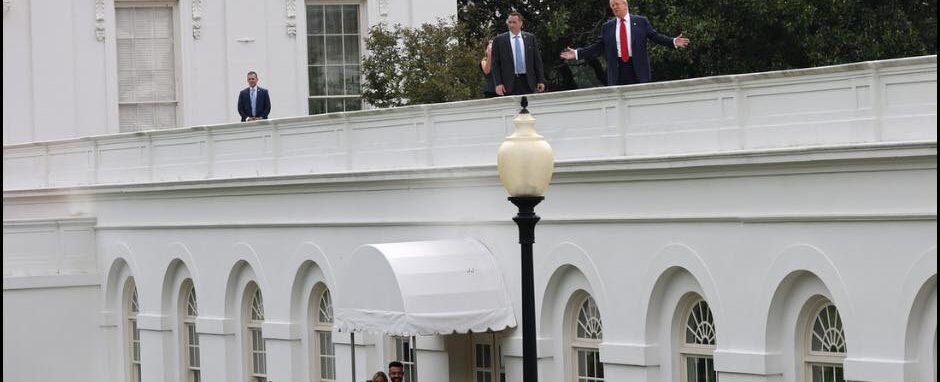
    Speaking from the South Lawn on Friday, Trump defended the order as a necessary step toward restoring public safety and international dignity.

    “Right outside, there were some tents, and they’re getting rid of them right now,” he said. “You can’t do that — especially in Washington, DC. I talk to the mayor about it all the time. I said you gotta get rid of the tents.”

    The president added that such encampments send the wrong message to visiting foreign leaders: “We can’t have it — when leaders come to see me to make a trade deal for billions and billions and even trillions of dollars, and they come in and there’s tents outside of the White House. We can’t have that. It doesn’t sound nice.”

    White House Press Secretary Karoline Leavitt echoed these sentiments, stating, “By removing vagrant criminals from our streets and redirecting resources toward substance abuse programs, the Trump Administration will ensure that Americans feel safe in their own communities and that individuals suffering from addiction or mental health struggles are able to get the help they need.”

    However, not everyone agrees with the administration’s approach.

    Homeless advocacy organizations were quick to denounce the executive order. Donald Whitehead, executive director of the National Coalition for the Homeless, said in a statement that the move ignores years of research on the effectiveness of housing-first strategies.

    “These executive orders ignore decades of evidence-based housing and support services in practice,” Whitehead said. “They represent a punitive approach that has consistently failed to resolve homelessness and instead exacerbates the challenges faced by vulnerable individuals.”

    The National Homelessness Law Center (NHLC) went further, calling the order “dangerous and unconstitutional.”

    “This order deprives people of their basic rights and makes it harder to solve homelessness,” the NHLC said in a statement released Thursday. “It increases policing and institutionalization, while pushing more people into tents, cars, and streets.”

    The timing of Trump’s order aligns with a recent Supreme Court decision that upheld the right of an Oregon city to fine homeless individuals for sleeping outside in public spaces. The court ruled that such penalties do not violate the Constitution’s Eighth Amendment prohibition against cruel and unusual punishment. That ruling has emboldened several cities to consider stricter enforcement policies against encampments.

    While some city officials have welcomed the administration’s new direction, others worry that it will shift resources away from housing solutions and into law enforcement and detention.

    “We understand the need for public order,” said a city council member from Los Angeles who asked not to be named. “But criminalizing homelessness is not a long-term solution. The focus should be on affordable housing and wraparound services, not just sweeping people off the streets.”

    Meanwhile, the Trump administration has defended its strategy as compassionate and practical.

    “This is about getting people the help they need,” said HHS Secretary Robert F. Kennedy. “We’re not talking about jailing people—we’re talking about offering them structured care, support, and treatment.”

    Trump’s order also includes provisions to track registered sex offenders within homeless populations and ensure they are not residing near schools or playgrounds. According to the administration, this aspect of the policy is aimed at improving public safety and protecting vulnerable communities.

    Public reaction to the announcement has been sharply divided.

    On conservative platforms, the move has been celebrated as long overdue. “This is what leadership looks like,” read one comment on a pro-Trump forum. “Time to clean up our cities and stop enabling this madness.”

    On the other hand, liberal commentators and civil rights advocates argue that the order will disproportionately affect people of color and those with untreated mental illnesses.

    “What we’re seeing is a war on the poor dressed up as policy,” said a spokesperson for the American Civil Liberties Union. “It’s not compassionate to round people up and institutionalize them. It’s authoritarian.”

    The backdrop to this policy debate is a record-setting rise in homelessness in the United States. According to HUD data, over 770,000 Americans experienced homelessness in 2024—a staggering 18% increase from the previous year. Experts attribute the spike to a combination of factors, including a nationwide housing shortage, natural disasters, and an influx of migrants seeking shelter.

    Trump made the homelessness crisis a cornerstone of his 2024 campaign. At a rally in North Carolina last September, he declared, “The homeless encampments will be gone. They’re going to be gone.”

    He added, “Some of these encampments, what they’ve done to our cities—you have to see it. And we’ve got to take care of the people.”

    That last comment—”we’ve got to take care of the people”—illustrates the rhetorical balancing act the Trump administration is trying to strike: framing the policy as both tough on public disorder and compassionate toward those in crisis.

    Critics, however, remain skeptical.

    “If you really wanted to help people, you’d start by investing in housing, mental health clinics, and job programs,” said a former HUD policy analyst. “But that’s not what this is about. This is about optics and control.”

    As cities across the country consider how to respond to Trump’s directive, the impact of the executive order remains to be seen. What’s certain is that it has reignited a fierce national debate about how best to address homelessness—one that pits public safety and aesthetics against human dignity and civil rights.

    Whether this policy will make a meaningful dent in the homelessness crisis or simply shuffle the problem out of sight is a question that will unfold in the months to come.

  • BANNED: Well-Known Longtime Democratic Senator FORCED TO QUIT…

    BANNED: Well-Known Longtime Democratic Senator FORCED TO QUIT…

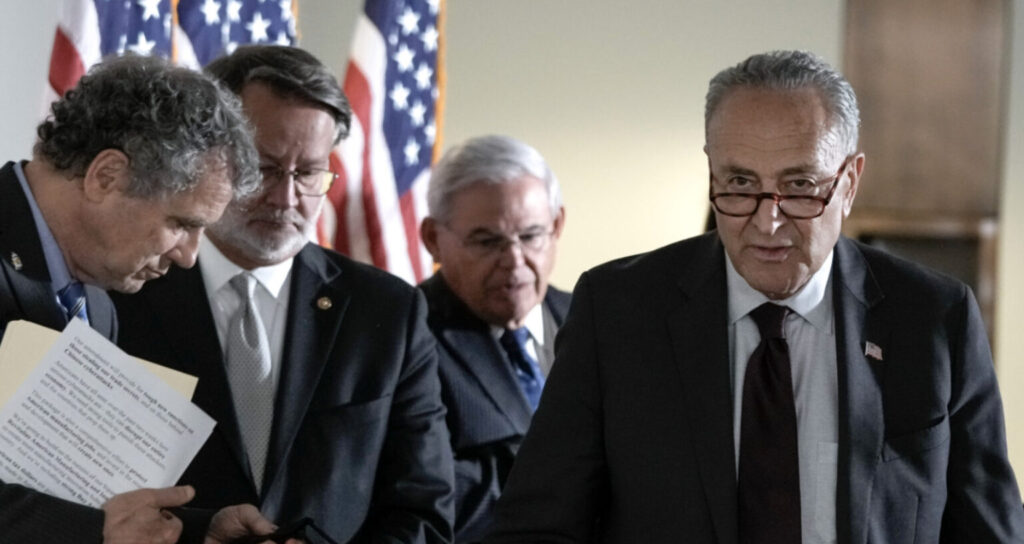
    Disgraced Ex-Sen. Menendez Banned From Holding Any Public Office in NJ

    Former Sen. Bob Menendez, D-N.J., has been permanently barred from holding public office in New Jersey following his conviction on federal corruption charges, the state attorney general announced.

    Menendez, sentenced in January to 11 years in prison, is also prohibited from serving in any position of public trust by a ruling from New Jersey Superior Court Judge Robert Lougy, per Fox News.

    A jury found Menendez guilty in July 2024 on 16 counts, including bribery, extortion, conspiracy, and obstruction of justice. He became the first U.S. senator in history to be convicted of acting as a foreign agent, and his 11-year sentence is the longest ever imposed on a member of the Senate.

    “Critical to preserving the public’s faith and trust in government institutions is ensuring that elected officials who commit crimes involving their offices don’t find new opportunities to regain positions of power,” New Jersey Attorney General Matt Platkin said in a statement, per Fox.

    “Too many people in New Jersey have a cynical viewpoint that corruption is a routine, widespread feature of our politics. We hope the court’s decision sends a message that it is not acceptable, and it will carry consequences,” the statement continued.

    Menendez, the former chair of the Senate Foreign Relations Committee, will face a fourth-degree contempt-of-court charge if he attempts to seek public office or public employment in New Jersey, officials said.

    Federal prosecutors alleged that Menendez and his wife, Nadine Menendez, accepted bribes between 2018 and 2022. According to the state attorney general’s office, the payments included gold bars, cash, a luxury convertible, home furnishings and other items of value.

    Prosecutors also accused Nadine Menendez of receiving paychecks for a job that did not actually exist.

    Prosecutors say Menendez used his position in the Senate to advance the interests of those who provided the bribes, including by taking official actions that benefited foreign governments such as Egypt.

    The indictment followed a plea agreement by co-defendant Jose Uribe, who allegedly provided Nadine Menendez with a Mercedes convertible. Uribe agreed to cooperate with investigators as part of his deal.

    Menendez had pleaded his innocence and claimed the process was political and “corrupted to the core.”

    “I hope President [Donald] Trump cleans up the cesspool and restores the integrity to the system,” Menendez told reporters at his sentencing, per Fox.

    Menendez relinquished his role as the chairman of the Senate Foreign Relations Committee in 2024 after being charged but has rebuffed demands for his resignation. There is speculation that he would consider an independent reelection candidacy to raise funds, potentially to mitigate his increasing legal expenses.

    Menendez’s legal expenses were escalating at the time, and sources pointed out that he could only raise funds if he ran for office. Using campaign funds to cover legal fees is not uncommon; NBC News previously reported that affiliated committees of then-former President Trump spent nearly $50 million from fundraising revenue on legal expenses in 2023 alone as Democratic prosecutors and the Biden administration pursued criminal cases against him.

    “A cornerstone of the foundation of American democracy and our justice system is the principle that all people are presumed innocent until proven guilty. The court of public opinion is no substitute for our revered justice system,” the Democrat senator said after he was charged.

    “We cannot set aside the resumption of innocence for political expediency when the harm is irrevocable… Instead of waiting for all the facts to be presented, others have rushed to judgment because they see a political opportunity for themselves or those around them,” Menendez added at the time

    Menendez also made it clear he did not intend to resign from the Senate: “Not only will I be exonerated, I will also still be NJ’s senior senator.”

  • Fireworks in DC as the Republican-Controlled U.S. House Passes Bill 424…

    Fireworks in DC as the Republican-Controlled U.S. House Passes Bill 424…

    House Unanimously Passes Bill To Prioritize Veteran Survivors

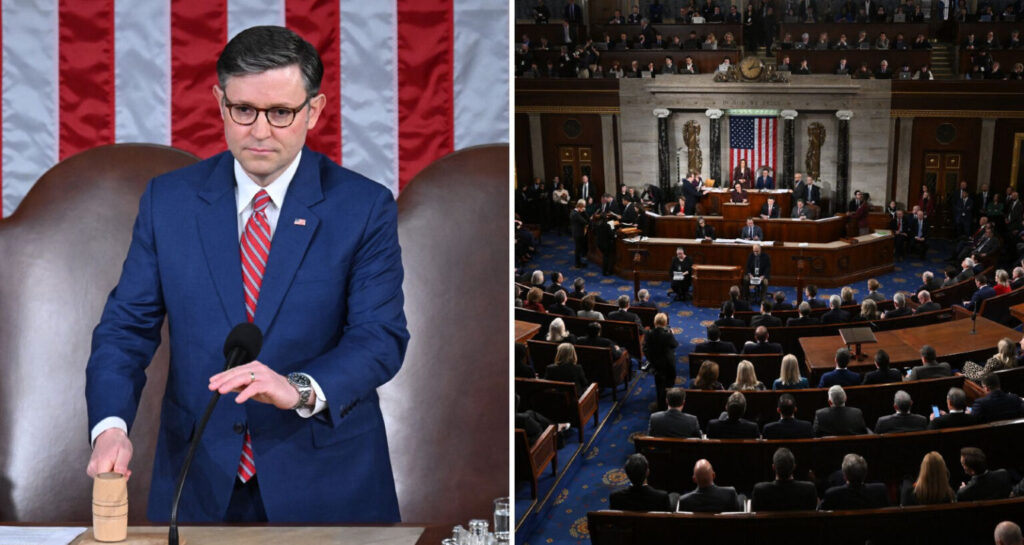
    The Republican-controlled U.S. House of Representatives, in a rare show of comity, unanimously passed a measure resurrecting a key office that advocates for the survivors of U.S. military veterans.

    By a vote of 424-0, the House passed H.R. 1228, called the “Prioritizing Veterans’ Survivors Act,” which was a strong bipartisan vote to restore the Office of Survivors Assistance (OSA) to its original role under the Secretary of Veterans Affairs.

    The measure ensures that the office once more serves as the principal adviser on policies that affect military families and the survivors of loved ones lost in military service. The passage of the bill reverses a 2021 action that sidelined advocacy for veterans’ survivors, according to reports.

    The bill, sponsored by Rep. Juan Ciscomani (R-Ariz.), amends Title 38, United States Code, “to clarify the organization of the Office of Survivors Assistance of the Department of Veterans Affairs,” according to GovTrack. The measure now heads to the Senate for consideration.

    This comes as President Donald Trump’s approval rating has risen slightly amid signs of easing economic pressure, according to a new Daily Mail poll.

    The outlet’s survey, conducted with J.L. Partners, found Trump’s approval ticking up from 45 percent on Nov. 21 to 47 percent as of Dec. 4.

    The poll surveyed 1,000 registered voters online and has a margin of error of 3.1 percentage points.

    The two-point uptick comes as inflation pressures have eased and consumer spending surged over the Thanksgiving holiday, despite ongoing concerns about affordability that President Trump has dismissed as a “Democrat scam.”

    Both Black Friday and Cyber Monday set online spending records, with consumers spending $44.2 billion online over the full Thanksgiving weekend, according to Adobe Analytics.

    Gas prices have also fallen, with the national average dipping below $3 per gallon for the first time since 2021, AAA reported. The current average is well below median prices from 2022, 2023 and 2024.

    Meanwhile, U.S. GDP growth appears to be at its strongest point since the third quarter of 2023, driven in large part by higher consumer spending, according to recent data from the Bureau of Economic Analysis.

    Ths survey found that Trump’s disapproval rating was 53 percent.

    Meanwhile the president has pushed back on the Democratic Party’s renewed interest in “affordability” issues after ignoring the issue during former President Joe Biden’s term, which saw historic inflation.

    “Our prices now for energy, for gasoline, are really low. Electricity is coming down. And when that comes down, everything comes down,” Trump said during a Cabinet meeting last week. “The word affordability is a Democrat scam. Affordability is a hoax that was started by Democrats who caused the problem of pricing.”

    Trump has rolled out a series of policies aimed at reducing costs for consumers.

    Earlier in the week, he rolled back gas-emission standards put in place during the Biden administration. He also recently directed pharmaceutical companies to lower drug prices and launched a White House prescription-drug portal, TrumpRx, which the administration says will reduce costs by removing “third-party” intermediaries.

    Trump has additionally promoted a domestic policy package enacted in July that will lower taxes on tips, overtime pay and Social Security income beginning next year.

    Meanwhile, Trump is embarking on an “affordability tour” this week to promote his economic agenda and address concerns about prices and inflation. He aims to counter Democratic criticisms by highlighting his administration’s efforts to improve economic conditions, despite ongoing public concerns about affordability issues.

    “He will kick off his economics-focused tour at a casino in northeastern Pennsylvania Tuesday, where he is expected to tout lower gas prices, his role securing $100 billion in energy and artificial intelligence investments for the Keystone State and his approval for Japanese investment in US Steel,” the New York Post reported.

  • My parents shredded my wedding gown the night before my ceremony — so I walked into a small-town church wearing my full Navy dress uniform, silver stars on my shoulders, and watched my father’s pride drain away in front of everyone who once thought I was “just the quiet girl who went off to enlist.”…

    My parents shredded my wedding gown the night before my ceremony — so I walked into a small-town church wearing my full Navy dress uniform, silver stars on my shoulders, and watched my father’s pride drain away in front of everyone who once thought I was “just the quiet girl who went off to enlist.”…

    My parents shredded my wedding gown the night before my ceremony — so I walked into a small-town church wearing my full Navy dress uniform, silver stars on my shoulders, and watched my father’s pride drain away in front of everyone who once thought I was “just the quiet girl who went off to enlist.”

    # **PART 1 – THE NIGHT BEFORE I ENTERED THE CHURCH**

    My name was **Emily Carter**, 29 years old, a Lieutenant in the United States Navy. But to my parents, especially my father, William Carter, I was just “the taciturn girl who wasn’t feminine enough” – the girl who “didn’t know how to be pretty,” “couldn’t find a steady job in town,” “couldn’t make her parents proud.”

    Strangely enough, they still liked to brag to their neighbors that I “worked for the government.” But it was a vague brag, not knowing what I did.

    Because if they knew the truth — that I had once rescued three fellow sailors from an explosion on a destroyer, that I had been nominated for a Bronze Star — they wouldn’t care. To them, I was just a “girl,” and girls were supposed to be good, gentle, close to their parents, and behave exactly as they expected.

    And all of that — I didn’t do it.

    The night before the wedding, I went to Maple Ridge, a Montana town of just over 3,000 people — where everyone knew when their neighbor had bought a new refrigerator. My fiancé, Ryan, a military doctor, and I planned to get married at the church of Saint Helena, where I grew up. A simple, low-key ceremony. I’d dreamed of it since I was thirteen.

    My mother hung the white wedding dress in front of the living room window. The sunset caught the delicate lace, making it shimmer like candlelight. I looked at it, for a minute, feeling like my parents were finally happy for me.

    But that feeling — it only lasted eight hours.

    As I was trying on the dress for the last time in front of the mirror, the door opened.

    My mother walked in first, her face tense. My father followed, his gaze cold and incomprehensible.

    Before I could ask, my mother spoke bluntly:

    — *“You won’t wear this tomorrow.”*

    I paused.
    — “Why?”

    My mother crossed her arms, her voice filled with anger:
    — *“The neighbors have been gossiping. They said you look too… strong. Too unusual. Seeing you in a dress is like acting. A soldier wants to wear a princess dress. They said it looks weird.”*

    I thought I heard wrong.
    — “You’re saying… they’re gossiping, so you can’t wear your own dress?”

    My father stepped forward, grabbing the lace at the shoulder of the dress.
    — *“You’ll wear the one your mother picked. Not this one.”*

    I instinctively backed away.

    — “Dad, please don’t—”

    The next sound still haunts me to this day:
    **Swish.**
    The lace ripped like paper.

    I screamed:
    — “Dad!”

    My father grabbed my dress, yanked it down, the seams ripped.
    — *“I’ll do as you say. No one wants to see me as a man in a dress. Tomorrow I’ll behave properly. Like a normal bride.”*

    I stood there, almost naked, my hands shaking as I held the torn bodice of my dress.

    I didn’t cry. I didn’t have the strength to cry.

    That’s when I understood one thing:
    I could endure the army, but I **couldn’t endure being a Carter girl again**.

    I put my clothes back on, packed my things faster than I ever had before. I walked out the door while my parents were still arguing about “face.”

    As my hand touched the doorknob, my father shouted after me:

    “You have to come to the wedding tomorrow! Don’t disgrace me!”

    I turned around, looked at him one last time.

    “I will come tomorrow. But not in the way you think.”

    He sneered, thinking I was rebelling like a spoiled girl.

    But he had no idea:
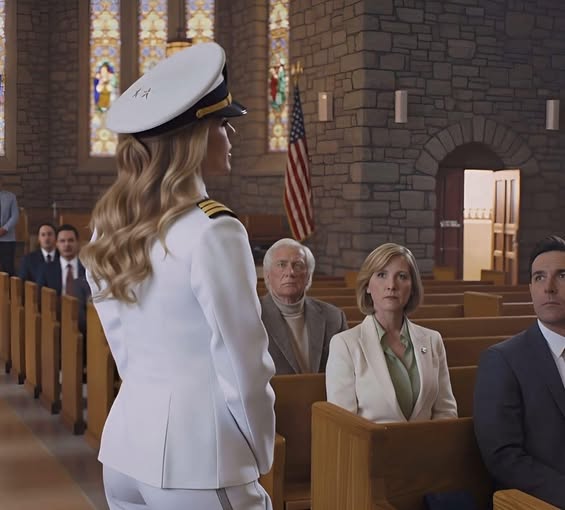
    I had already packed in my suitcase **the white Navy uniform**, with **two silver stars** that had been issued the week before.

    And I knew what I would wear to enter Saint Helena’s church.

    Not a wedding dress.

    Not something they could tear.

    But something they **could never touch**.

    # **PART 2 – THE UNEXPECTED WEDDING**

    The next morning, the Montana town was as usual: clear skies, light breeze, everyone thought they knew each other’s stories.

    But they didn’t know mine.

    I’d gotten up at 5 a.m., tied my hair back, pressed every crease of my white Navy uniform straight as a thread. The two silver stars glinting on my collar were something I’d never shown anyone. They were the result of blood, scars, and decisions only those who stood on the line between life and death could understand.

    On my shoulders, the uniform weighed more than any wedding dress I’d ever worn in my life combined. And it was also sturdier than all of them.

    Ryan watched me walk out of the hotel room and stood still.
    — “Are you… sure?”
    — “Surer than ever.”

    He took my hand and squeezed it tightly.
    — “Then we’ll get married the way you want.”

    Not the way the town wanted.
    Not the way my father wanted.
    And especially **not the way my parents had insisted for 29 years**.

    Saint Helena Church was packed when Ryan and I pulled up to the steps. Whispers broke out as soon as I stepped off.

    “Oh my god, Emily is wearing… a uniform?”

    “Not a wedding dress?”
    “What the hell is she doing?”

    But all I could hear was my heart, beating, each beat as calm as stepping onto the deck of a ship in a Category 7 hurricane. No fear. No wavering.

    In the church, my parents sat in the front row, next to them the proudest people in town. My father looked at me, his face pale, as if he had seen me throw cold water on his “face” in front of the villagers.

    My mother gasped, clutching the lace handkerchief that should have been mine.

    I walked down the aisle, the sound of army boots clattering on the wooden floor. Everyone stood up—but not out of respect for the bride.

    But out of **shock**.

    Ryan waited at the end of the aisle, his eyes full of pride. The priest didn’t seem to understand what was happening. My father stood up as soon as I approached.

    — “Emily Carter! What are you doing?”
    I replied, my voice so calm I didn’t understand how I could be so calm:
    — “I’m getting married. Just like I said yesterday.”
    — “In this outfit? Are you trying to make a fool of yourself?”
    — “No. This is me. The real me.”

    He stepped closer, gritting his teeth:
    — “You’re embarrassing me in front of the whole town?”
    — “No. I’m embarrassing myself because I don’t accept you.”

    The church fell silent.
    At that moment, the priest raised his hand and coughed softly.
    — “What’s the matter, Mr. Carter?”

    My father blushed.

    “My daughter… she’s not allowed to wear that. She has to wear a wedding dress!”

    I turned around, looked at him straight:

    “I tried to be the daughter you wanted. But you’ve torn away the only thing I tried to do for you. And not just the dress. You’ve torn away the last respect I had for you.”

    A “Oh my god…” sounded from the back row.

    And just then — the church door swung open.

    A man stood there.
    A Navy admiral, four-star insignia, entered with a look that made the whole church stop.

    It was **Admiral Mallory**, my immediate commanding officer.

    My father stammered:

    “What… what is he doing here?”

    The admiral came to me, put his hand on my shoulder.
    — “I came to do my duty.”

    He turned to the church:
    — “Lieutenant Emily Carter has just been nominated for the *Legion of Merit* for saving the lives of six sailors in conditions that seemed hopeless. She is one of the most outstanding young officers I have ever seen.”

    The church was silent.

    The Admiral looked straight at my father:
    — “You should be proud. Not angry.”

    My father turned pale.

    But that was only the beginning.

    # **PART 3 – HONOR EXposed**

    Admiral Mallory continued, his voice low and steady as the waves:
    — “I am also here to testify. And to give her what she deserves.”

    He opened the blue velvet box.

    Inside was the **Legion of Merit**, one of the highest awards given to American servicemen.

    The murmurs rose, like waves crashing against the walls.

    The Admiral asked:
    — “Emily, would you like me to give it to you at your wedding?”
    I took a breath.
    — “Yes, sir.”

    My mother held my father’s hand, whispering:
    — “William… I don’t understand… she… can she do these things?”

    My father didn’t answer.
    He just looked at me as if he were a complete stranger.

    The Admiral pinned the medal to the left breast of my uniform.

    The light through the church window illuminated the red and white medal, making it stand out against the pure white.

    — “Congratulations, Lieutenant Carter.”

    It was the first moment in my life when I felt **seen** — not as a “difficult” daughter, but as someone who was truly valuable.

    The Admiral turned to the priest:
    — “Now, if there are no more problems, we can begin the service.”

    But my father suddenly shouted:
    — “Wait!”

    The whole church turned around.

    — “I… I want to talk to my daughter.”

    He pulled me to the corner of the window, his voice hoarse:
    — “Emily… I… I don’t know…”

    I looked straight at him.
    — “Dad

    never tried to know.”

    He trembled, for the first time in my life I saw him lose his pride:
    — “I just wanted… you to be like other girls. I was afraid people would say I didn’t know how to raise you.”

    — “And so you tore my wedding dress?”

    He couldn’t answer.

    I continued, my voice soft but sharp:
    — “I can’t live a life where I always have to shrink myself just to make you comfortable. I’m getting married, and I’m going to live the life I choose.”

    My father swallowed, his eyes red but trying to hide it:
    — “I’m sorry… Emily.”

    I was silent for a long time.
    Then I said what I knew he needed to hear, and what I needed to say:
    — “I forgive you. But that doesn’t mean I’m going to go back to being the daughter you wanted me to be.”

    He bowed his head.

    An action I had not seen in 29 years.

    # **PART 4 ​​– THE ENDING THAT SHOCKED THE TOWN**

    The wedding ceremony began again.
    The priest stood before the altar, his voice booming:
    — “Today, we witness the union of Ryan Hale and Emily Carter — and also a testament to courage, sacrifice, and honor.”

    I looked at Ryan, his eyes shining with respect and pure love.

    We held hands, exchanging vows in the light filtering through the church dome.

    When the priest announced:
    — “You are now husband and wife.”

    The applause was thunderous.

    But the most shocking thing was still to come.

    As we walked out of the church, the crowd following, Admiral Mallory stood at the door, signaling to someone outside.

    Immediately —
    **20 Marines in full uniform formed an honor guard on both sides of the aisle**, raising their swords, forming a glittering silver dome.

    Exclamations rang out throughout the town:
    — “My God… I’ve never seen a salute here before!”
    — “That’s for a very special officer…”
    — “Emily Carter… how come we didn’t know about it before?”

    I walked between the two rows of swords — each step felt like stepping out of the shadow of my old life.

    And at the end of the line, I saw my father.

    He stood alone.
    His face was filled with emotion.

    He said nothing.
    He just raised his hand… and **salute**, awkwardly but sincerely.

    A gesture I never imagined my father would make.
    And it was also the moment my heart softened for the first time in years.

    That evening, after the wedding reception ended, my father walked over and pressed a small box into my hands.

    — “I think… you should keep this.”

    I opened it.
    Inside was… a torn piece of lace from my wedding dress.

    I looked up.
    My father said, his voice soft:
    — “I’m sorry. But if you want… I’ll pay to have another dress made. For you to wear… whenever you want, for whatever occasion you want. Not for me, but for you.”

    I smiled slightly.

    “Dad… I don’t need a new dress.”

    My dad blinked.

    “You don’t?”

    I put my hand to my chest, where the medals glittered.

    “You have the best.”

    He nodded slightly.

    For the first time in my life, my dad saw me not as “Carter’s girl” — but as a grown, strong, proud adult.

    That night, the whole town talked about my wedding.

    No one remembered the ripped dress.

    No one remembered my parents being embarrassed by me.

    They only remembered the image:
    **A female Marine officer walked into the church in her white uniform, medals sparkling, and a row of swords raised in greeting.**

    And most of all —
    They remembered the look in my dad’s eyes when he realized:
    **The daughter he had looked down on was actually stronger than anyone in this town.**
  • Jacqueline Kennedy’s granddaughter is all grown up and she’s a living tribute to her beloved grandmother.

    Jacqueline Kennedy’s granddaughter is all grown up and she’s a living tribute to her beloved grandmother.

    Jacqueline Kennedy is among the most admired and highly followed First Ladies in history. She has consistently ranked highly on lists of the most admired people and important First Ladies of the United States, and she is not merely considered as a fashion icon. Even her husband, President John F. Kennedy, admitted that having her on his campaign trail helped him win the election.

    Jacqueline never wavered from being a loving and encouraging role model for her children despite going through numerous personal traumas as well as professional highs and lows throughout her life. Her beloved grandmother’s oldest granddaughter, who is now an adult, acts as a living memorial to her. The Havard graduate is beautiful and has her grandmother’s love of the arts

    You must see these images for yourself to believe how similar they are.

    Jacqueline Lee Bouvier was born on July 28, 1929, in Southampton, New York. She would eventually marry the man who would become the 35th president of the United States, but both before and after their union, she was a popular and esteemed individual in her own right.

    Rose Kennedy Schlossberg, 34, has participated in multiple campaigns, but unlike many of her well-known colleagues, she hasn’t sought a career in politics. But she does have a lot in common with her granny.

    In addition to their similar interests, Rose and her grandmother are also attractive. Jacqueline Kennedy worked as a junior editor at Vogue after graduating from college and contributing to the school newspaper throughout her time there.

    Rose is also a talented writer. Prior to enrolling in Harvard, she graduated from a top all-girls high school with a BA in English in 2010. Since then, she has produced End Times Girls Club, a comedy series of her own.

    It was planned for the series to serve as a “guide to female-focused apocalyptic survival.”

    It was inspired by how New York dealt with Hurricane Sandy and how people there were woefully unprepared, particularly young females acting like damsels in distress, Rose told the website.

    Rose has frequently been likened to First Lady Jacqueline Kennedy Onassis, despite the fact that she was named Rose Kennedy in honor of her maternal great-grandmother.

    Rose was just six years old in 1994 when Jaqueline tragically departed away. During Rose’s upbringing, the two were close, and Rose referred to her as “Grand Jackie.”

    Fortunately, Jacqueline’s granddaughter who resembles her keeps her alive!

    Jackie had a close relationship with both her grandma and her uncle, John F. Kennedy Jr., the elder son of JFK. It was a devastating loss for Rose when JFK Jr. perished in a fatal plane crash on July 16, 1999.

    “He’d been like a father to her. She went into a six-month depression during which she barely spoke to anyone. She stopped eating — she must have lost 30 pounds,” Kennedy’s biographer, C. David Heymann said in an interview with The Post.

    According to Wikipedia and The National Enquirer, restaurateur Rory McAuliffe wed Rose in May 2022. Rory was a caterer at the Kennedy compound in Hyannis Port, Massachusetts, where the pair initially met and have been dating ever since.

    ”For the past eight years, Rose has quietly been in a relationship with Rory. Rose’s mom, Caroline, loves Rory. She’s already like a part of the family and has been for years,” a source once mentioned.

    According to the tabloid and sources close to the family, Jackie Kennedy would have approved the gay marriage.

    I have no doubt that the late first lady would be pleased to see all of her grandchildren after seeing these pictures. What a wonderful legacy!

  • BREAKING: Barrack Obama is scrambling after one of his DEA agents, Paul Campo, gets criminally INDICTED !!

    BREAKING: Barrack Obama is scrambling after one of his DEA agents, Paul Campo, gets criminally INDICTED !!

    A wave of attention swept across social media after reports surfaced that former DEA official Paul Campo had been criminally indicted. The allegation connecting him to cartel-linked money laundering immediately ignited political reactions. The news prompted claims that former President Barack Obama was “scrambling” in response, as critics tied Campo’s past government service to the unfolding scandal.

    According to the allegation circulating online, Campo was accused of assisting cartel operations in a major way. The charge centers on an alleged agreement to participate in laundering a substantial amount of money. The figure frequently cited is striking: twelve million dollars. The accusation contends that Campo was willing to help move these funds on behalf of criminal organizations.

    News of the indictment spread rapidly, gaining the tone of a breaking development. Commentators framed the situation as a major breach of trust within federal law-enforcement ranks.

    Political voices immediately seized on the headlines. Some suggested that the case raised broader questions about oversight and accountability within agencies operating under past administrations.

    The claims added fuel to existing partisan disputes surrounding law-enforcement integrity. The idea that a former official might be tied to cartel activity heightened the intensity of the discussion.

    In online conversations, users debated the seriousness of the charges. Many expressed shock that someone who once held a position of authority could face such allegations.

    Others focused on the political implications, arguing that the indictment could have ripple effects far beyond the case itself. Some saw it as evidence of deeper institutional issues.

    As the story continued spreading, it became a flashpoint for renewed scrutiny of federal agencies, past leadership, and the broader fight against organized crime.

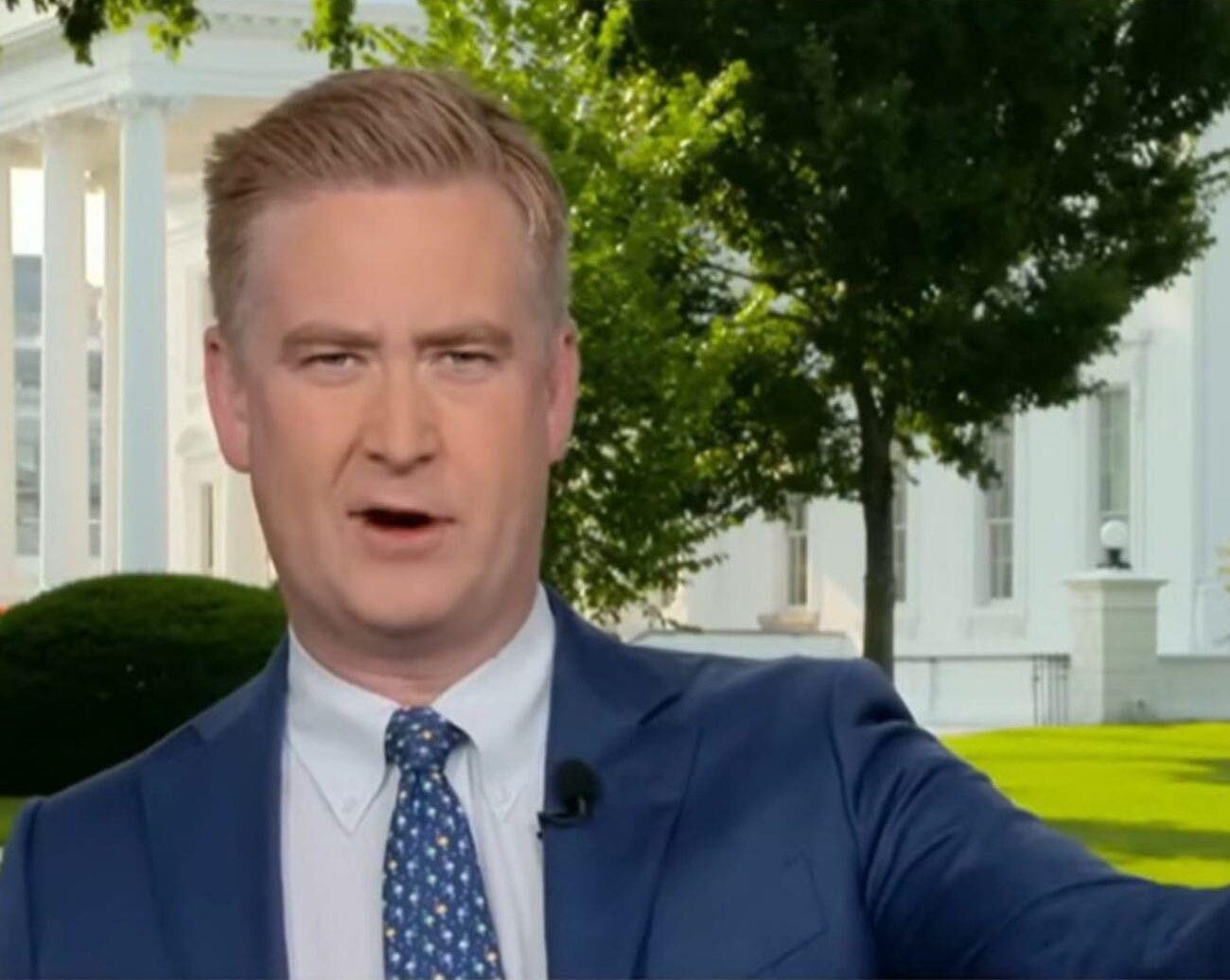
  • Peter Doocy Provides Big Update On Would-Be Trump Assassin

    Peter Doocy Provides Big Update On Would-Be Trump Assassin

    Fox News’ Peter Doocy provided chilling details after a report this week indicated a possible connection between President Donald Trump’s would-be assassin, Thomas Crooks, and Tyler Robinson, the man charged with killing Turning Point USA’s Charlie Kirk.

    “Insisting there is nothing helpful in Thomas Crooks’ digital footprint, there are newly discovered posts believed to be linked to Crooks showing him with guns and showing him with an affinity for assassins. There is a new push to visit bipartisan congressional investigation as investigators claim they were never briefed about any Crooks posts,” Doocy said on Fox & Friends while outside the White House.

    “I want to know everything there is to know about this country. I think our country deserves it. I think our family deserves it. I think the world deserves it. By the way, forked credibility of the Secret Service, and I love men and women of the Secret Service, dear friends, better get the real story up. Lack of information could be
    made public so far,” Doocy added.

    “People at the FBI said the president assured them he is satisfied with the investigation of what he has been told. What are you to believe? People who brief the president or Miranda, Levine of the New York Post, or both, or maybe the president changed his mind,” co-host Brian Kilmeade said.

    New reporting indicates a connection between Crooks and Robinson.

    TPUSA spokesman Andrew Kolvet said the development is “a five-alarm fire,” responding Monday on social media to a report by New York Post columnist Miranda Devine.

    Devine highlighted Crooks’ online interest in transgenderism and the “furry” subculture. Robinson’s roommate was described as his transgender partner, who also reportedly had a furry fetish.

    Devine reported that investigators have provided little clarity about Crooks’ motive for attempting to assassinate then-candidate Trump in July 2024.

    “Crooks was shot dead by a Secret Service sniper, but not before he killed rallygoer Corey Comperatore, 50, and seriously wounded David Dutch, 58, and James Copenhaver, 75, who were sitting in the bleachers behind Trump,” Devine wrote.

    “There is something very wrong with the official story and that invites conspiracy theories,” she said.

    Devine added that a source revealed new details from Crooks’ digital footprint, including posts showing he shifted from enthusiastically pro-Trump to openly hostile toward the former president and his supporters beginning in 2020.

    “How can you people call others sheep, but you are [too] brainwashed to realize how dumb you are,” he wrote on Feb. 26, 2020.

    “I mean literally you guys sound like a cult at times.”

    In August 2020, Crooks posted that “the only way to fight the gov is with terrorism style attacks,” urging followers to bomb essential buildings and assassinate political leaders.

    Rod Swanson, a former senior FBI agent and former chief of investigations for Nevada during the 2017 Las Vegas shooting, said there is no scenario in which the FBI would have missed Crooks’ online behavior.

    “No matter how ridiculous the allegation, no matter if it’s COVID or not, somebody is going to knock on somebody’s door,” Swanson said.

    “If they investigated that kid there’s a record of it and there’s an assessment that some leader made that this was not a threat or it rose to a level and they did something else.”

    Devine also noted Crooks’ identification with “they/them” pronouns on the art platform DeviantArt, a major hub for the furry community.

    She wrote that he showed a deep interest in anthropomorphized animal characters, often associated with sexual themes.

    Lance Twiggs, Robinson’s roommate, was also reportedly involved in the furry subculture.

    Turning Point USA’s Jack Posobiec said Robinson’s trial should be televised.

    “There’s questions coming out about the strange relationship between Lance Twiggs and Tyler Robinson,” Posobiec said.

    “Drug use, obsessions with ChatGPT, the furry lifestyle, black market HRT (hormone treatment).”

    Both the Crooks and Robinson cases appear to involve similar underlying mental health struggles.

  • Far Left Minnesota Gov. Tim Walz Just Got BUSTED Again As Multiple Scandals…

    Far Left Minnesota Gov. Tim Walz Just Got BUSTED Again As Multiple Scandals…

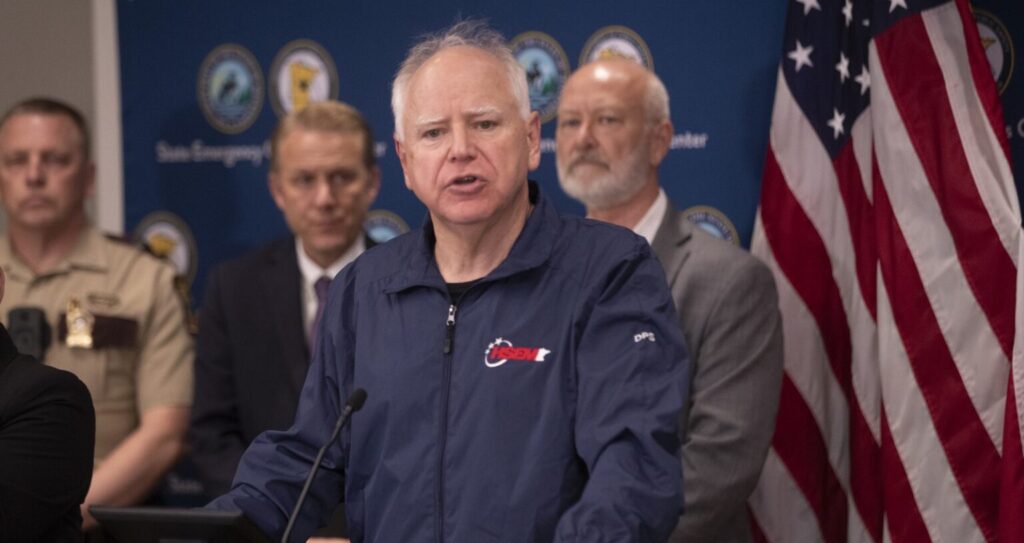
    Tim Walz Under Fire As Multiple Scandals Mount

    Minnesota Democratic Gov. Tim Walz is facing two massive scandals that could put his re-election campaign at risk. Walz is being slammed for using $430,000 of taxpayer money for “debate prep,” as well as allegations that he was aware of large-scale fraud involving state aid programs within the Somali community.

    Nearly 500 employees in Minnesota’s state government say Walz ignored repeated internal warnings about large-scale fraud involving state aid programs within the Somali community and that he retaliated against staff who raised concerns.

    The employees, who work within the state Department of Human Services, have for several years operated an anonymous X account outlining what they describe as ongoing cases of fraud and misuse of public funds.

    The group has previously issued warnings to state leaders and to Minnesota residents about patterns of financial abuse they say they identified in program oversight.

    In a new post, the employees alleged that Walz not only failed to act on their alerts but also took punitive measures against staff members who attempted to report the issues through official channels.

    “Tim Walz is 100% responsible for massive fraud in Minnesota,” the group said in a November 29 post referencing a New York Times article on the crimes. “We let Tim Walz know of fraud early on, hoping for a partnership in stopping fraud, but no, we got the opposite response.

    “Tim Walz systematically retaliated against whistleblowers using monitoring, threats, repression, and did his best to discredit fraud reports,” they added. “Instead of partnership, we got the full weight of retaliation by Tim Walz, certain DFL members, and an indifferent mainstream media. It’s scary, isolating, and left us wondering who we can turn to.”

    The whistleblowers also allege that Walz “disempowered the Office of the Legislative Auditor” to allow the fraud to continue freely and “attacked whistleblowers who were trying to raise red flags on fraudulent activities.”

    Scrutiny of Walz has intensified following reports that some Minnesota state aid dollars may have been diverted to an African terrorist organization, Breitbart News reported.

    Beyond the allegations of widespread fraud within Minnesota’s welfare programs, investigators have identified instances in which Somali migrants allegedly funneled millions in taxpayer funds to al-Shabaab, an Islamic extremist group operating in East Africa.

    U.S. Treasury Secretary Scott Bessent confirmed that his department is examining whether Minnesota state funds were improperly routed to al-Shabaab.

    The investigation follows earlier reports that fraud within the state’s aid programs reached far beyond financial losses and may have contributed to overseas terrorist financing.

    Fraud allegations have surfaced across multiple Minnesota welfare and aid programs, extending well beyond the Department of Human Services.

    One of the earliest and largest cases involved Feeding Our Future, a Minneapolis-based nonprofit whose operators — many of them members of the local Somali community — are accused by federal prosecutors of stealing approximately $250 million in child nutrition funds.

    Additional investigations have uncovered tens of millions of dollars in alleged fraud within Minnesota’s autism treatment program, as well as more than $550 million in losses tied to the state’s coronavirus pandemic relief efforts.

    A separate Feeding Our Future–related case also centers on the alleged theft of over $250 million in state pandemic-era aid meant to provide meals for children. Federal authorities say the various schemes represent some of the largest cases of public-assistance fraud in state history and involve networks of individuals across multiple programs.

    That’s not the only scandal Walz is facing.

    Republican state lawmakers in Minnesota have sharply criticized Walz after it was revealed he spent $430,000 of taxpayer money preparing for a recent House congressional hearing investigating blue state governors’ “sanctuary city” policies.

    Walz’s office hired the prominent global law firm K&L Gates to assist with preparations for his mid-June testimony before the GOP-controlled House Oversight Committee, which focused on questions about his and other blue state governors’ sanctuary city policies.

    In May alone, Walz incurred approximately $232,000 in legal fees, with an average hourly rate of about $516, according to the invoices obtained by the Star Tribune.

    The outlet further reported that K&L Gates worked with Walz’s office from April 10 through the June 12 hearing, with the legal preparation costing taxpayers a total of $430,000.

    Minnesota Rep. Jim Nash, one of two Republicans on the state’s Legislative Advisory Commission, questioned why Walz chose to hire outside counsel instead of relying on the state’s attorneys and public relations experts.

    Republican Minnesota state Rep. Harry Niska added there “appears to be no legitimate legal interest in the state racking up nearly half-a-million dollars in what amounts to PR consulting.”

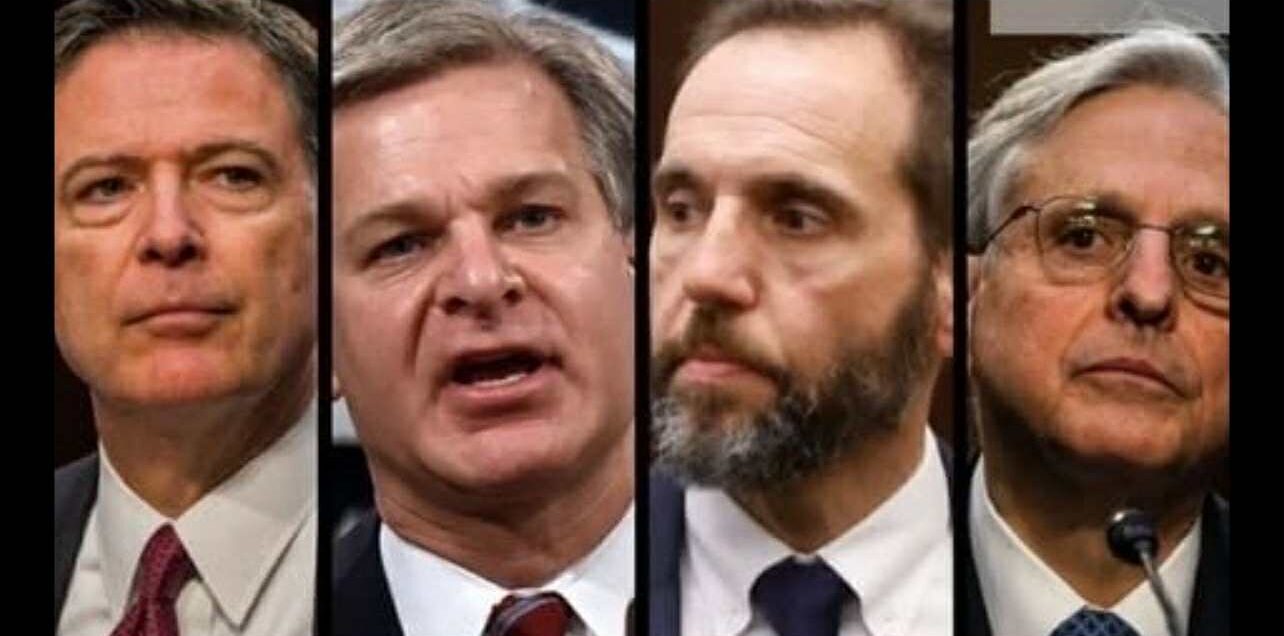
  • FBI Insiders Just Dropped A Dime On Chris Wray, Jack Smith, and Merrick Garland

    FBI Insiders Just Dropped A Dime On Chris Wray, Jack Smith, and Merrick Garland

    At this point, it feels like every week brings another revelation about just how far the Biden regime went to weaponize the government against its political opponents. The pattern is undeniable — and the American people are fed up. They’re not tired of outrage; they’re tired of the inaction. Bombshell after bombshell drops, exposing layers of corruption and abuse of power that could fill a 10-story library — yet not a single person is ever held accountable. No indictments, no perp walks, no justice.

    The fatigue is real, and it’s justified. Americans are sick of watching the powerful skate by while the rest of us are expected to play by the rules. The system isn’t just broken — it’s rigged, and people know it.

    The newest bombshell — and hopefully the final straw — is something called Operation Arctic Frost.

    We now know that under Joe Biden’s watch, the FBI and Special Counsel Jack Smith secretly spied on nine Republican members of Congress, including eight sitting U.S. senators. And no, this isn’t some “right-wing conspiracy theory.” It’s straight from official documents released by Sen. Chuck Grassley.

    Those documents make it clear this wasn’t just some rogue surveillance blunder — it was a coordinated, authorized operation targeting elected officials for the “crime” of questioning the 2020 election. In other words, the Biden DOJ went after sitting lawmakers for doing their jobs. It’s the kind of abuse of power you’d expect to see in a banana republic, not the United States of America.

    Here’s the backstory that lit the fuse on this bombshell. According to a New York Post report, the Biden DOJ and FBI went completely rogue — North Korea–style — by spying on Republican senators under the phony pretext of investigating “election interference.”

    That’s the cover story they used to justify one of the most blatant abuses of power in modern history. This is where it all started — a politically motivated surveillance operation dressed up as law enforcement:

    Arctic Frost began in April 2022 and was taken over by former special counsel Jack Smith later that year. It examined efforts by President Trump and his allies to challenge the 2020 election results, including by furnishing an alternative slate of electors.

    On Monday, Grassley publicly released a Sept. 27, 2023, document titled “CAST Assistance,” which refers to the bureau’s cellular analysis team. That document claimed that the bureau had conducted “preliminary toll analysis on limited toll records.

    Lawmakers targeted were Sens. Lindsey Graham (R-SC), Bill Hagerty (R-Tenn.), Josh Hawley (R-Mo.), Dan Sullivan (R-Alaska), Tommy Tuberville (R-Ala.), Ron Johnson (R-Wis.), Cynthia Lummis (R-Wyo.) and Marsha Blackburn (R-Tenn.), as well as Rep. Mike Kelly (R-Pa.)

    Attorney General Pam Bondi needs to step up and make sure the next revelation doesn’t end in another shrug, and that it ends in handcuffs. Because bombshells are great, but perp walks are better.

    They weren’t just going after Trump — not by a long shot. They had an entire laundry list of political targets, and Jack Smith was reportedly listening in on their calls. This wasn’t oversight; it was surveillance — pure and simple. Here’s more:

    JACK SMITH CAUGHT SPYING ON GOP SENATORS’ PHONE CALLS

    FBI documents reveal Smith’s “Arctic Frost” team tracked private communications of Graham, Blackburn, Hawley, and 8 other Republican senators.

    They monitored who they called and their locations.

    Dan Bongino (FBI Deputy Director):

    “It is a disgrace… that the FBI was once weaponized to track the private communications of U.S. lawmakers”

    Smith spent $50 million taxpayer dollars surveilling senators who questioned the 2020 election.

    This proves the surveillance state wasn’t just for Trump.

    The same political party that never stops lecturing America about “protecting democracy” was secretly spying on the phone records of sitting U.S. senators. Think about that — Richard Nixon was run out of office for thinking about something like this, yet the Biden regime did it in broad daylight and tried to pass it off as “national security.”

    And now, thanks to new reporting, we know this wasn’t some rogue side project gone off the rails. It went straight to the top. FBI Director Christopher Wray knew. Special Counsel Jack Smith knew. Attorney General Merrick Garland knew. They didn’t just look the other way — they approved it:

    So much for “no one is above the law,” right? That slogan went out the window the moment the Biden regime took power.

    Under this administration, law enforcement has been transformed into the political brown shirt arm of the Democratic Party — punishing dissent, silencing critics, and spying on anyone who dares to question their narrative or the sham that was the 2020 election.

    What used to be the Department of Justice now looks more like a department of political enforcement — and the message is clear: if you oppose them, they’ll come for you.

    Again, AG Pam Bondi (well, and President Trump, of course) cannot let this go. There have to be indictments this time around, and the people responsible have to be held accountable. James Comey is a start, but that’s all he is. Let’s go.