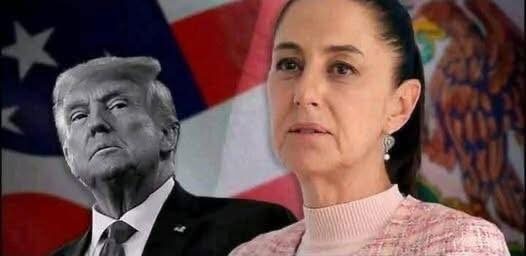
• Mexican president states that Trump is not..

    Mexican president states that Trump is not..

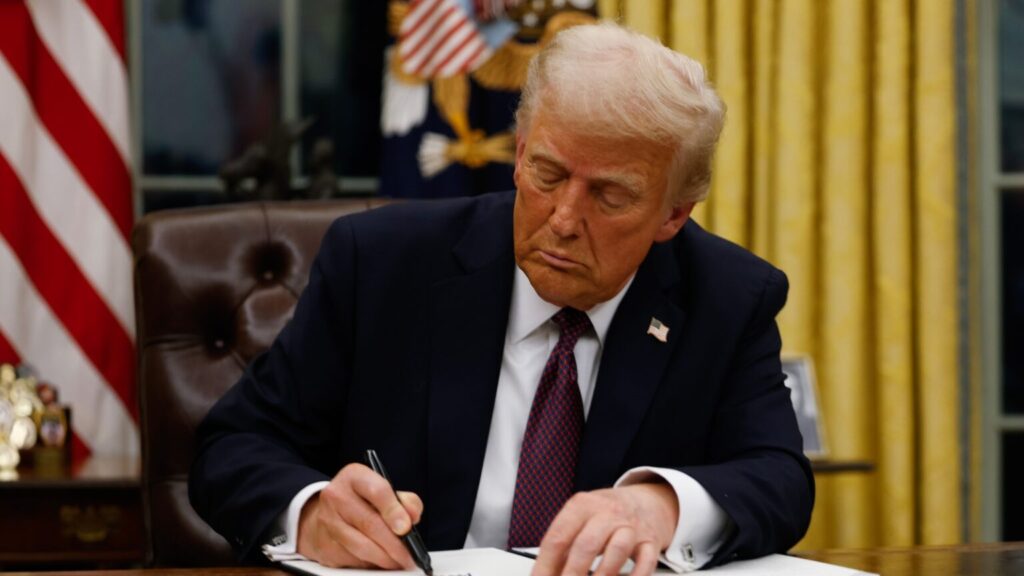
    World leaders react after Trump says U.S. has bombed 3 nuclear sites in Iran, including Fordo World leaders reacted to President Donald Trump’s announcement Saturday that the U.S. had carried out a “very successful attack” on three nuclear sites in Iran, including Fordo.

    “This is an HISTORIC MOMENT FOR THE UNITED STATES OF AMERICA, ISRAEL, AND THE WORLD. IRAN MUST NOW AGREE TO END THIS WAR,” Trump posted on Truth Social.

    Here’s how world reacted after the attack.
    Iranian Foreign Minister Abbas Araghchi said in a statement on X that his nation “reserves all options” in responding to the attack.

    “The events this morning are outrageous and will have everlasting consequences,” Araghch said. “Each and every member of the UN must be alarmed over this extremely dangerous, lawless and criminal behavior. In accordance with the UN Charter and its provisions allowing a legitimate response in self-defense, Iran reserves all options to defend its sovereignty, interest, and people.”

  • Joe Biden Resurfaces to Remind Us He’s The Worst President Ever – Shoc…

    Joe Biden Resurfaces to Remind Us He’s The Worst President Ever – Shoc…

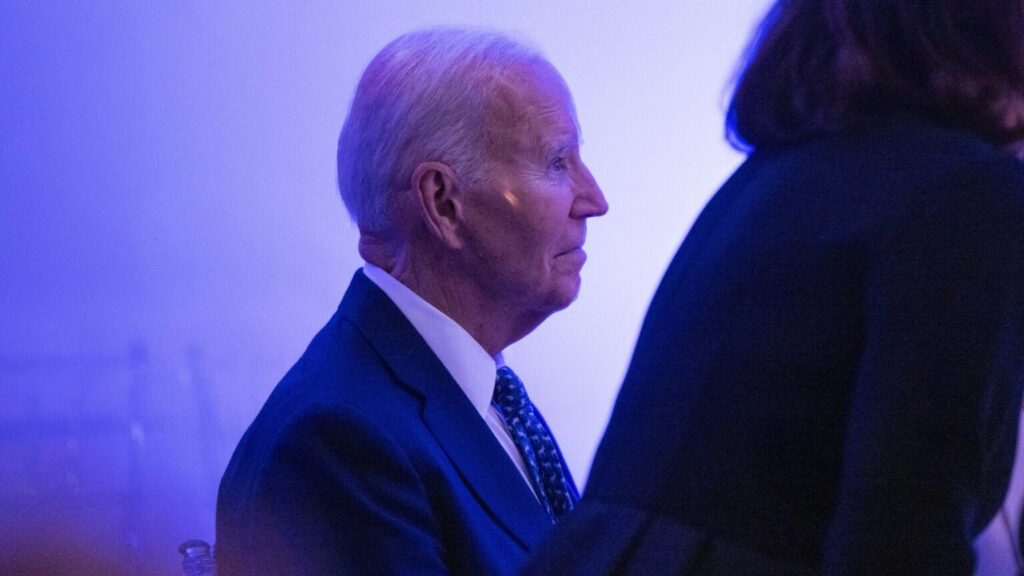
    Biden Reappears, Stumbles Through Another Public Speaking Engagement

    Former President Joe Biden made a rare public appearance on Friday, where he struggled through his speech, as has often been the case over the past couple of years. Biden declared that “we’re the United States of Amerigotit” in his latest verbal gaffe during a speech before the International LGBTQ+ Leaders Conference in Washington, D.C.

    “We just have to get up. As long as we keep the faith … and remember who the hell we are. We’re the United States of Amerigotit, that’s who we are! We’re the U.S.!” Biden said. The former president told the assembled lawmakers and activists that it was time to “fight back” against the Trump administration, which he accused of violating the Constitution.

    “All of us are dismayed by the present state of the union,” he added. “This is no time to give up. It’s time to get up. Get up and fight back. Get up. Continue to fight. And what’s the fight all about? … it’s about protecting the Constitution. It’s about protecting the Constitution.”

    The former president further accused President Donald Trump and his supporters of attempting to “distort and derail our fight for equality” and “further divide the country,” according to a report from Fox News.

    “They’re trying to turn it into something scary, something sinister. But folks, it’s really not about anything that’s all that complicated. At its core, it’s about making every American given the opportunity to be treated with basic decency, dignity, and respect they all deserve. That’s what every single American deserves, every American,” he said.

    Last week, Biden made headlines again when members of the Trump administration criticized the former president for failing to make any progress on the Jan. 6 pipe bombing case.

    FBI Director Kash Patel criticized the bureau’s lack of progress on the long-running investigation into the 2021 DNC and RNC pipe bomb case on Thursday, saying it reflected “sheer incompetence or complete intentional negligence” by the FBI under the Biden administration.

    His remarks come after authorities arrested Brian Cole Jr., 30, of Woodbridge, Va., earlier in the day, who is accused of planting pipe bombs outside the Democratic National Committee and Republican National Committee headquarters on Jan. 5, 2021 — the night before the Capitol riot. Cole is scheduled to make his initial appearance in federal court in Washington, D.C., on Friday afternoon to be formally arraigned on the charges, the New York Post reported.

    “The prior administration sat on the evidence for four years,” Patel told “Fox News at Night” Thursday evening. “There wasn’t any production of new evidence from five years ago.”

    “Here’s what we did — we went out to the country, brought in our experts, and Deputy Director [Dan] Bongino led the charge and said, ‘We are going to look at every single piece of evidence again,’” he added.

    According to a probable cause affidavit, investigators relied on bank records and cellphone data to connect Cole to the manufacture and placement of the pipe bombs outside the Democratic and Republican party headquarters in Washington’s Capitol Hill neighborhood. Authorities say the activity traced back to 2019.

    “We looked at three million lines of evidence,” Patel told host Trace Gallagher. “We went back and looked at the cell phone tower data dumps. We went back and looked at the providers and what information they provided pursuant to search warrants at the time and asked questions, such as ‘Why weren’t all the phone numbers scrubbed?’ and ‘Why weren’t they connected?’ and ‘Why wasn’t there any geolocational data done?’

    “Now that is either sheer incompetence or complete intentional negligence, neither of which is acceptable for this FBI. So, we changed that in the prior eight months, not on just this case, but everyone. And what that did was allow us to narrow the search down,” he added.

  • Secret Plot to Topple President Donald Trump Revealed – You’ll Never Guess…

    Secret Plot to Topple President Donald Trump Revealed – You’ll Never Guess…

    ‘Establishment’ Republican Plans Takeover Of GOP After Trump: Report

    It’s no secret that the so-called “establishment wing” of the Republican Party has never been happy with the fact that Donald Trump managed to take over the GOP with his “MAGA” and “America First” agenda. But now a dynastic GOP family is planning to wrest the party from the current president’s clutches once he leaves office in January 2029.

    Former President George W. Bush and his family are reportedly looking to reclaim the Republican Party from President Donald Trump once he leaves office, as indicated by a recent report.

    There are said to be “rumors” emerging about a “scheme to end the so-called ‘Bush Exile’” as part of an initiative to take back control of the GOP from Trump and his Make America Great Again (MAGA) agenda, according to the Daily Mail.

    “Now, rumors are stirring of a plot to end the so-called ‘Bush Exile’ and take back the GOP from the so-called scourge of Trumpism,” the report said.

    “Behind the scenes, and still with deep connections around the country, a shadow Republican Party is lying in wait to take over when Trump is gone,” the report said. “And, while the former president is determined not to publicly criticize Trump – much to the frustration of some of his former aides – he may not be averse to quietly helping to shape the Republican Party’s long-term future.”

    One person, described as a “former Bush official,” told the UK outlet that Trump “knows that there’s no third term option.” The person also admitted that Vice President JD Vance “has a head start” over other possible Republican presidential candidates in 2028.

    A former official from the Bush administration predicted that the 2028 presidential race will present a significant opportunity within the Republican Party.

    Additionally, former Republican National Committee (RNC) Chairman Michael Steele has been quoted urging the former president to engage more actively with the party, noting that his voice could resonate with many more Americans.

    In an interview with CBS News anchor Norah O’Donnell in 2021, the younger Bush revealed he felt that Trump “lacked the ‘humility’ necessary to be an effective leader.”

    In October 2019, during Trump’s first term, Bush also claimed Trump’s “isolationist United States” was “destabilizing around the world.” The 43rd president warned that the U.S. becoming isolationist was “dangerous for the sake of peace.”

    Bush’s remarks then came after he led the nation “into war in Afghanistan and Iraq with more than 4,500 Americans dying in Iraq — including more than 3,500 killed in combat.”

    Needless to say, several conservative voices rejected the notion that the Bushes should once again become the faces of the GOP.

    “We will never let this happen,” Donald Trump Jr. posted on the X platform.

    “Okay, enough. This isn’t going to happen, and frankly, the Bush family has already left the stage, and they should remain off it. Their time is over. It’s done. Second, the base isn’t receptive to their brand of Republican politics anymore,” RedState’s Matt Vespa wrote on Saturday.

    “The base is more blue-collar: folks who aren’t supportive of the free-trade bonanza Bush II ran. If the GOP base wasn’t high on Jeb in 2016, what makes you think the 2028 Republican base would go ga-ga over another Bushie running? This isn’t a phase or a fad, guys. The GOP has been transformed under Trump, and it’s not going back,” he added.

    “Anyone who has run against MAGA has been killed politically, with most having their presidential hopes dashed forever,” he noted further. “Move on, Bushies. Let go, and let God. Your time is over.”

  • High Ranking Former Obama Official’s Home Raided – Arrested And Charged…

    High Ranking Former Obama Official’s Home Raided – Arrested And Charged…

    Ex-Obama Official Accused Of Helping Cartel Launder Millions

    A former high-level Drug Enforcement Administration official who served during then-President Barack Obama’s administration, believed he was helping a Mexican cartel move cocaine in the United States and offered to launder millions of dollars for the organization, federal prosecutors said Friday.

    Paul Campo, who worked his way up to become the DEA’s deputy chief of the Office for Financial Operations, and his alleged accomplice, Robert Sensi, were arrested Thursday after being caught in an undercover sting involving a confidential source posing as a member of the Jalisco New Generation Cartel, The New York Post reported.

    Campo served with the DEA for roughly 25 years before retiring in 2016. According to prosecutors, Campo and Sensi began interacting with the undercover operative in late 2024 as part of a larger investigation targeting cartel activity.

    Sensi allegedly told the source he had a friend who previously oversaw the DEA’s financial operations division and could provide valuable help with laundering cartel drug proceeds and sharing sensitive information about federal probes.

    Prosecutors said the confidential source was working under the direction of law enforcement and represented himself as a member of CJNG, a Mexico based transnational criminal group overseen by Nemesio Ruben “El Mencho” Oseguera Cervantes.

    CJNG traffics cocaine, methamphetamine, fentanyl, and other controlled substances into the United States while also engaging in money laundering and violence, according to the indictment. The group was formally designated a Foreign Terrorist Organization on February 20, 2025.

    After their initial contacts, Campo and Sensi met repeatedly with the undercover operative.

    According to the indictment, both men agreed to launder money by converting cash into cryptocurrency and pursuing potential real estate investments.

    Prosecutors said the pair also discussed fentanyl production and explored the possibility of securing commercial drones and military grade weapons for the cartel.

    The indictment states that the weapons discussed included AR-15 rifles, M4 carbines, M16 rifles, grenade launchers, and rocket propelled grenades.

    Campo and Sensi often emphasized Campo’s DEA background and financial expertise during the meetings.

    In one conversation, the undercover source explained, “what we do with the drones, we put explosives and we just send it over there, boom,” to which Sensi later responded that a drone could carry roughly six kilograms of C-4 explosive, adding it was enough to “blow up the whole f—— . . . I don’t want to say.”

    According to prosecutors, Campo and Sensi agreed to launder approximately $12 million in narcotics proceeds and laundered $750,000 as part of the operation.

    The money was converted from cash into cryptocurrency but ultimately flowed to the U.S. government as part of the sting.

    The indictment also alleges the men provided a payment for approximately 220 kilograms of cocaine with the understanding the drugs would be sold for about $5 million, including in New York City, and that they would share in the profits.

    Campo, 61, of Oakton, Virginia, and Sensi, 75, of Boca Raton, Florida, were charged with conspiring to commit narcoterrorism, conspiring to distribute and possess with intent to distribute cocaine, conspiring to provide material support to a designated foreign terrorist organization, and conspiring to commit money laundering.

    Both men pleaded not guilty and were ordered detained following their court appearance.

    “The indictment of former Special Agent Paul Campo sends a powerful message: those who betray the public trust—past or present—will be held to account to the fullest extent of the law,” DEA Administrator Terrance C. Cole said.

    He added that any former agent who engages in criminal activity “dishonors the men and women who serve with integrity and undermines the public’s confidence in law enforcement.”

    “We will not look the other way simply because someone once wore this badge,” Cole said.

    U.S. Attorney Jay Clayton called CJNG a violent criminal enterprise and commended investigators for their work in the case.

  • Maxine Waters Sparks Outrage After Major Blunder on Live MSNBC Segment

    Maxine Waters Sparks Outrage After Major Blunder on Live MSNBC Segment

    In the high-stakes world of American politics, where every word is scrutinized and every statement can become viral

    content within minutes, even the most experienced legislators occasionally stumble in ways that undermine their intended message. Such moments serve as stark reminders that political passion, while necessary for effective advocacy, must be tempered with precision and constitutional literacy to maintain credibility and effectiveness.

    The latest example of this delicate balance between fervor and accuracy emerged from a television appearance that was intended to deliver a serious constitutional argument about presidential fitness for office. Instead, the segment became a case study in how a fundamental error can overshadow substantive policy concerns and provide ammunition to political opponents eager to question a critic’s competence.

    What unfolded reveals not only the challenges facing lawmakers who must navigate complex constitutional processes while under intense media pressure, but also the broader implications of how constitutional illiteracy can undermine legitimate political discourse in an era when every mistake is amplified and weaponized by opposing political forces.

    The Television Appearance That Sparked Controversy

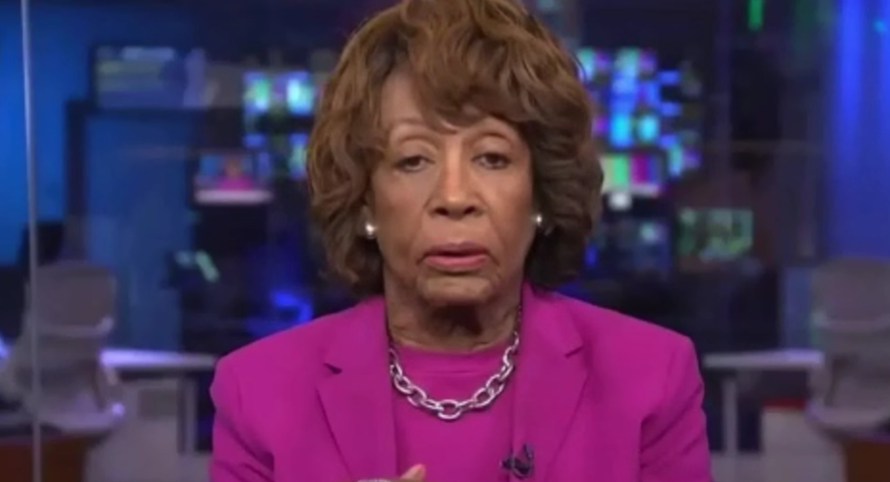
    Representative Maxine Waters of California stepped before MSNBC cameras on Friday with a clear mission: to articulate her concerns about President Donald Trump’s fitness for office and call for constitutional action to address what she perceives as dangerous presidential behavior. The veteran congresswoman, known for her passionate advocacy and willingness to take strong stands against policies she opposes, intended to make a serious constitutional argument about the limits of presidential power.

    Waters’ appearance was prompted by Trump’s recent decision to dismiss Federal Reserve Governor Lisa Cook, a move that the California Democrat characterized as both economically dangerous and potentially self-serving. Her concerns about the dismissal centered on its potential impact on monetary policy, interest rates, and the broader economy, issues that fall squarely within her expertise as a senior member of the House Financial Services Committee.

    “It is time to call for Article [Amendment] 25 of the Constitution of the United States of America to determine his unfitness, to determine that something’s wrong with this president,” Waters declared during the appearance. “And I would suggest that we move very aggressively to talk about the danger to this country and to our democracy and not play around with this because this is absolutely one of the most destructive things that this president could do.”

    However, Waters’ passionate plea was immediately undermined by a fundamental error that would overshadow her substantive concerns about economic policy. By referring to “Article 25” instead of the “25th Amendment,” she demonstrated a basic misunderstanding of constitutional structure that provided her critics with easy ammunition while detracting from her intended message about presidential accountability.

    Understanding the Constitutional Error

    The mistake Waters made reveals a fundamental confusion about the structure and organization of the U.S. Constitution that is particularly problematic for a member of Congress who has sworn an oath to support and defend that document. The Constitution consists of seven articles that establish the basic framework of government, followed by 27 amendments that modify or add to the original text.

    Article 25 simply does not exist in the U.S. Constitution. The Constitution contains only seven articles: Article I establishes the legislative branch, Article II creates the executive branch, Article III establishes the judicial branch, Article IV governs relationships between states, Article V outlines the amendment process, Article VI establishes federal supremacy, and Article VII addresses ratification.

    The 25th Amendment, which Waters clearly intended to reference, was ratified in 1967 and provides mechanisms for addressing presidential incapacity or inability to serve. Section 4 of the amendment allows the Vice President and a majority of cabinet members to declare a president unable to discharge presidential duties, effectively removing the president from power until the situation is resolved.

    This distinction matters because it reflects basic constitutional literacy that voters rightfully expect from their elected representatives. When lawmakers demonstrate fundamental confusion about the documents they’ve sworn to uphold, it raises questions about their competence to participate in complex constitutional processes and undermines their credibility when making serious arguments about governmental power and accountability.

    The 25th Amendment’s Actual Provisions

    Understanding what Waters was attempting to invoke requires examining the 25th Amendment’s actual provisions and the high bar it sets for removing a president from office. The amendment addresses four scenarios related to presidential succession and incapacity, with Section 4 being the most relevant to Waters’ apparent concerns.

    Section 4 allows the Vice President and a majority of principal cabinet officers to declare in writing to congressional leadership that the President is unable to discharge presidential duties. This declaration immediately transfers presidential powers to the Vice President as Acting President, but it also triggers a process that allows the President to contest the determination.

    If the President contests the incapacity determination, Congress must decide the issue by two-thirds vote in both chambers within 21 days. This extraordinarily high threshold ensures that the 25th Amendment cannot be used as a routine tool for political disagreement but only in cases of genuine presidential incapacity that commands overwhelming bipartisan support.

    The amendment has never been used to remove a sitting president, though it has been invoked voluntarily when presidents underwent medical procedures. Its invocation would represent an unprecedented constitutional crisis that would require extraordinary evidence of presidential incapacity beyond mere policy disagreements or concerns about decision-making quality.

    The Federal Reserve Controversy at the Heart of Waters’ Concerns

    While Waters’ constitutional reference was flawed, her underlying concerns about Trump’s dismissal of Federal Reserve Governor Lisa Cook touch on legitimate questions about presidential power over monetary policy and potential conflicts of interest. The Federal Reserve System was designed to operate with significant independence from political pressure, and Fed governors serve 14-year terms specifically to insulate them from short-term political considerations.

    Cook’s dismissal came amid mounting allegations of mortgage fraud, with federal housing regulators issuing criminal referrals over discrepancies in her property filings. The allegations center on claims that Cook misrepresented the nature of various properties on mortgage applications and government ethics forms, potentially obtaining better loan terms through false representations.

    According to Bill Pulte, head of the U.S. Federal Housing Agency, Cook misrepresented a Cambridge, Massachusetts condominium as a “second home” on a 2021 mortgage application, then listed the same property as an “investment/rental property” on government ethics forms eight months later. Similar discrepancies allegedly exist regarding properties in Atlanta and Ann Arbor, creating a pattern of potentially fraudulent representations.

    “Three strikes and you’re out,” Pulte wrote on social media, detailing what he characterized as repeated false representations by Cook about her various properties. Such discrepancies are significant because lenders typically offer more favorable terms for primary residences and second homes than for investment properties, which carry higher interest rates and down payment requirements due to perceived higher risks.

    Waters’ Economic Arguments and Their Merit

    Despite her constitutional error, Waters raised substantive concerns about the economic implications of Cook’s dismissal that deserve serious consideration. As a senior member of the House Financial Services Committee, Waters has extensive experience with monetary policy issues and legitimate expertise in evaluating the potential consequences of changes to Federal Reserve leadership.

    “This stands to basically upend the entire economy. This stands to really deal with what is going to happen on Wall Street, what’s going to happen with interest rates, what’s going to happen with the president of the United States being able to make decisions that he will personally benefit from,” Waters argued during her MSNBC appearance.

    Her concerns about potential conflicts of interest reflect broader questions about presidential power over institutions designed to operate independently from political influence. The Federal Reserve’s independence is considered crucial for effective monetary policy, as political pressure can lead to short-term decisions that undermine long-term economic stability.

    Waters also worried about the precedent of removing Fed governors for reasons that might be politically motivated rather than based solely on performance or ethical violations. If presidents can easily dismiss Fed governors, it could compromise the institution’s independence and effectiveness in managing monetary policy without political interference.

    The Social Media Response and Political Implications

    Waters’ constitutional error quickly became viral content on social media platforms, with critics across the political spectrum mocking her mistake while questioning her competence to evaluate presidential fitness for office. The irony of calling for presidential removal based on mental unfitness while simultaneously demonstrating constitutional illiteracy was not lost on political observers and opponents.

    “Mentally unstable Maxine Waters wants to invoke ‘Article 25’ of the Constitution because she says Trump is mentally unfit for office. ‘Something’s wrong with this president!’” noted the Western Lensman account on social media, highlighting the contradiction between Waters’ argument and her error.

    Florida Politics editor Eric Daugherty was even more direct in his criticism: “WOW! Maxine Waters LOSES IT on national television, demands the immediate invoking of ‘Article 25’ of the Constitution to remove Donald Trump from office. There is no Article 25…there are only 7 Articles. ‘Something’s WRONG with this president!’ Something’s wrong with this CONGRESSWOMAN.”

    The viral nature of Waters’ mistake demonstrates how quickly political errors can spread and overshadow substantive policy arguments in the modern media environment. Her constitutional confusion became the story rather than her concerns about economic policy or presidential accountability, effectively undermining her intended message and providing her opponents with ready-made attack material.

    The Broader Context of Constitutional Literacy in Congress

    Waters’ error highlights broader concerns about constitutional literacy among elected officials and the importance of basic civics knowledge for effective governance. Members of Congress take an oath to support and defend the Constitution, making fundamental knowledge of that document’s structure and provisions a reasonable expectation for their service.

    The mistake also reflects the challenges facing lawmakers who must speak extemporaneously about complex constitutional issues while under media pressure. Television appearances require quick thinking and clear communication, but they also create opportunities for errors that can have lasting political consequences when captured on video and shared widely online.

    Constitutional literacy becomes particularly important when lawmakers attempt to invoke rarely used provisions like the 25th Amendment, which requires precise understanding of complex procedures and high legal standards. Misstatements about such procedures can undermine public confidence in both the specific lawmaker and the broader institution of Congress.

    The Political Weaponization of Constitutional Errors

    The rapid spread of criticism regarding Waters’ mistake demonstrates how constitutional errors can be weaponized in partisan political battles, often overshadowing the substantive policy concerns that prompted the original statement. In an era of intense political polarization, even minor mistakes can become major political liabilities that opponents exploit for maximum advantage.

    This weaponization creates a chilling effect on political discourse, as lawmakers may become reluctant to engage in constitutional arguments for fear of making errors that will be used against them. However, it also reinforces the importance of constitutional competence among elected officials who must navigate complex legal and procedural issues as part of their official duties.

    The focus on Waters’ error rather than the substance of her economic arguments reflects broader patterns in American political discourse, where procedural mistakes often receive more attention than policy substance. This dynamic can undermine productive debate about important issues while rewarding opponents who focus on gotcha moments rather than substantive engagement.

    Lessons for Political Communication and Constitutional Discourse

    Waters’ mistake offers important lessons about the intersection of constitutional knowledge, political communication, and media strategy in contemporary American politics. The incident demonstrates that passionate advocacy must be combined with precise knowledge to maintain credibility and effectiveness in political arguments.

    For lawmakers attempting to make constitutional arguments, the incident underscores the importance of careful preparation and fact-checking before public appearances. Constitutional provisions are complex and technical, requiring precise language and accurate references to maintain credibility and avoid providing opponents with attack opportunities.

    The viral nature of Waters’ error also highlights how quickly political mistakes can spread in the digital media environment, making accuracy and precision more important than ever for public officials. In an era where every statement can become content for political opponents, lawmakers must balance spontaneous communication with careful attention to factual accuracy.

    The Future of 25th Amendment Discussions

    Despite Waters’ error, legitimate questions remain about the appropriate use of the 25th Amendment and the standards for determining presidential incapacity. The amendment’s high procedural barriers ensure it cannot be used for routine political disagreements, but they also create challenges for addressing genuine concerns about presidential fitness when they arise.

    Future discussions about the 25th Amendment will need to distinguish between policy disagreements and genuine incapacity while maintaining the constitutional processes designed to prevent abuse of this extraordinary power. Waters’ error may actually complicate such discussions by associating constitutional arguments with constitutional illiteracy.

    The incident also demonstrates the importance of constitutional education for both lawmakers and the general public, as effective democratic governance requires basic understanding of governmental structures and processes. When elected officials demonstrate confusion about fundamental constitutional provisions, it undermines public confidence in governmental institutions and democratic processes.

    Conclusion: The Cost of Constitutional Confusion

    Representative Maxine Waters’ reference to the non-existent “Article 25” while calling for President Trump’s removal serves as a cautionary tale about the intersection of political passion and constitutional precision. Her substantive concerns about Federal Reserve independence and potential presidential conflicts of interest were overshadowed by a fundamental error that undermined her credibility and provided ammunition to political opponents.

    The incident highlights the importance of constitutional literacy among elected officials and the challenges of maintaining accuracy while engaging in passionate political advocacy. In an era where every mistake can become viral content, lawmakers must balance spontaneous communication with careful attention to constitutional facts and procedures.

    While Waters’ error was embarrassing and politically damaging, it should not completely overshadow the legitimate questions she raised about presidential power, institutional independence, and potential conflicts of interest. However, her mistake demonstrates that effective political advocacy requires not just passion and conviction, but also precise knowledge of the constitutional framework that governs American democracy.

    The broader lesson extends beyond any individual lawmaker to encompass the fundamental importance of constitutional literacy in democratic governance. When elected officials demonstrate confusion about basic constitutional provisions, it undermines public confidence in both individual representatives and democratic institutions more broadly, making accurate constitutional knowledge not just politically advantageous but essential for effective democratic leadership.
  • Massive Victory For Republicans In Congressional Redistricting Fight – H…

    Massive Victory For Republicans In Congressional Redistricting Fight – H…

    Indiana House Passes Redistricting Bill as GOP Though Outcome Uncertain In Senate

    The Indiana House has passed a bill to redraw the state’s congressional districts, sending the proposal to the Senate, where it has encountered stronger resistance. The bill passed 57-41. Twelve Republicans joined Democrats in opposing the measure, WTHR reported.

    Two representatives were excused from voting. Among the Republicans who voted no were two members of House leadership, including State Rep. Greg Steuerwald of District 40, who helped draw the maps approved in 2021. Only two Republicans spoke in favor of the bill during Friday’s session.

    The bill’s author, State Rep. Ben Smaltz of District 52, said nothing in state law prevents lawmakers from redrawing districts whenever they decide it is appropriate, as long as constitutional requirements are met.

    House Speaker Todd Huston of District 37 also urged support. He called the issue difficult and argued that Indiana is not operating outside the national trend.

    “Nationally, we don’t operate in a vacuum, and states are doing this all across the country – red and blue states – and we felt like it was important for us to be a part of that and make sure we used every tool we could to support a strong Republican majority,” Huston said.

    “The fact of the matter is, states all across the country have or continue to do this,” he said. “I’ve heard we can stop it here. I don’t think anybody believes that. I don’t think what we do here will stop other states from doing it. I think it’s the place where we are right now. This is our time to act.”

    The bill now moves to the Indiana Senate, where President Pro Tem Rod Bray of Martinsville has repeatedly said there are not enough votes to approve redistricting.

    Several Senate Republicans have already stated their opposition to the effort, which was initiated by President Donald Trump as part of his push to maintain control of the U.S. House after the 2026 midterm elections.

    Democrats spent more than three hours arguing that the proposed map divides communities of interest and weakens the voting strength of Black and brown residents, particularly in Marion County.

    House Minority Leader Phil GiaQuinta of District 80 questioned the precedent of changing maps mid-cycle.

    “What happens if elections don’t go the way people want in ’26? Are we going to come back in ’27 and start moving precincts around, move one county here and there? Or what’s going to happen?” GiaQuinta said.

    “Unfortunately, now we’ve set the stage to do this, unfortunately, more often than when it should be done, which is once every 10 years.”

    State Rep. Vernon Smith of District 14 told lawmakers that passing the bill would energize Democrats in future elections.

    “We won’t be discouraged. We will be driven to victory. We won’t just lick our wounds. We’ll put on our armor for war,” Smith said.

    “You asked for it. We’re going to give it to you.”

    After the vote, Senate Minority Leader Shelli Yoder of Bloomington said the bill “tears apart communities, strips voters of representation they voted for and hands control to national figures who are more interested in cementing absolute power rather than solving any problems.”

    “Hoosiers should pick their leaders. Politicians should not redraw the map to pick the voters. Hoosiers don’t cheat and this bill does,” Yoder said.

    The vote came shortly after Gov. Mike Braun spoke outside the House chamber at a pro-redistricting rally and acknowledged the resistance in the Senate but said “we will get redistricting done.”

    Braun praised Huston and House Republicans for what he called “the courage to protect Hoosier voters.”

    The proposed map now sits with the Senate, which will take it up next week. The governor urged senators to move quickly. He said that even if the map is not adopted, “the discussion isn’t over.”

    During Braun’s remarks, anti-redistricting protesters demonstrated from the upper floors of the rotunda and encouraged Republican lawmakers to vote no.

  • ‘Terminated!’ President Donald Trump Issues Massive Decree That Rattles D…

    ‘Terminated!’ President Donald Trump Issues Massive Decree That Rattles D…

    Trump Declares Biden’s Autopen Orders, Documents Null and Void

    President Donald Trump announced that any document former President Joe Biden signed using the autopen has been “hereby terminated.” The Trump administration has repeatedly criticized the previous administration’s reliance on the device, which applies a signature to documents without the president physically signing them.

    Critics of the former president argued that documents were signed without Biden’s knowledge, fueling claims that his cognitive ability declined during his time in the White House, Mediaite reported.

    Biden has rejected those allegations and said he was personally responsible for every pardon issued in the final days of his presidency.

    “Any document signed by Sleepy Joe Biden with the Autopen, which was approximately 92% of them, is hereby terminated, and of no further force or effect,” Trump wrote.

    “The Autopen is not allowed to be used if approval is not specifically given by the President of the United States. The Radical Left Lunatics circling Biden around the beautiful Resolute Desk in the Oval Office took the Presidency away from him. I am hereby cancelling all Executive Orders, and anything else that was not directly signed by Crooked Joe Biden, because the people who operated the Autopen did so illegally. Joe Biden was not involved in the Autopen process and, if he says he was, he will be brought up on charges of perjury.”

    Presidents are believed to have used versions of the autopen for more than 200 years, dating back to Thomas Jefferson, who obtained one after it was patented in 1803, according to the Shapell Manuscript Foundation.

    Gerald Ford, Lyndon B. Johnson, George W. Bush, and Barack Obama are all known to have used the device.

    Obama became the first president to use an autopen to sign legislation in 2011.

    In 2005, during the Bush administration, the Justice Department concluded the autopen is legal.

    “A person may sign a document by directing that his signature be affixed to it by another,” a DOJ memo said. Legal scholars have also noted that the Constitution does not require presidents to personally sign pardons.

    Trump made similar allegations about Biden’s autopen use in June, at which time he called for an investigation.

    On Oct. 28, the Republican led House Oversight Committee recommended the Justice Department investigate the issue.

    The White House responded to questions about how Biden’s orders could be “terminated” by referring back to Trump’s Truth Social post.

    Trump told reporters in March that he has used the autopen “only for very unimportant papers.”

    “You know, we get thousands and thousands of letters, letters of support for young people, from people that aren’t feeling well, etcetera,” Trump said.

    “But to sign pardons and all of the things that he signed with an autopen is disgraceful.”

    In a July interview with The New York Times, Biden said Republicans are “liars” for claiming he was unaware of his own White House actions that were signed using the autopen.

    “I made every decision,” Biden said.

    President Trump announced Thursday that he plans to temporarily halt immigration from third-world countries following the shooting of two National Guard troops in Washington, D.C. In a post on Truth Social, the president said the nation has advanced technologically but “Immigration Policy has eroded those gains and living conditions for many,” RedState reported.

    He wrote that he will “permanently pause migration from all Third World Countries to allow the U.S. system to fully recover, terminate all of the millions of Biden illegal admissions, including those signed by Sleepy Joe Biden’s Autopen, and remove anyone who is not a net asset to the United States, or is incapable of loving our Country, end all Federal benefits and subsidies to noncitizens of our Country, denaturalize migrants who undermine domestic tranquility, and deport any Foreign National who is a public charge, security risk, or non-compatible with Western Civilization.”

  • Ilhan Omar Faces Scrutiny as Minnesota’s COVID-Era Fraud Scandal Deepens

    Ilhan Omar Faces Scrutiny as Minnesota’s COVID-Era Fraud Scandal Deepens

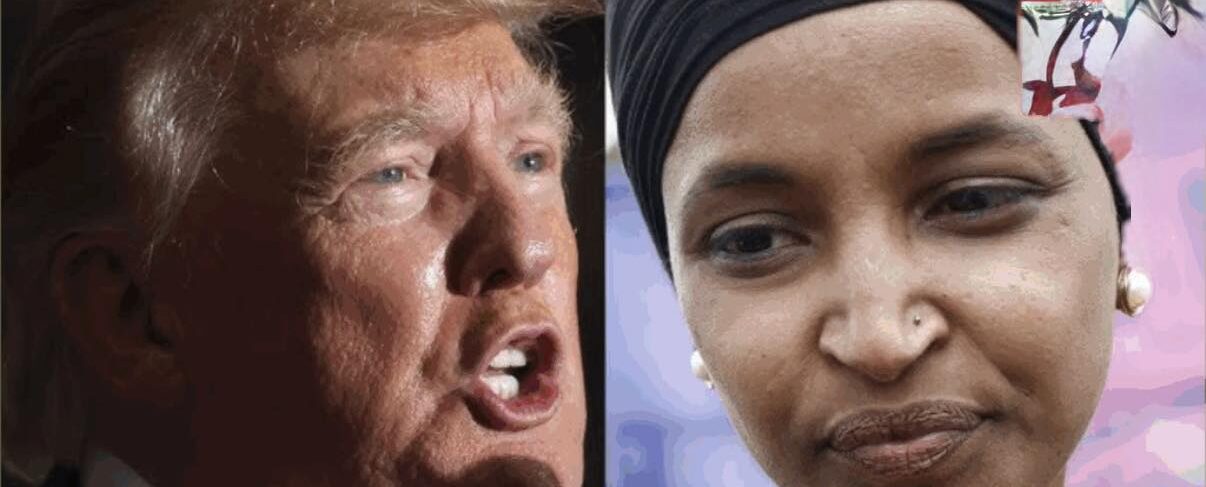
    MINNEAPOLIS, MN — In recent months, Minnesota has found itself at the center of the largest COVID-era fraud case in the United States, a scandal that has swept up dozens of individuals, implicated nonprofit organizations, and cast a long shadow over the state’s political leadership. As the scope of the fraud continues to widen, questions are being raised not just about those who perpetrated the crimes, but also about the officials and systems that allowed it to happen — with Representative Ilhan Omar, a prominent voice in Minnesota politics, now facing mounting criticism for her response.

    A Fraud of Unprecedented Scale

    The roots of the scandal trace back to the pandemic, when emergency federal funds were disbursed to support child nutrition programs as millions of American families struggled with food insecurity. In Minnesota, the nonprofit “Feeding Our Future” became the epicenter of what prosecutors now call the largest COVID-related food fraud in the nation.

    Over the past three years, federal investigators have charged at least 78 people in connection with the scheme, alleging that they created shell companies, fabricated meal programs, and submitted fake invoices and attendance rosters. The government, relying on these fraudulent records, reimbursed the organizations for meals that were never served. The estimated losses run into the hundreds of millions, with some reports suggesting that as much as $500 million may have been siphoned from taxpayer-funded nutrition programs.

    According to court documents and investigative reports, the fraud was not the work of a few rogue actors. Instead, authorities describe a coordinated network of individuals and businesses, many of whom had prior histories of financial misconduct. In one example, Usuzman Kamar, previously banned from the SNAP food assistance program for suspected fraud, was able to re-enter the system through a different program, enrolling his store KS Grocery in the child nutrition scheme overseen by Feeding Our Future. Despite red flags and a history of disqualification, he was approved by state authorities and ultimately received over $1 million in reimbursements for meals he claimed to serve — a number that investigators say was wildly inflated.

    The Safari Restaurant in downtown Minneapolis, another focal point of the investigation, allegedly claimed to serve over 18,000 meals per day despite seating only 35 people. Its owner is currently in federal custody, and the restaurant has become a symbol of the scandal’s audacity and the apparent failure of oversight.

    Allegations of Money Laundering and Terrorism Links

    As the investigation has deepened, federal sources have suggested that some of the stolen funds were laundered through shell companies and sent overseas, including to Somalia. There are unconfirmed reports that a portion of the money may have ended up in the hands of al-Shabaab, a Somali-based terrorist group with links to al-Qaeda. While no direct evidence has been publicly presented tying the fraud’s proceeds to terrorist financing, the possibility has fueled political controversy and national headlines.

    President Trump, seizing on the scandal, has called for an end to deportation protections for Somali nationals in Minnesota and labeled the state a “hub for Somali gang networks,” though he has not provided evidence for these sweeping claims. The rhetoric has further inflamed tensions in the state, which is home to the largest Somali immigrant community in the United States.

    Political Fallout and Omar’s Response

    Amidst the arrests and indictments, Representative Ilhan Omar — the nation’s first Somali-American member of Congress and a high-profile progressive — has come under fire from critics who accuse her of failing to condemn the fraud forcefully. Instead, they argue, Omar has focused her attention on those exposing the scandal and has characterized the response as an attack on the Somali community.

    In public remarks, Omar has emphasized that the wrongdoing of individuals should not be used to demonize an entire community. “In this country, we do not blame the lawlessness of an individual on a whole community,” she told supporters, drawing applause. “If a person commits a crime, they face justice. You don’t put that crime on a whole community.”

    Omar has also pushed back against allegations that Somali politicians or community leaders were complicit in the fraud, and has warned that inflammatory language — particularly suggestions that money was funneled to terrorist groups — puts innocent lives at risk. “There is not a single piece of evidence that taxpayer resources from Minnesota have gone to aid and abet terrorism,” she said, calling such accusations “dangerous.”

    She further argued that “Somalis are not terrorizing this nation. We are helping it thrive,” pointing to the many Somali-Americans who serve as teachers, nurses, engineers, public servants, and members of the U.S. military.

    Critics Demand Accountability

    Despite Omar’s defense of her community, critics — including conservative commentators and Republican lawmakers — argue that her response has been inadequate. They contend that the scale of the fraud, which has now led to more than 85 indictments (the majority of Somali descent), cannot be dismissed as the work of a few bad actors. Instead, they say, it points to systemic failures in oversight, a culture of permissiveness within state agencies, and a reluctance among some leaders to confront uncomfortable truths.

    “This isn’t just about a handful of people breaking the rules,” said David Gaither, a former Minnesota state senator. “This took coordination. This took a network. And it happened right under the noses of those in charge.”

    Investigative reporters have highlighted how many of those accused were able to exploit weaknesses in the system, sometimes with the tacit approval or negligence of state agencies. In some cases, individuals previously barred from federal programs for fraud were able to re-enter through different channels and continue collecting taxpayer funds.

    State Leadership Under Fire

    The scandal has also put Governor Tim Walz and other Democratic leaders in the hot seat. On NBC’s “Meet the Press,” Walz was questioned about the failure to stop the fraud, which reportedly cost the state more than it spends annually on its Department of Corrections.

    Walz defended his administration’s record, noting that dozens of people have been charged and some have already been convicted and sentenced. “Governors don’t get to just talk theoretically. We have to solve problems,” he said. “People who are taking advantage are going to prison. That is totally disconnected with demonizing an entire group of people who came here fleeing civil war and created a vibrant community.”

    Still, critics point out that the fraud ran for years, with multiple warnings and red flags ignored. They argue that Minnesota’s reputation as a generous, well-run state made it a target for criminals, but that is no excuse for the lack of oversight.

    “You don’t get hundreds of millions of dollars stolen without a culture that allows it,” one commentator noted. “You don’t get this level of corruption without people in government choosing to look the other way.”

    A Community Caught in the Crossfire

    For Minnesota’s Somali community, the scandal has been a double-edged sword. On the one hand, many have condemned the fraud and called for those responsible to be held accountable. On the other, they fear being unfairly tarred by the actions of a few, especially in an environment of rising anti-immigrant sentiment.

    Federal sources have noted a saying in the Somali community: “When it rains in Minneapolis, umbrellas go up in Mogadishu.” The implication is that consequences in Minnesota reverberate all the way to Somalia — not just in terms of money, but in the reputation and safety of Somali-Americans.

    Omar and others have warned that the focus on Somali defendants risks inflaming prejudice and undermining the contributions of Somali-Americans to Minnesota and the nation.

    The Search for Solutions

    As the investigation continues, with more indictments expected, the question remains: How did such a massive fraud persist for so long, and what can be done to prevent it from happening again?

    Some have called for a complete overhaul of the state’s oversight mechanisms, stricter vetting of organizations receiving federal funds, and greater transparency in the disbursement of aid. Others argue that political leaders must be willing to confront uncomfortable realities, even when they involve their own communities or political allies.

    At the same time, there is a growing recognition that the vast majority of Somali-Americans — like the vast majority of Minnesotans — are law-abiding citizens who want to see justice done and taxpayer funds protected.

    Conclusion

    The Feeding Our Future scandal has exposed deep flaws in Minnesota’s oversight of federal relief funds and has become a flashpoint in the state’s political and cultural life. As federal prosecutors continue to bring charges and as political leaders debate responsibility, the case serves as a sobering reminder of the challenges facing public institutions in a crisis — and the dangers of allowing identity politics to overshadow accountability.

    Whether Minnesota’s leaders, including Ilhan Omar, can restore public trust will depend not just on rhetoric, but on real reforms and a willingness to confront the failures that allowed this unprecedented fraud to happen.

  • ICE Arrests Man Accused of Throwing Molotov Cocktails at Federal Officers in Los Angeles

    ICE Arrests Man Accused of Throwing Molotov Cocktails at Federal Officers in Los Angeles

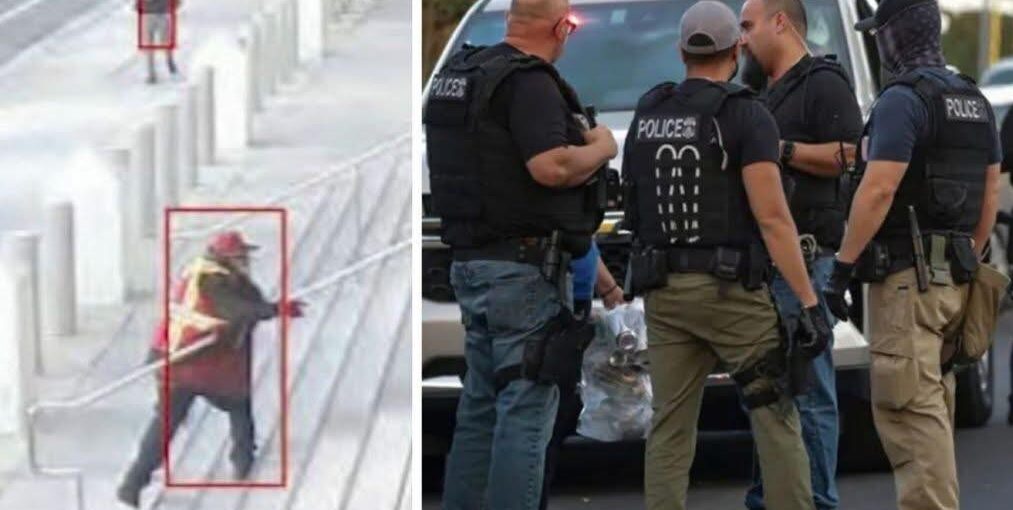
    Federal authorities arrested a 54-year-old man on Monday after he allegedly attempted to attack a U.S. Citizenship and Immigration Services (USCIS) facility in downtown Los Angeles using multiple Molotov cocktails. The incident, which occurred outside the Los Angeles Federal Building, has raised renewed concerns about threats facing federal employees and the growing hostility directed at immigration enforcement personnel.

    According to the Department of Homeland Security (DHS), the suspect arrived at the building carrying several glass bottles filled with flammable liquid. Protective Security Officers stationed at the site reported hearing the man shouting angry remarks about U.S. Immigration and Customs Enforcement (ICE) shortly before the attack unfolded. Moments later, the suspect allegedly hurled the homemade incendiary devices toward officers who were posted at the building’s perimeter.

    Fortunately, none of the Molotov cocktails ignited. DHS officials said the bottles were improperly lit, preventing what could have been a far more dangerous outcome. Even so, investigators emphasized that the man appeared fully intent on causing significant harm.

    In statements made after his arrest, the suspect allegedly told authorities that he planned to blow up the building and “spray down” the officers inside — comments that federal officials say underscore the seriousness of the incident. He also reportedly continued expressing hostility toward ICE throughout the interrogation.

    ### A Growing Pattern of Threats

    The attack is the latest in a concerning trend of threats and assaults targeted at federal law enforcement personnel. Assistant Secretary Tricia McLaughlin addressed the incident in a DHS statement, noting that ICE officers and security staff face a “constant barrage of hostility” as they carry out their duties.

    “This was a clear and deliberate attack on federal law enforcement,” McLaughlin said. “It reflects the ongoing dangers these men and women encounter every day as they work to keep the public safe. Our officers regularly confront individuals who are wanted for violent crimes, including murder, sexual assault, and gang activity. Despite these risks, they continue to serve with professionalism and commitment.”

    McLaughlin went on to condemn the broader environment of antagonism toward immigration enforcement officers — an environment that she said can embolden violent individuals.

    “Our officers face mass assaults, individuals using vehicles as weapons, and even targeted shootings,” she said. “These attacks are not isolated. They are fueled in part by irresponsible rhetoric and misinformation that paint officers in a false and dangerous light. While people can debate policy, violence against law enforcement must never be tolerated.”

    ### No Injuries, but Serious Charges Expected

    DHS confirmed that no federal employees or security personnel were injured during the attack. Much of that can be attributed to two factors: the officers’ quick response and the failure of the incendiary devices to ignite.

    Still, the suspect is expected to face a range of federal charges, including attempted arson, assault on federal officers, and making threats against government personnel. Depending on the outcome of the investigation and the final charges filed by federal prosecutors, he could face decades in prison.

    Investigators are also reviewing surveillance footage, interviewing witnesses, and analyzing the materials recovered at the scene to determine whether the suspect acted alone or had previously expressed violent intentions. Authorities have not yet released the man’s identity, citing the ongoing investigation.

    ### Federal Buildings Under Heightened Security

    Monday’s attack has prompted renewed discussions inside DHS and related agencies about improving security protocols at federal facilities. Although security at USCIS and ICE buildings has increased in recent years, officials acknowledge that unpredictable lone-actor attacks remain one of the most difficult threats to prevent.

    The Los Angeles Federal Building, located in a busy downtown district, is no stranger to protests or demonstrations related to immigration policies. But DHS noted that the overwhelming majority of visitors are peaceful. Incidents involving weapons or attempts at arson remain rare — though, as this case shows, not nonexistent.

    Security experts have long warned that federal buildings can become symbolic targets for individuals harboring strong anti-government or anti-law-enforcement sentiments. Even improperly constructed incendiary devices can pose a significant threat to both personnel and the public. Monday’s attack, while ultimately unsuccessful, could have caused major injuries or sparked a fire affecting hundreds of employees and visitors.

    ### Broader Debate Over Anti-ICE Sentiment

    While DHS officials highlighted the hostility directed at immigration enforcement agencies, the incident has also prompted broader discussion about the national climate surrounding immigration policy.

    In recent years, ICE has become a lightning rod in political debates, with some activists calling for the agency’s defunding or abolition. Critics argue that certain enforcement actions are too aggressive, while supporters contend the agency plays a critical role in removing dangerous individuals from the country.

    The suspect’s alleged comments, according to authorities, reflected a strong anti-ICE sentiment — a factor that investigators will examine to determine whether ideological motives played a role. However, federal officials have stressed that nothing justifies acts of violence or attempted terrorism.

    Public safety experts note that emotionally charged rhetoric around immigration — whether coming from activists, media personalities, or even elected officials — can sometimes escalate into extreme behavior by individuals who take political frustrations into their own hands.

    Even so, it is important to distinguish between political disagreements and violent actions. Most Americans who express criticism of federal agencies do so peacefully and lawfully. Monday’s attack, officials emphasized, is an example of criminal behavior, not political speech.

    ### Officers’ Response Praised

    The Protective Security Officers who witnessed the attack acted quickly, restraining the suspect before the situation escalated further. DHS praised their professionalism and credited them with preventing the incident from becoming far more destructive.

    Internal reviews are underway to determine whether additional security measures — such as more advanced screening, reinforced barriers, or increased patrols — should be implemented at the Los Angeles facility and other high-risk locations.

    In the meantime, officers have been instructed to remain alert for individuals displaying erratic behavior or carrying suspicious items near federal buildings.

    ### A Reminder of Ongoing Risks

    For many federal officers, the incident serves as another reminder of the unpredictable nature of their work. Whether processing immigration applications, conducting investigations, or protecting federal buildings, they face risks that often go unnoticed by the general public.

    While Monday’s attack resulted in no injuries, DHS leaders have emphasized that the outcome could have been far worse. A single functioning Molotov cocktail could have endangered dozens of people, including the officers, bystanders, and employees inside the building.

    As federal prosecutors prepare charges, DHS hopes the swift action taken in this case will serve as a deterrent to others who might consider violent acts against government facilities or personnel.

    The investigation is ongoing, and additional details are expected to be released in the coming days.

  • Supreme Court Blockbuster – High Court Could Revisit Obama-Era Case

    Supreme Court Blockbuster – High Court Could Revisit Obama-Era Case

    Supreme Court Considers Taking Up Same-Sex Marriage Case

    The U.S. Supreme Court is considering whether to hear a case brought by former Kentucky clerk Kim Davis, who is seeking to overturn the court’s decision in Obergefell v. Hodges, a landmark ruling that established the right to same-sex marriage across the nation.

    Davis’ attorney, Matthew Staver, expressed optimism about the court taking the case, according to Newsweek.

    But William Powell, the attorney who represented the couple that sued Davis, provided a statement to Newsweek that he is “confident the Supreme Court will likewise agree that Davis’s arguments do not merit further attention.”

    The case, brought by Davis—a former Kentucky clerk who served six days in jail for refusing to issue marriage licenses to same-sex couples on religious grounds—could pose a significant challenge to federal protections for same-sex marriage nearly a decade after the Supreme Court legalized such unions nationwide.

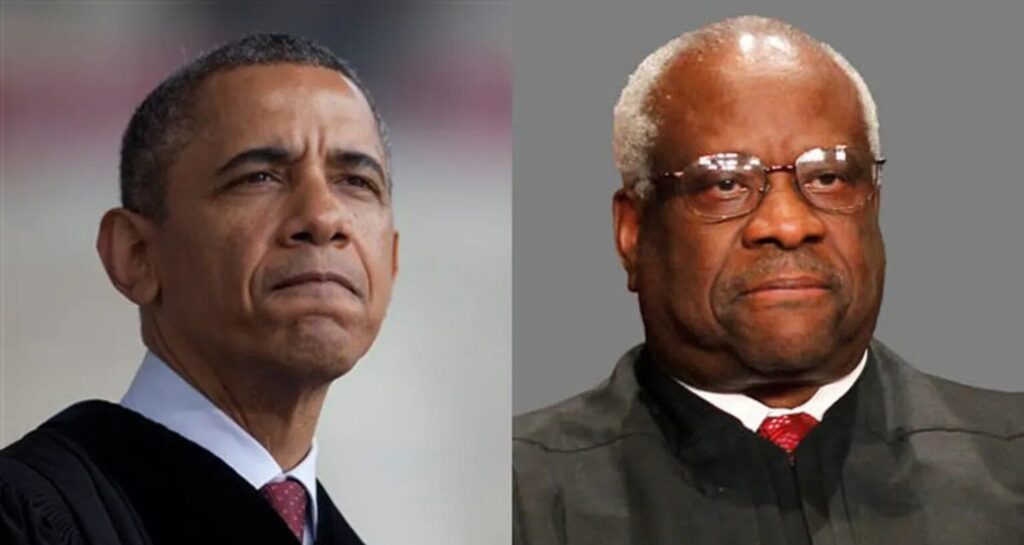
    Some justices, including Clarence Thomas, have signaled a willingness to revisit the issue in recent years, particularly as the court has shifted to the right. That conservative realignment on cultural matters was underscored by the 2022 decision overturning Roe v. Wade, which had guaranteed abortion rights for decades.

    If the court were to strike down the nationwide right to same-sex marriage, the matter would likely revert to the states—many of which have yet to pass laws recognizing such unions.

    In a newly filed petition to the Supreme Court, Staver argued against same-sex marriage on religious grounds.

    “Obergefell was ‘egregiously wrong,’ ‘deeply damaging,’ ‘far outside the bound of any reasonable interpretation of the various constitutional provisions to which it vaguely pointed,’ and set out ‘on a collision course with the Constitution from the day it was decided,’” he wrote.

    Davis’ case “presents the ideal opportunity to revisit substantive due process that ‘lacks any basis in the Constitution,’” the petition says, per Newsweek.

    “This flawed opinion has produced disastrous results leaving individuals like Davis ‘find[ing] it increasingly difficult to participate in society without running afoul of Obergefell and its effect on other antidiscrimination laws,’” it reads. “And, until the Court revisits its ‘creation of atextual constitutional rights,’ Obergefell will continue to have ruinous consequences for religious liberty.’”

    The petition stated that if the court were to overturn Obergefell, the authority to determine marriage rights would revert to the states, while same-sex marriages performed since the ruling would remain legally recognized under a grandfather provision.

    Staver told the outlet that he believes the court’s previous ruling on the issue is constitutionally unsound.

    “It has no basis in the Constitution,” he said. “It’s what caused this issue with Kim Davis to be sent to prison for six days and now facing hundreds of thousands of dollars personally, is the Obergefell opinion originally, and I think that it’s time to reevaluate that and overturn it.”

    Other legal experts are not confident that the high court would reverse its earlier decision.

    “There’s a chance that a conservative majority could use the case to expand the rights of religious objectors to same-sex marriage,” Daniel Urman, law professor at Northeastern University, told Newsweek.

    “But that’s not the same as overturning the right itself, and I don’t see a majority of the Court ready to do that. Culturally, same-sex marriage has become embedded in American life, and it is still popular in public opinion polls,” he added.

    Paul Collins, a professor of legal studies and political science at the University of Massachusetts Amherst, told Newsweek that although Davis hopes to use the case as a means to overturn same-sex marriage, that is not necessarily the central issue before the court.

    “Instead, it is about a jury verdict for inflicting emotional damages by violating a same-sex couple’s right to marry. This just isn’t the right vehicle for challenging a constitutional right to same-sex marriage,” he told Newsweek.