The last thing I expected on my wedding day was to be stranded on a remote Texas road in a wedding dress, watching my dream ceremony fall apart. My limousine died just thirty minutes before 200 guests were scheduled to see me walk down the aisle, and I had no cell service, no transportation, and no way to reach anyone. As I stood there crying, a large motorcycle pulled up beside the limo. A man with gray hair, tattoos, and a leather vest stepped off, walking toward me with a calm confidence that only made the situation feel more surreal. In that moment, fear and panic collided with disbelief, and I truly thought I was in danger—until he spoke.
His name was Thomas, and instead of being a threat, he turned out to be a kind stranger with remarkable patience. He calmly examined the limo, explained that a snapped belt made it impossible to repair on the spot, and then offered an unexpected solution: a ride on the back of his Harley Davidson to St. Michael’s Church. He even gave me his leather vest to protect my grandmother’s dress from the wind and bugs. I had never ridden a motorcycle in my life, and the idea of racing through backroads in a wedding gown felt absurd and terrifying, but there was something sincere in his voice when he said he’d want someone to help his own daughter the same way.
Against all logic, I climbed onto that motorcycle, sitting sideways, clutching this stranger for balance as he took off with steady determination. The highway blurred beneath us, my veil flew like a parachute behind me, and laughter mixed with adrenaline in a way I’ll never forget. We pulled into the church parking lot with only minutes to spare, where the sight of a bride arriving on a Harley stunned the guests, silenced the crowd, and brought tears to my father’s eyes. Instead of disappearing, Thomas accepted our invitation to stay, quietly sitting in the back until he was pulled into the celebration by my family.
Later, at the reception, we learned who he really was: a veteran, a father, a grandfather, a man who had overcome loss and found community through riding. He told stories about charity rides, helping children, serving others, and how people often misjudge him based on appearance. By the end of the night, he wasn’t just a stranger who saved a wedding—he was part of our lives. He gifted me a cross that belonged to his late wife, saying she would’ve wanted me to have it. Today, that pendant hangs in our home, and Thomas is still in our family photos. My wedding didn’t go as planned, but it became unforgettable because a stranger chose compassion over convenience, turning a disaster into a story of humanity, gratitude, and unexpected friendship.
Even in 2025, some of the world’s oldest living stars continue to inspire millions. Their careers shaped film, television, and music for generations, and their legacies remain powerful today. Elizabeth Waldo, born in 1918, is celebrated for preserving indigenous music and influencing cultural studies. Karen Marsh Doll, one of Hollywood’s oldest surviving actresses, offers a rare link to the golden age of cinema, with connections to The Wizard of Oz and Gone with the Wind.
Ray Anthony, now 103, stands as one of the last great big-band leaders, keeping a vibrant era of American music alive. Beloved TV and film icons such as June Lockhart, Eva Marie Saint, and Dick Van Dyke continue to inspire fans with their longevity and joyful presence. Watch This Video Below for More Information and Curiosity:
Comedy legends Mel Brooks and William Shatner, along with the timeless Barbara Eden, remain active voices in the entertainment world. Stars like Clint Eastwood, Sophia Loren, and Michael Caine show remarkable resilience, continuing to create meaningful work well into their 90s.Julie Andrews, Shirley MacLaine, Al Pacino, and Jane Fonda exemplify dedication not only through their artistic achievements but also through activism and cultural influence. Together, these remarkable figures prove that true talent, passion, and creativity have no age limit—and their impact continues to shape the world.
RNC Files Election Integrity Lawsuit In Maryland Over Huge Discrepancy
The Republican National Committee (RNC) filed a lawsuit Friday against Maryland election officials, alleging the state has failed to properly maintain its voter-registration rolls. According to the complaint, registration rates in several Maryland counties are “impossibly high,” with two of the state’s largest counties reporting more registered voters than adult citizens.
The lawsuit also states that 10 additional counties have registration rates above 95% of their adult-citizen populations, even though 2022 U.S. Census Bureau data places Maryland’s overall registration rate at roughly 75.6%, the Daily Caller reported on Friday.
“Marylanders deserve to have confidence in their elections and to know that their state is properly maintaining its voter rolls,” RNC Chair Joe Gruters said. “The State Board of Elections has failed to do its job and remove ineligible or deceased voters from its rolls. Marylanders have a right to accurate voter rolls, which is why the RNC is suing today.”
Election officials are allegedly failing to make reasonable efforts to comply with the National Voter Registration Act (NVRA) and properly tend to voter registration rolls, according to the lawsuit cited by the outlet.
The Office of Legislative Audits of the Maryland General Assembly found in October 2023 that the State Board of Elections’ review of its voter registration data “remained inadequate.” An audit discovered “2,426 potentially deceased individuals with active voter registration and 327 individuals with potential duplicate voter registrations,” according to the report.
Failure to maintain voter lists “burdens the right to vote of the individual Plaintiffs and all individual members of the RNC and MDGOP who are lawfully registered to vote in Maryland by undermining their confidence in the integrity of the electoral process, discouraging their participation in the democratic process, and instilling in them the fear that their legitimate votes will be nullified or diluted by unlawful votes,” the lawsuit states.
In addition, the U.S. Department of Justice has also filed a lawsuit against Maryland for failing to produce requested voter registration lists, the outlet reported.
The Maryland suit is part of the DOJ’s move requiring more than half of U.S. states to update and maintain their voter rolls, and a senior department official told Just the News this week that prosecutors believe the lapses that left deceased individuals and non-citizens listed as eligible voters in several Democrat-run states may have been intentional.
“The sloppiness of the elections in blue states is no accident. It is on purpose. It is a feature, not a bug,” Assistant Attorney General for Civil Rights Harmeet J. Dhillon told Just the News’ streaming news program.
“And the goal is to cram as many people on there and make voters who are not particularly engaged, make it easy for someone else to help them fill out their ballot and return it for them when they didn’t care enough to do it themselves,” she added.
“What we can do at the federal government level is ensure that our federal election laws are observed, and that includes each state’s requirement to keep clean voter rolls,” she added. “That is a fundamental basic.”
Dhillon spoke one day after her division filed lawsuits against six Democrat-led states — Maryland, Delaware, Rhode Island, New Mexico, Washington state and Vermont — seeking court orders requiring them to provide voter-registration records to the Justice Department. The filings state that the DOJ intends to examine the rolls for irregularities, outdated or duplicate entries, and other potential violations of federal list-maintenance requirements, the outlet reported.
She also reached an agreement last week with North Carolina requiring the state to review and correct more than 100,000 voter registrations that were added without meeting state legal requirements.
Dhillon said her office is now on track — through litigation, settlements or voluntary compliance — to require at least 26 states to update and clean their voter rolls.
“We’re now in litigation with 14 states. So the six yesterday included Maryland, Delaware, Rhode Island, New Mexico, Washington State and Vermont. That adds to eight we already had going,” she said.
The confrontation, which left Congress in stunned silence, took an unexpected turn when a hot mic captured a private comment from Abrams moments later, flipping the narrative and sparking a nationwide uproar that reverberated far beyond the Capitol.
The clash began as Kennedy grilled Abrams, a prominent voting rights advocate and founder of Fair Fight Action, over her critique of a proposed federal voting law. Abrams had argued that certain provisions echoed Georgia’s 2021 election law, which she called racially discriminatory due to its impact on minority voters. Kennedy, known for his sharp rhetoric, interrupted her testimony, accusing her
of “playing the race card” to inflame divisions. “Your remarks are reckless and divisive,” he thundered, citing her past statements about voter suppression as evidence of “baseless racial accusations.” The chamber fell silent as Kennedy demanded Abrams retract her claims, asserting they undermined bipartisan efforts.
Six women who say they were trafficked by Jeffrey Epstein or his longtime associate Ghislaine Maxwell made a public appeal on Tuesday in Washington, D.C., demanding the federal government release more investigative files. They also urged former President Donald Trump to publicly rule out a pardon for Maxwell. The women appeared alongside family members of Virginia Giuffre, a prominent Epstein accuser who died by suicide in April, and criticized what they called a long-standing failure to deliver justice.
Jess Michaels, who alleges Epstein raped her in 1991, described him as a “master manipulator” and said his behavior followed a calculated strategy that left young women and teenage girls defenseless. Michaels cited a “severe miscarriage of justice” and delays in accountability as her motivation for speaking out. Her remarks echoed the sentiments of other survivors who say they were also groomed and abused.
Wendy Avis and Jena-Lisa Jones, both of whom say they were 14 when Epstein abused them, condemned the silence of adults who may have witnessed the abuse. Jones stated that many people around Epstein “very clearly knew what was going on” but have refused to speak up. Avis, speaking publicly for the first time, stressed that victims like her still haven’t received justice, calling for broader recognition of the everyday people affected.
All six women, including Marijke Chartouni, Lisa Phillips, and Liz Stein, expressed deep frustration with the Justice Department. Stein accused officials of failing to protect or inform survivors and backed bipartisan efforts in Congress to force transparency. Their statements came just before the Republican-led House Oversight Committee released over 33,000 pages of Epstein-related documents.
Reps. Ro Khanna and Thomas Massie are leading a legislative push to investigate alleged mishandling of the federal probes into Epstein and Maxwell. Maxwell, currently serving a 20-year prison sentence, continues to deny wrongdoing. Phillips warned that if the system continues to fail them, survivors are prepared to take justice into their own hands: “We’ll compile our own list.”
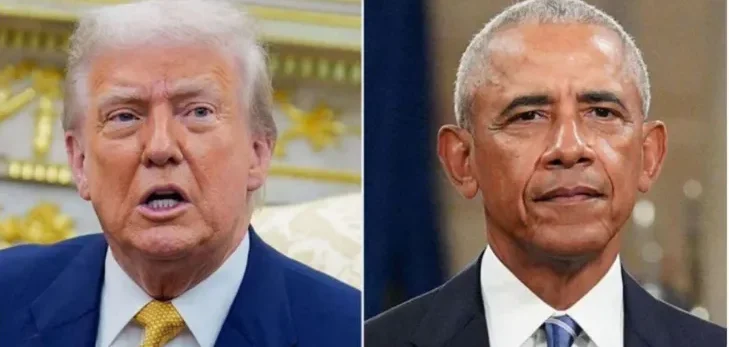
President Donald Trump is still pushing for the Senate GOP to get rid of the filibuster. The president posted a video on Truth Social on Monday that included audio of former Attorney General Eric Holder saying that if Democrats win a “trifecta” in the 2028 elections, they should think about extending the Supreme Court.
Holder said this while talking to Ben Meiselas, who co-founded MeidasTouch, which posted the footage last month.
In the Monday Truth Social post, Trump referred to Holder, who served under Democratic President Barack Obama, as an “Obama sycophant” and said that “Eric Holder (known as ‘FAST AND FURIOUS’) just gave a Speech where he emphatically stated, above all else, that Democrats will PACK the Supreme Court of the United States if they get the chance. The word is, he wants 21 Radical Left Activist Judges, not being satisfied with the heretofore 15 that they were seeking.”
Trump said that getting rid of the filibuster will help Republicans win the 2026 midterm elections and the 2028 presidential election.
“It will be 21, they will destroy our Constitution, and there’s not a thing that the Republicans can do about it unless we TERMINATE THE FILIBUSTER, which will lead to an easy WIN of the Midterms, and an even easier WIN in the Presidential Election of 2028,” he asserted.
“Why would the Republicans even think about giving them this opportunity? The American People don’t want gridlock, they want their Leaders to GET THINGS DONE — TERMINATE THE FILIBUSTER, AND HAVE THE MOST SUCCESSFUL FOUR YEARS IN THE HISTORY OF OUR COUNTRY, BY FAR, WITH NOT EVEN THE HINT OF A SHUTDOWN OF OUR GREAT NATION ON JANUARY 30TH!” Trump declared in the
post.This is the second time in recent weeks that Trump has gone after former President Barack Obama.
The new interim U.S. Attorney for the Northern District of New York, appointed to the post by Trump, once called out Joe Biden and Obama as well as twice-failed presidential contender Hillary Clinton.
John A. Sarcone III, a lawyer in private practice in Westchester County, accused Biden of being a “traitor” and committing “treason” in a 2022 social media post.
After Biden tweeted on New Year’s Eve that year he was “ready to get things done,” Sarcone responded, “Traitor should be tried for treason. Worst person to occupy the White House.”
Sarcone once tweeted that Obama should be “the first illegal alien deported” while calling for Clinton to be jailed for treason.
Sarcone was allowed to be placed in his interim position without needing Senate confirmation. And while he does not have any prosecutorial experience, he has a lengthy track record as an attorney who has also worked for Trump’s campaigns
When Sarcone was sworn in on Monday in Albany, he defended his limited prosecutorial experience by asserting in his speech that what truly defines a good prosecutor is “judgment.”
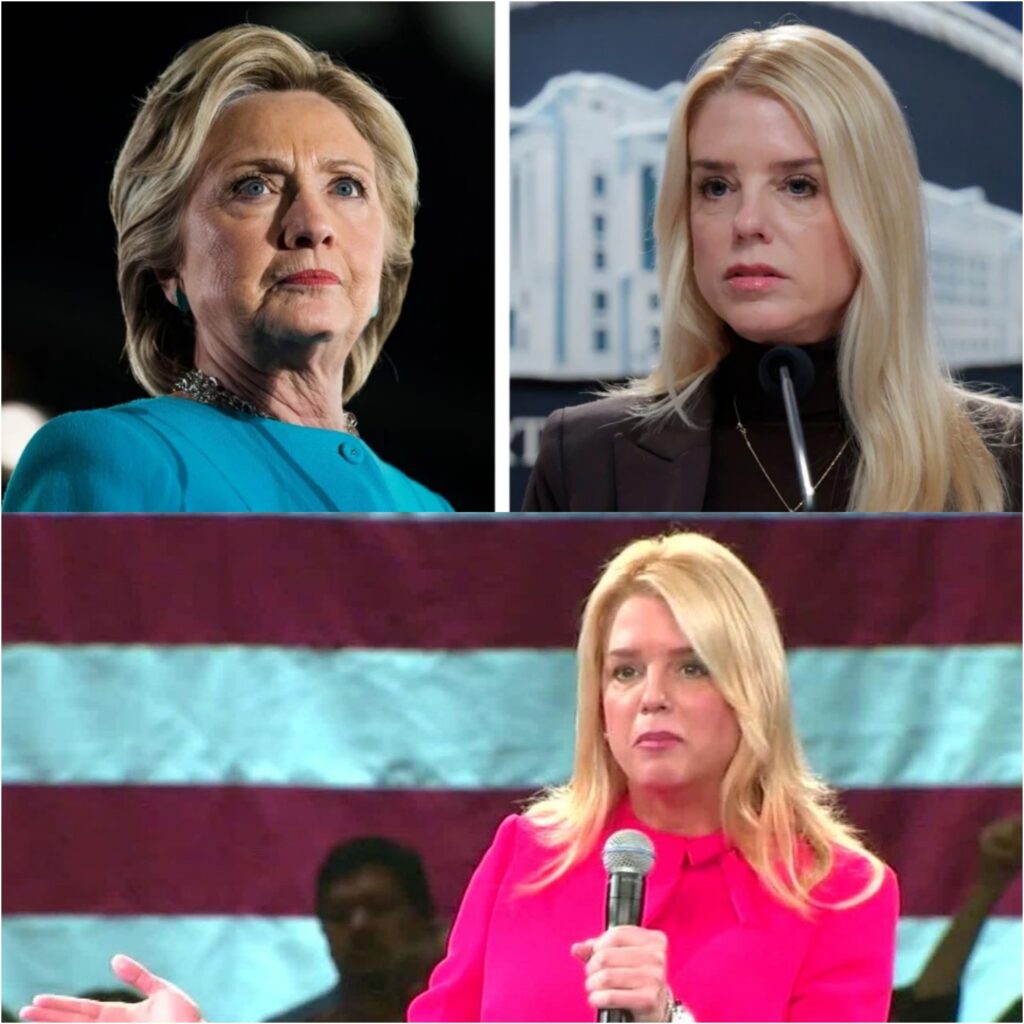
“I believe the prosecutorial power, and discretion,” he said, “is best entrusted to those with the full breadth of professional and life experiences, from which common sense, wisdom, and informed judgment emerge.” Sarcone said his priorities will include securing the border with Canada; ending “lawlessness and willful disregard” for federal laws; and fighting against public corruption, scams and consumer fraud.BOOM! Hillary Clinton GETS SLAPPED IN THE FACE as Pam Bondi DECLARATES shocking news!
BOOM! Pam Bondi Drops Bombshell, Hillary Clinton Stunned in Explosive Revelation
The air was thick with anticipation as the Senate chamber filled for what was supposed to be a routine oversight hearing. But within moments, the atmosphere shifted. The press gallery buzzed, staffers exchanged wary glances, and the nation’s attention turned sharply to the front of the room. What unfolded was not a standard exchange of political barbs—it was an electrifying confrontation, as former Florida Attorney General Pam Bondi unleashed a revelation so shocking that it left Hillary Clinton reeling and the political landscape shaken.
The Scene: Tension Before the Storm
Hillary Clinton entered the chamber with her trademark composure, confident and collected. She had weathered countless hearings, investigations, and media storms. But tonight, something felt different. The cameras lingered, their lenses focused not just on Clinton, but on Bondi—her adversary for the evening, and a Republican firebrand known for her relentless pursuit of accountability.
Bondi, dressed in crisp navy, stood at her desk with a stack of documents and a steely gaze. The silence in the chamber was palpable, the sort that precedes a storm. Reporters leaned forward, sensing a story in the making. Clinton’s allies whispered reassurances, but the tension was unmistakable.
The Bombshell Unleashed
As the proceedings began, Bondi wasted no time. She gripped the microphone, her voice clear and unwavering.
“Tonight, America deserves the truth. And I intend to deliver it.”
She opened a red folder, the seal of the Florida Attorney General’s office stamped across its cover. The screen behind her flickered to life, revealing a timeline of events—emails, financial transactions, and confidential memos. Bondi began to walk the chamber through each point, her delivery methodical yet merciless.
“For years, we’ve been told that certain matters were settled, that investigations had run their course. But new evidence has come to light—evidence that demands answers from Secretary Clinton.”
The room fell silent, every eye glued to the screen.
The Evidence: Emails and Transactions
Bondi’s team had uncovered a trove of previously undisclosed emails, communications that painted a troubling picture of backdoor dealings and questionable alliances. One email, dated March 2016, showed direct correspondence between Clinton’s office and foreign government officials discussing financial contributions to the Clinton Foundation in exchange for political access.
Bondi read aloud:
“If the contribution is confirmed, we can ensure a meeting with Secretary Clinton during her upcoming visit.”
The words hung in the air like a verdict. Clinton shifted in her seat, her composure beginning to crack.
Bondi pressed on, revealing wire transfers traced from overseas accounts to entities connected to Clinton’s inner circle. The amounts were staggering—millions of dollars funneled in over a period of months, all coinciding with key policy decisions.
“These are not coincidences. These are patterns. Patterns that point to influence peddling at the highest levels.”
The Fallout: Press Frenzy
The press gallery erupted into a frenzy. Phones buzzed, laptops clattered, and headlines began to form in real time. Even seasoned correspondents, long accustomed to political scandal, leaned forward in disbelief.
Bondi let the chaos build, then cut through it with a single line:
“This is not about party. This is about integrity.”
Reporters scrambled to verify the documents, some reaching out to sources in the Justice Department and FBI. The evidence, it seemed, was legitimate—and the implications were explosive.
Clinton’s Response: Under Fire
Clinton attempted to regain control, her voice steady but strained.
“Let’s be clear: These allegations have been investigated before. There is nothing new here.”
Bondi was ready. She raised another folder, this one marked “CONFIDENTIAL,” and handed it to the committee chair. Inside were records of meetings between Clinton staffers and foreign lobbyists—meetings that had never been disclosed to congressional investigators.
“With all due respect, Secretary Clinton, the American people are tired of half-truths and evasions. They want transparency.”
The chamber murmured in agreement. Even some Democratic senators appeared uneasy, shifting in their seats as the weight of the evidence grew heavier.
The Turning Point: Testimony Under Oath
Bondi called her first witness—a former State Department official who had worked directly under Clinton. Under oath, the official testified to the existence of a “shadow network” of advisors who coordinated with foreign interests outside official channels.
“We were told to keep certain communications off the record. It was understood that some meetings were not to be documented.”
The revelation sent shockwaves through the chamber. Clinton’s legal team scrambled to respond, but the damage was done. The narrative had shifted, and Bondi was in control.
The Broader Impact: Political Earthquake
As the hearing continued, Bondi laid out the broader implications. She connected the dots between foreign money, policy decisions, and the erosion of public trust.
“This is not just about one individual. It’s about the integrity of our institutions. If we allow foreign money to dictate American policy, we undermine everything this country stands for.”
The screen behind her flashed with images of protests, headlines, and polling data showing a dramatic drop in public confidence. Bondi’s words resonated beyond the chamber, echoing across social media and news broadcasts nationwide.
Clinton on the Defensive
Clinton tried to rebut the accusations, insisting that her record was one of service and dedication. But the momentum was against her. Bondi’s evidence was overwhelming, her delivery relentless.
“Service is not immunity. Dedication does not excuse deception.”
Bondi’s closing argument was a masterclass in prosecutorial precision. She summarized the evidence, the testimony, and the stakes:
“Tonight, we have seen what happens when power is unchecked. When accountability is ignored. But we have also seen the strength of truth—the power of one voice to challenge the status quo.”
The Aftermath: A Nation Responds
As the hearing adjourned, the chamber remained abuzz. Reporters rushed to file stories, senators huddled in tense conversations, and social media exploded with reactions.
Clinton left the chamber, her face etched with the strain of the night’s revelations. Bondi, meanwhile, stood firm, her reputation as a fearless advocate cemented.
The headlines were swift and brutal:
Pam Bondi Drops Bombshell, Clinton Under FireEvidence of Foreign Influence Rocks SenateCalls for Accountability Grow Louder
Conclusion: A Reckoning for Power
The events of the night marked a turning point—not just for Clinton, but for American politics. Bondi’s bombshell had shattered the veneer of invincibility that had long surrounded Washington’s elite. The questions raised would not be easily dismissed, and the demand for answers would only grow louder.
In the end, the hearing was more than a confrontation between two political heavyweights. It was a reminder that truth, when wielded with courage, can shake the foundations of power. And as the nation watched, Pam Bondi proved that sometimes, all it takes is one voice to spark a reckoning.
First 2028 Democrat Announces They Are Not Running For President
Several top Democrats, such as former Vice President Kamala Harris, former Transportation Secretary Pete Buttigieg, and California Democratic Gov. Gavin Newsom, are all expected to run for president in 2028.
But one young, up-and-coming figure says he is not planning to jump into the race, CNN noted.
Maryland Democratic Gov. Wes Moore says he will not run for president in 2028, despite being frequently touted among Democrats as a prospective presidential contender.
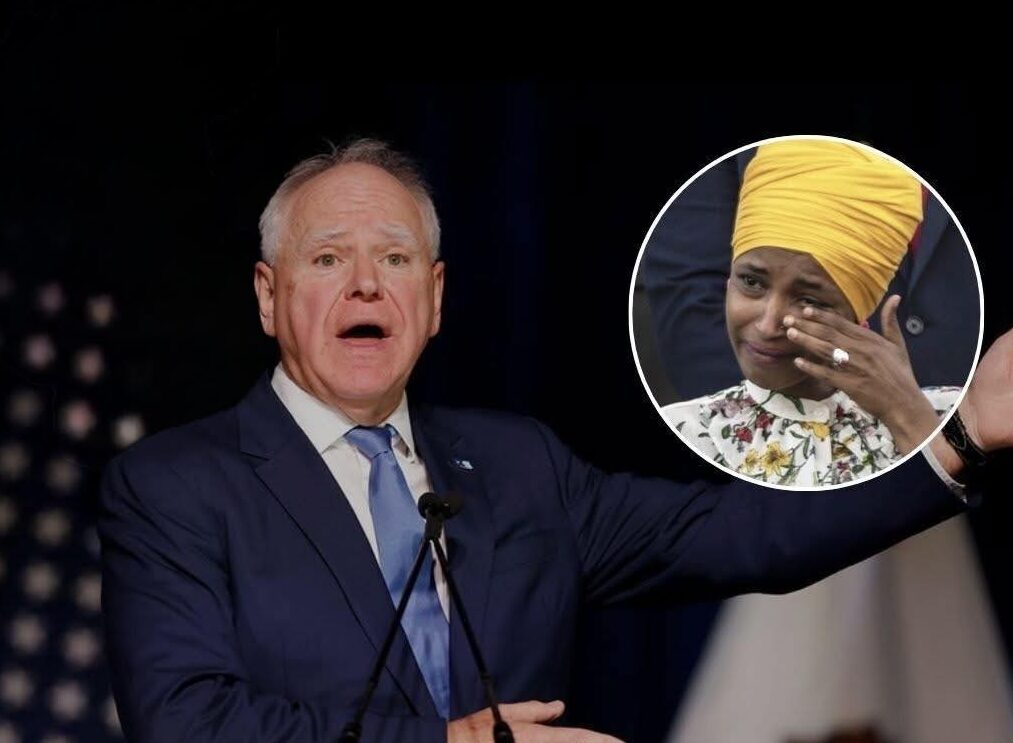
Minnesota is once again under scrutiny as new investigations uncover additional layers of public-assistance fraud occurring during Gov. Tim Walz’s administration. The state, still grappling with the aftermath of the high-profile Feeding Our Future case, is now facing fresh accusations that point to widespread misuse of taxpayer-funded programs — with financial losses estimated to be far higher than previously understood.
The latest revelations stem from reporting by City Journal, which examined potential abuse within the state’s Medicaid Housing Stabilization Services program. According to investigators, some service providers allegedly exploited the system by billing for services that were not provided, inflating claims, or setting up operations designed primarily to siphon funds rather than offer legitimate assistance.
These new allegations arrive on the heels of the Feeding Our Future scandal, a $250 million scheme involving fraudulent claims of feeding low-income children during the pandemic. That case — now considered one of the largest federal fraud investigations in Minnesota history — raised serious questions about oversight and accountability across several state agencies.
A Growing Financial Toll
According to emerging reports, the cumulative losses across various programs may approach $1 billion when combining confirmed cases with suspected, ongoing fraud. Investigators say the full financial impact is difficult to calculate, given the number of programs involved and the complexity of tracking improper payments across multiple agencies.
A recent Fox News report suggested that even these estimates may fall short, indicating that auditors and federal authorities believe more fraudulent activity could still be uncovered as investigations continue.
A Complex, Multilayered Issue
While some reports have highlighted individuals within Minnesota’s Somali-American community as being involved in specific cases, officials and investigators emphasize that the issue is not limited to any single demographic group. Rather, they point to systemic weaknesses — including rapid program expansions, oversight challenges, and inconsistent auditing — that created opportunities for exploitation across multiple networks of individuals and organizations.
Law enforcement agencies, including federal investigators, continue to examine whether any of the misappropriated funds were routed to criminal enterprises outside the state. Some unverified allegations referenced in media reports have suggested possible links to foreign groups, though authorities have not publicly confirmed those details.
Calls for Reform and Accountability
As the scale of the alleged fraud becomes clearer, Minnesota lawmakers from both parties are renewing calls for stronger safeguards to prevent future abuses. Proposed reforms include:
tighter eligibility verification
increased auditing requirements for high-risk providers
improved data-tracking systems to detect irregular billing
clearer channels for whistleblower reporting
State officials have acknowledged the need for improvements, noting that several oversight reforms have already begun in response to the Feeding Our Future case.
A State Searching for Answers
The unfolding investigations place renewed pressure on Minnesota’s leadership to restore public trust and ensure that taxpayer-funded programs reach the people they are intended to serve. With multiple probes still underway and more information expected to emerge, the full scope of the issue remains uncertain.
What is clear is that Minnesota now faces one of the most extensive public-assistance fraud challenges in its history — one that will likely influence statewide policy decisions for years to come.
Senate Majority Leader Chuck Schumer publicly addressed a series of bomb threats made against three of his New York offices, prompting swift law-enforcement responses and reigniting discussion about the increasingly volatile tone of American political discourse. According to Schumer’s statement, the threats were delivered through an email that reportedly referenced political slogans and claims related to the 2020 election, raising concerns about the intersection of extremist rhetoric and public safety.
The incidents occurred at Schumer’s district offices in Rochester, Binghamton, and Long Island, and law-enforcement agencies were immediately dispatched to each location to conduct thorough security sweeps. Although no explosive devices were discovered and no injuries were reported, the threats prompted temporary evacuations, interruptions to office operations, and a wave of public attention as officials worked to determine the credibility and origin of the email.
In his statement, Schumer thanked the responding authorities for acting quickly and ensuring that the facilities were secured. He emphasized that all office staff were safe and that federal investigators were actively reviewing the threats in coordination with local police departments. While the senator described the incident as deeply concerning, he also acknowledged that such events have become disturbingly common across the political spectrum, reflecting a broader trend of heightened hostility toward elected officials.
An Incident Reflecting a Larger Pattern
Incidents involving threats to political offices have increased over the past several election cycles, with members of both major parties reporting a rise in targeted harassment, violent threats, and security concerns. The U.S. Capitol Police have also confirmed that politically motivated threats have multiplied in recent years, often tied to online misinformation campaigns, partisan anger, and various forms of ideological extremism.
Experts note that threats against public officials rarely emerge in isolation. Instead, they arise within a broader atmosphere shaped by intense political rhetoric, distrust in institutions, and the amplification of polarized narratives through social media platforms. In that sense, the Schumer incident reflects a national climate where high-profile figures regularly find themselves at the center of controversies that escalate far beyond policy disagreements.
Schumer, as one of the most recognizable Democratic leaders in the country, is no stranger to criticism or political tension. Yet the bomb threats illustrate how political disagreements—regardless of where they originate—can quickly cross into dangerous territory when individuals or groups resort to intimidation tactics.
The Content of the Threat and Early Investigative Clues
According to Schumer’s office, the threatening emails included references to the “2020 election” and a subject line incorporating “MAGA,” though officials have not released specific details. Investigators are currently reviewing the email headers, routing data, and metadata to determine the sender’s location and whether the threats were part of a broader effort or simply the action of an individual acting alone.
Cybersecurity analysts point out that political slogans or references within threatening messages can sometimes serve as distractions intended to mislead investigators. In other cases, such content reflects an individual’s attempt to express grievances, mimic political talking points, or provoke public reaction. Officials have not yet stated whether they believe the threats were politically motivated or if certain references were inserted for shock value.
Law-enforcement agencies typically treat all bomb threats with urgency, even when they suspect hoaxes, due to the potential consequences of failing to respond appropriately. Offices were swept using standard procedures, including bomb-sniffing K-9 units, visual inspections, and equipment checks.
Reactions from Public Officials
Following Schumer’s statement, several New York lawmakers and local leaders expressed relief that no physical danger was uncovered while also condemning the unacceptable nature of threats directed at elected officials. They emphasized that political disagreements must not lead to intimidation or violence, echoing similar sentiments voiced after previous incidents targeting members of Congress from both political parties.
Security experts argue that increasing public hostility toward political institutions has resulted in a troubling normalization of threats against public figures. They point out that while most threats do not result in violence, they place significant strain on law-enforcement resources and contribute to a climate of fear that discourages civic participation.
In recent years, public officials have faced a growing range of security risks—including doxxing, stalking, social-media harassment, and physical threats—leading some to advocate for expanded safety measures, updated protocols, and greater mental-health support for staffers who encounter harassment as part of their duties.
Schumer’s Own History with Political Rhetoric
While the focus remains on the bomb threats themselves, the incident has revived public discussion about the tone of political communication and the responsibility of leaders to help de-escalate conflicts rather than inflame them.
As a prominent political figure, Schumer has often been involved in high-stakes policy debates where rhetoric becomes heated. Critics argue that his past comments on judicial decisions, legislative battles, and opposing political groups have occasionally contributed to the broader climate of partisan tension. Supporters counter that strong rhetoric is hardly unique to Schumer and that he has consistently condemned violence and threats against elected officials, regardless of political affiliation.
This latest episode has highlighted the delicate balance between robust political expression and the need to maintain a safe, functional environment for public discourse. While partisan differences will undoubtedly continue, the boundaries between strong criticism and dangerous escalation are increasingly under scrutiny.
Political Climate and Public Safety
The threats to Schumer’s offices come at a time of heightened national unease, with many Americans expressing frustration over political division, economic uncertainty, and the perceived erosion of trust in civic institutions. These pressures form a backdrop to incidents like this one, where individuals may feel compelled to act out—either symbolically or violently—through threats or intimidation.
Sociologists and political-behavior experts warn that such incidents, if left unaddressed, can erode the foundations of democratic participation. When elected officials feel unsafe or under constant threat, it affects not only their ability to perform their duties but also the willingness of ordinary citizens to pursue public service.
The FBI and other agencies continue to track cases involving threats to lawmakers and have ongoing concerns about isolated individuals who may become radicalized through online content. They emphasize that preventing escalation requires vigilance, reporting suspicious behavior, and encouraging constructive political dialogue.
Moving Forward
As of this writing, investigators are still working to identify the individual or group responsible for the threatening emails. Schumer’s offices have resumed operations, and no further threats have been reported. His staff remains in contact with federal and local law enforcement as the investigation proceeds.
Incidents like these serve as reminders of the importance of maintaining strong security protocols for public offices, many of which operate in non-secure buildings in local communities. Staffers often serve as the first point of contact for constituents, fielding calls, handling meetings, and managing outreach, making their safety an essential part of the broader conversation about political violence.
In the wake of the threats, Schumer reiterated his gratitude for the swift action taken by law enforcement and expressed confidence in their ability to identify the individual responsible. He called on Americans to reject threats and intimidation and to uphold peaceful forms of civic engagement, no matter how intense public debates may become.
Conclusion
The bomb threats directed at Sen. Chuck Schumer’s offices underscore the troubling rise of political hostility across the United States. While the threats ultimately resulted in no injuries or confirmed danger, the episode highlights a concerning trend in which political frustrations are increasingly expressed through dangerous or disruptive acts. As investigators work to trace the source of the threats, the incident reinforces the need for civility, caution, and a renewed commitment to dialogue over division. In an era where rhetoric too often spills into intimidation, this case stands as yet another reminder of the fragile line between passionate political expression and actions that threaten public safety.
A new round of 2028 polling has landed — and for Republicans who still dream of pulling the party back to a pre-Trump era, the results could not be more discouraging. The latest Saint Anselm College Survey Center poll from the New Hampshire Institute of Politics shows Vice President JD Vance not just leading the GOP field, but absolutely crushing it.
If the New Hampshire Republican primary were held today, according to the survey, Vance would walk away with the nomination in a landslide. And the message from voters is unmistakable: the MAGA movement is not fading, moderating, softening, or retreating. It is solidifying — and JD Vance is the clear heir to the mantle heading into 2028.
How the Poll Was Conducted
The survey sampled 2,112 registered voters in New Hampshire between November 18 and 19, 2025, using randomly selected cell phone numbers aligned with the state’s demographic profile. With a reported ±2.1% margin of error, this is not some tiny, low-confidence poll. It’s large, detailed, and unmistakably clear in its results.
When voters were asked a straightforward question — If the 2028 New Hampshire primary were held today, who would get your vote? — JD Vance dominated with 57% support, far ahead of any other Republican contender.
And among Democrats, the race itself is fractured, with Pete Buttigieg and Gavin Newsom still battling for relevance — a stark contrast to the overwhelming unity on the Republican side.
The Numbers Tell a Story — And It’s a Familiar One
New Hampshire has long been a politically independent state — famously unpredictable, stubbornly contrarian, and often willing to defy the expectations of political insiders. Yet in this poll, the message from the state’s Republican voters is not murky or complicated. It is loud, unified, and unmistakable:
JD Vance is the future of the party.
Whether the GOP establishment likes it or not.
For years now, certain Republican strategists, legacy-media pundits, and former Bush-era officials have pushed the idea that the party must distance itself from Donald Trump and return to what they affectionately call “norms,” “respectability,” or “traditional conservatism.” But the data — not the wishful thinking — continues to reject that premise.
New Hampshire Republicans appear unbothered by the constant media attacks on Trump, unpersuaded by the warnings of political scientists, and unimpressed with the predictable talking points from traditional GOP commentators. Instead, a significant majority are siding with Trump’s chosen successor, a populist figure who has embraced the MAGA platform while giving it a younger, more polished, and more intellectual face.
Why Vance Is Resonating
JD Vance’s rise has not happened in a vacuum. Several factors explain his dominance:
1. He represents continuity without stagnation.
Vance is unmistakably aligned with Donald Trump — ideologically, stylistically, and strategically — but he brings his own distinct identity. Voters who want the movement to continue see him as a natural extension rather than a departure.
2. His appeal spans multiple factions of the modern GOP.
Vance appeals to:
Trump loyalists
Working-class conservatives
Voters skeptical of endless foreign entanglements
Younger Republicans tired of the old guard
His combination of economic populism, cultural conservatism, and political sharpness is hitting a sweet spot.
3. He does not trigger the same intensity of opposition Trump does among some undecided Republicans.
This matters in primaries. There are voters who like Trump’s policies but are worn out by the chaos and controversy. Vance offers them a familiar platform with a steadier presentation.
4. His national visibility as vice president has normalized him.
Unlike other rising stars who must fight for attention, Vance benefits from daily exposure, interviews, speeches, and coverage. That kind of presence makes him feel inevitable to GOP voters.
Who Isn’t Connecting — and Why
Though the survey did not list every candidate’s numbers in detail, the headline tells the story: 57% for Vance leaves the other potential contenders — establishment Republicans, moderates, neoconservative throwbacks — in political dust.
Candidates who have floated runs or been mentioned as alternatives either lack grassroots enthusiasm or are relying too heavily on donor-class support. The GOP electorate has changed dramatically over the past decade, and candidates who fail to understand that shift are falling further and further behind.
Some former Bush-style Republicans want to return to:
aggressive foreign policy
corporate-friendly economics
and softer cultural messaging
But GOP voters have made it clear those ideas are relics of another era.
Democrats Aren’t in Much Better Shape
While Republicans are consolidating around JD Vance, Democrats are fractured between Pete Buttigieg and Gavin Newsom, neither of whom has been able to unite the party’s left-wing factions, moderates, and increasingly disillusioned voters.
Some Democrats want a fresh face. Others want a more aggressively progressive candidate. Still others want a centrist. The confusion reflects a party with an identity crisis — the opposite of what the Republican numbers show.
The longer this division remains unresolved, the more advantages Republicans carry into 2028.
Why New Hampshire Matters
New Hampshire is small in population but gigantic in influence. A commanding lead there:
builds national momentum
attracts donor confidence
legitimizes candidacies
and pressures weaker candidates to drop out early
If JD Vance is already over 57% this early — nearly three years before the election — it indicates something far greater than routine early polling noise.
It signals that Vance is not just a likely frontrunner.
He is potentially unbeatable unless the political landscape shifts dramatically.
The GOP’s Post-Trump Identity Is No Longer a Question
For years, political analysts insisted the GOP would eventually “snap back” to its pre-2016 identity. They predicted Trump was a “temporary phenomenon,” a “symptom of voter anger,” or a “protest vote gone wrong.”
But now, nearly a decade after Trump’s first election, the data continues to show:
The movement wasn’t temporary.
It wasn’t accidental.
It has staying power — and successors.
JD Vance’s rise in New Hampshire is not an outlier. It’s the latest confirmation of a long-term realignment.
Final Takeaway
This poll doesn’t simply show JD Vance leading. It shows him dominating.
It shows a GOP electorate unified behind a single direction — and a single successor.
It shows the Republican establishment losing ground, not gaining it.
And perhaps most importantly:
It shows that the MAGA era is far from over.
In fact, according to New Hampshire voters, it’s just getting started.
Perfecting a hard-boiled egg sounds simple, yet many people know how tricky it can be. From shells that refuse to peel to yolks that turn an unexpected shade of green, stovetop boiling doesn’t always deliver predictable results. That challenge is what inspired a closer look at an alternative technique: baking eggs in the oven. Although the idea might seem unconventional at first glance, it has gained popularity for producing reliable results with far less supervision. Testing this method side-by-side with traditional boiling revealed that oven-baked eggs can be surprisingly effective, especially for anyone who values convenience and consistency in the kitchen.
One of the strongest advantages of using the oven is how effortless the process becomes. There is no pot to watch, no chance of water boiling over, and no need to adjust the heat mid-way. Instead, the eggs simply sit in a preheated oven, allowing the cook to focus on other tasks. This makes the technique especially appealing for meal prepping, hosting brunches, or preparing large quantities for salads and snacks. While stovetop boiling works well for small batches, the oven excels when more eggs are needed at once, offering a hands-off method that many home cooks appreciate.
The steps themselves are straightforward. Begin by preheating the oven to 325–350°F and placing the eggs in a muffin tin or similar heat-safe dish to keep them from rolling. Bake them for 25–30 minutes, depending on your oven. While they cook, prepare a bowl of ice water. As soon as the timer goes off, transfer the eggs directly into the ice bath to stop the cooking process and help loosen the shells. This method requires only a few basic items—eggs, a muffin pan, and ice water—yet it yields results that can be peeled immediately or stored for later. Unpeeled eggs keep for up to a week in the refrigerator, while peeled eggs are best enjoyed within a few days.
Though baking offers many advantages, it also comes with a few considerations. Because heat distribution varies among ovens, some eggs may cook unevenly or develop small brown spots on the shells. Overbaking can create firmer whites or slightly dry yolks, and—just like with boiling—overcooking may produce a harmless green-gray ring around the yolk. The flavor remains mild and familiar, but the texture can differ slightly from traditionally boiled eggs. Regardless of cooking method, one constant remains: peeling success is influenced more by the age of the eggs than by how they are cooked. Older eggs naturally separate from their shells more easily. In the end, both the oven and the stovetop methods are effective; the best choice depends on whether you prioritize speed or convenience. For large batches and multitasking, the oven shines. For quick results or smaller quantities, boiling remains the classic, dependable option.